
Getting Married in France: Legal Requirements and Apostille Guide for UK Couples
Introduction
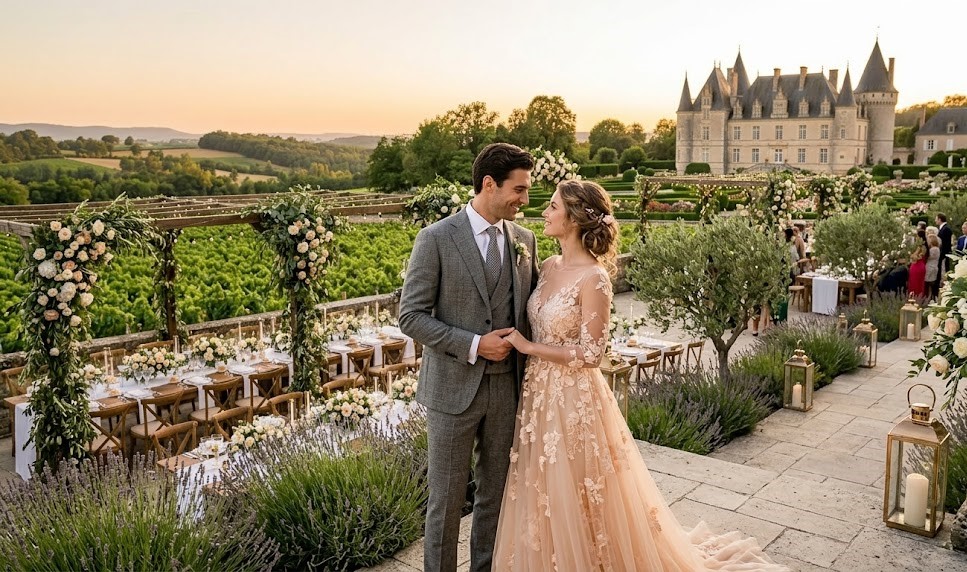
Few destinations evoke romance quite like France. From the enchanting vineyards of Bordeaux and the charming countryside of Provence to the majestic châteaux of the Loire Valley, France provides a stunning backdrop for a destination wedding. For many British couples, a French wedding is a dream come true — a blend of elegance, culture, and unforgettable scenery.
However, planning a wedding abroad comes with its share of legal responsibilities. France requires several official documents before a civil marriage can be legally recognised. UK citizens must ensure that documents such as birth certificates, certificates of no impediment, and proof of address are properly prepared and, in many cases, legalised with an apostille issued by the Foreign, Commonwealth & Development Office (FCDO). Without completing this process, French authorities may refuse to accept the documents, which can lead to delays or even cancellation of the ceremony.
This comprehensive guide provides UK couples with everything they need to know about getting married in France, from legal requirements and document preparation to real-life experiences and tips for a smooth wedding planning process.
Why Choose France for a Destination Wedding
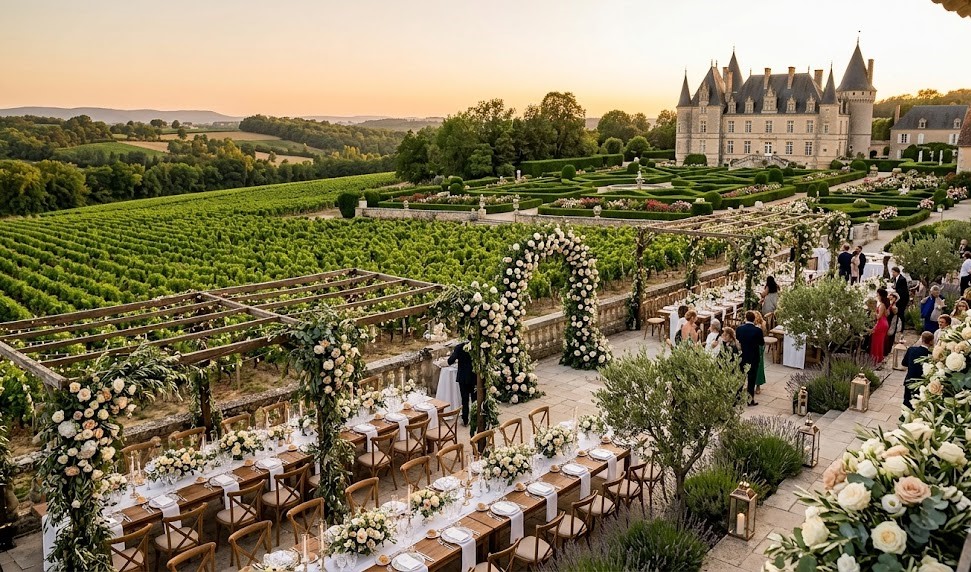
France has long been a top choice for destination weddings. Its combination of romantic scenery, historic venues, and fine cuisine makes it perfect for couples looking for an elegant celebration.
Stunning Venues Across France
Some of the most sought-after locations include:
- Loire Valley Châteaux – Fairy-tale castles surrounded by manicured gardens
- Provence Countryside – Lavender fields and rustic estates for intimate weddings
- Bordeaux Vineyards – Perfect for wine-loving couples
- Parisian Ceremonies – Iconic landmarks and luxury venues in the city of love
France’s diversity ensures that every couple can find a venue that matches their vision, whether it’s a grandiose château or a secluded vineyard.
Civil vs Religious Ceremonies in France
Couples must decide whether to have a civil marriage or a religious ceremony, as legal requirements differ.
Civil Marriages
Civil weddings are conducted at the local Mairie (town hall). French law mandates that all marriages be legally registered at a town hall, even if the couple plans a religious ceremony later.
For foreign couples, the process involves submitting official documents and meeting residency requirements, which vary by location. UK citizens often need to provide proof of residency, though some regions allow exceptions for short-term stays.
Religious or Symbolic Ceremonies
Religious ceremonies are optional and usually follow a civil marriage. Many couples choose a symbolic ceremony in picturesque locations like churches, gardens, or private estates to complement the legal civil ceremony. Symbolic ceremonies do not require additional legal documentation.
Required Documents for UK Couples
France has strict documentation rules for civil marriages. UK citizens typically need the following:
- Birth Certificate – A full UK-issued birth certificate is required to confirm identity.
- Certificate of No Impediment (CNI) – Confirms the individual is legally free to marry.
- Passport – A valid passport is essential for identification.
- Proof of Address – Recent utility bills or official letters may be requested.
These documents must often be translated into French by a certified translator and legalised with an apostille to be accepted by French authorities.
Understanding Apostille Requirements
What Is an Apostille?
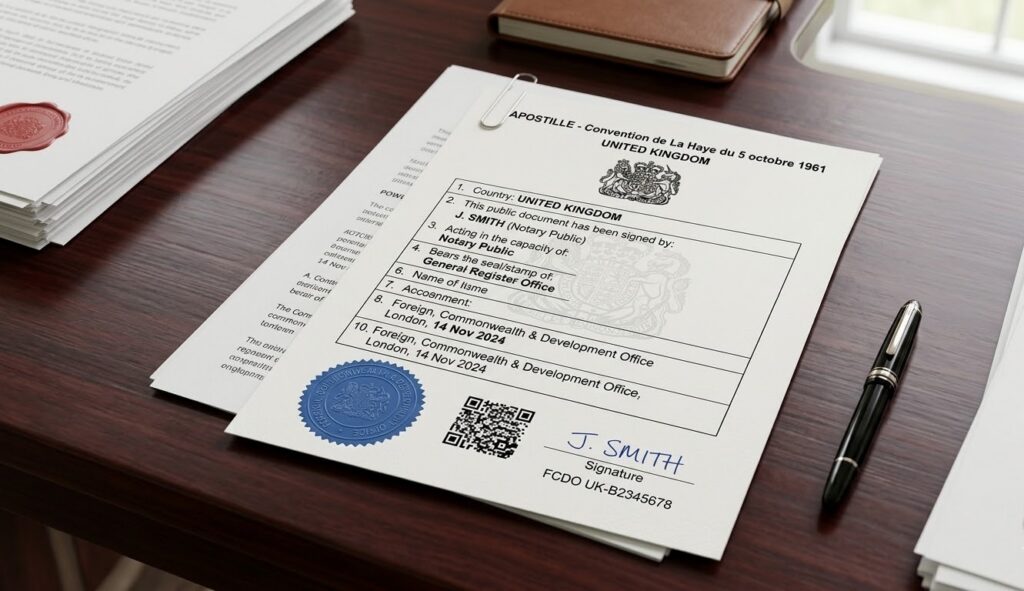
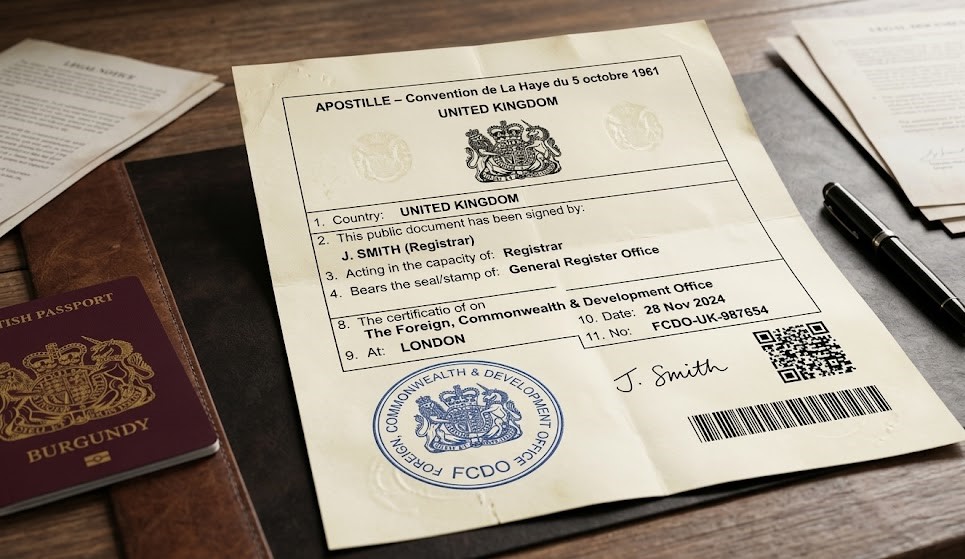
An apostille is an official certification that verifies the authenticity of a document for international use. Under the Hague Apostille Convention, documents from one member country (like the UK) can be recognised in another member country (like France).
Why Apostilles Are Important for France
French authorities require apostilles to confirm that foreign documents are genuine. Without an apostille, documents such as birth certificates or CNIs may not be accepted, potentially delaying the wedding.
How to Obtain an Apostille in the UK
Documents are legalised through the Foreign, Commonwealth & Development Office (FCDO). The process includes:
- Obtaining the original document (birth certificate, marriage certificate, etc.)
- Submitting it to the FCDO for apostille certification
- Receiving the document with an official apostille attached
- Translating documents into French if required
Pro Tip: Start this process at least 2–3 months before the wedding to avoid last-minute issues.
UK Government Guidance on Legalising Documents
Real-Life Stories and Experiences
Couples often share valuable insights about the challenges of preparing documents for destination weddings.
Example Story
A bride planning her Santorini wedding discovered two days before her flight that her birth certificate had not been apostilled. Thanks to an urgent service, the document was processed in time, and the wedding proceeded without interruption.
Trustpilot Reviews
Many couples have praised apostille services for helping reduce the stress of legal paperwork. For example, a couple preparing for their wedding in Rhodes highlighted how the service ensured their documents were ready in time.
Step-by-Step Guide to Getting Married in France
- Choose Your Venue – Château, vineyard, countryside estate, or city hall
- Confirm Local Marriage Requirements – Contact the Mairie to verify documentation and residency rules
- Gather Required Documents – Birth certificate, CNI, passport, proof of address
- Obtain Apostille Certification – Legalise documents through the FCDO
- Translate Documents – Certified translation into French may be required
- Submit Documents to the Town Hall – Allow sufficient processing time
- Attend Civil Ceremony – Complete the legal marriage at the Mairie
- Optional Symbolic or Religious Ceremony – Celebrate with a personal ceremony or reception
Tips for a Stress-Free Wedding Abroad
- Start Planning Early – Allow several months to prepare documents and obtain apostilles
- Use Professional Services – Apostille and translation services can save time and prevent errors
- Confirm Local Rules – Each town hall may have slightly different requirements
- Keep Copies of Documents – Always have duplicates for peace of mind
- Plan Symbolic Ceremonies – Consider a symbolic celebration if legal procedures are complex
Frequently Asked Questions (FAQ)
Q1: Can UK citizens legally marry in France?
Yes, UK citizens can legally marry in France, provided all required documents are prepared and submitted according to French law.
Q2: Do UK documents need an apostille for a French wedding?
Yes, most UK-issued documents must be legalised with an apostille from the FCDO before French authorities will accept them.
Q3: How long does the apostille process take?
Processing times vary but typically take a few working days. Allow extra time for translations and shipping.
Q4: Do documents need to be translated into French?
Yes, certified translations are usually required for all official documents submitted to French authorities.
Q5: Can a symbolic ceremony replace a civil wedding?
No, a civil marriage at the Mairie is legally required. A symbolic or religious ceremony can follow for personal celebration.
Q6: What happens if documents are incomplete?
The town hall may delay or refuse to process the marriage, potentially cancelling the ceremony until all documents are complete.
Conclusion
France remains one of the most romantic and iconic destinations for British couples seeking a wedding abroad. Its picturesque landscapes, historic châteaux, and Mediterranean charm create unforgettable memories.
However, couples must carefully navigate the legal requirements for a civil marriage, including obtaining birth certificates, CNIs, passports, and proof of address. Properly legalising these documents with an apostille from the UK FCDO and ensuring translations are accurate is essential for a smooth and stress-free wedding.
By planning ahead, utilising professional services, and following local procedures, UK couples can enjoy their dream destination wedding in France without unnecessary complications, making their special day truly magical.