
Apostille vs Legalisation: What Is the Difference?
Introduction
When you plan to use UK documents abroad, you may quickly encounter unfamiliar terms such as apostille, document legalisation, or authentication. Many people assume these terms mean the same thing, but there are important differences.
Whether you are moving abroad, getting married overseas, applying for a foreign job, studying internationally, or expanding a business, foreign authorities often require your UK documents to be officially verified before they will accept them. This process ensures the documents are genuine and legally recognised in another country.
In the UK, the most common method is obtaining an apostille certificate issued by the UK government. However, for some countries, documents must go through a longer legalisation process involving embassies or consulates.
Understanding the difference between apostille vs legalisation can save you time, money, and frustration. In this guide, we explain:
- What an apostille is
- How document legalisation works
- The differences between apostille and embassy legalisation
- Which documents require certification
- How to obtain an FCDO apostille in the UK
- Common mistakes to avoid
If you need help with the process, a professional apostille service UK provider can simplify everything and ensure your documents are processed quickly and correctly.
What Is an Apostille?
Understanding the Apostille Certificate
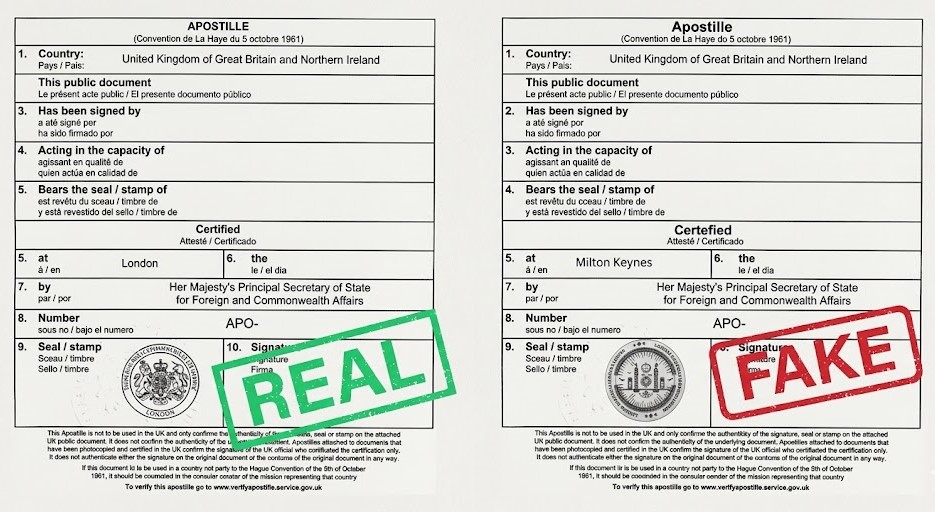
An apostille is an official certificate issued by the UK government to confirm that a document is genuine. It verifies the signature, seal, or stamp on the document so that it will be recognised in another country.
In the UK, apostilles are issued by the Foreign, Commonwealth & Development Office (FCDO).
The apostille certificate confirms:
- The authenticity of the signature
- The capacity in which the person signed the document
- The validity of any seal or stamp
Once attached to a document, the apostille allows it to be accepted in countries that are members of the Hague Apostille Convention.
This process is often referred to as:
- apostille UK
- apostille documents UK
- FCDO apostille
- document legalisation UK
When Do You Need an Apostille?
You may need an apostille when presenting UK documents abroad for official purposes such as:
- Immigration or visa applications
- Overseas employment
- International study
- Marriage abroad
- Property purchase overseas
- International business operations
For example:
A British citizen moving to Spain may need an apostille on their birth certificate.
A UK company opening a branch in the UAE may require apostilled corporate documents.
Without proper certification, foreign authorities may reject the documents entirely.
What Is Document Legalisation?
Understanding the Legalisation Process
Document legalisation is the broader process of verifying a document for international use.
An apostille is actually one form of legalisation, but not all legalisation processes are the same.
There are two main scenarios:
1. Apostille Legalisation (Hague Convention Countries)
If the destination country is a member of the Hague Apostille Convention, only an apostille certificate is required.
The process is simple:
- Verify the document
- Submit it to the FCDO
- Receive the apostille certificate
This is the most common type of apostille service UK.
2. Embassy Legalisation (Non-Hague Countries)
If the destination country is not part of the Hague Convention, additional steps are required.
These may include:
- Notarisation by a UK solicitor or notary
- Apostille from the FCDO
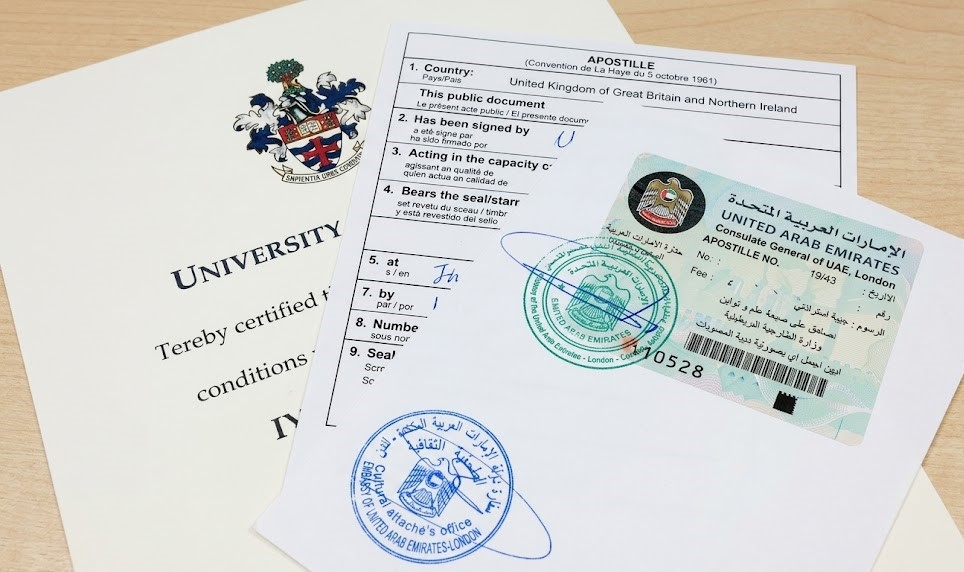
- Legalisation by the destination country’s embassy or consulate
This multi-step process is often referred to as full document legalisation UK.
Apostille vs Legalisation: Key Differences
Understanding the difference helps you choose the correct process for your documents.
| Feature | Apostille | Full Legalisation |
|---|---|---|
| Issued by | UK Foreign, Commonwealth & Development Office | FCDO + Embassy |
| Used for | Hague Convention countries | Non-Hague countries |
| Complexity | Simple | Multi-step process |
| Processing time | Usually faster | Longer |
| Cost | Lower | Higher due to extra stages |
In Simple Terms
- Apostille = single government certification
- Legalisation = multiple verification stages
- Both processes ensure your UK documents are accepted abroad.
Which Documents Commonly Require an Apostille?
Many types of personal and business documents may require an apostille.
Personal Documents
These documents are commonly required for immigration, study, or marriage abroad.
Examples include:
Birth Certificates
Often required for:
- Visa applications
- Dual citizenship
- Overseas marriage
Marriage Certificates
Used for:
- Spouse visa applications
- Immigration processes
- Registering marriage abroad
Death Certificates
Required for:
- Probate matters abroad
- Property transfers
Police Certificates (ACRO)
Used for:
- Employment abroad
- Residency permits
Educational Documents
Many countries require apostilled academic qualifications.
Examples include:
- Degree certificates
- Diplomas
- Transcripts
- Teaching qualifications
These are frequently requested when applying for international employment or study visas.
Business and Corporate Documents
Businesses expanding internationally often need apostilled corporate paperwork.
Common examples include:
- Certificates of incorporation
- Company registration documents
- Articles of association
- Board resolutions
- Powers of attorney
- Commercial contracts
For companies trading abroad, document legalisation UK is often essential.
Step-by-Step Process to Obtain an Apostille in the UK
Getting an apostille UK involves several steps.
Step 1: Confirm the Destination Country Requirements
Before starting the process, check:
- Whether the destination country accepts apostilles
- Whether additional legalisation is required
A professional apostille service UK can confirm this for you.
Step 2: Prepare Your Documents
Some documents can be apostilled immediately, such as:
- Original UK birth certificates
- Marriage certificates
- Court documents
Other documents may first require certification by a solicitor or notary.
Examples include:
- Copies of passports
- Educational certificates
- Business agreements
Step 3: Submit Documents to the FCDO
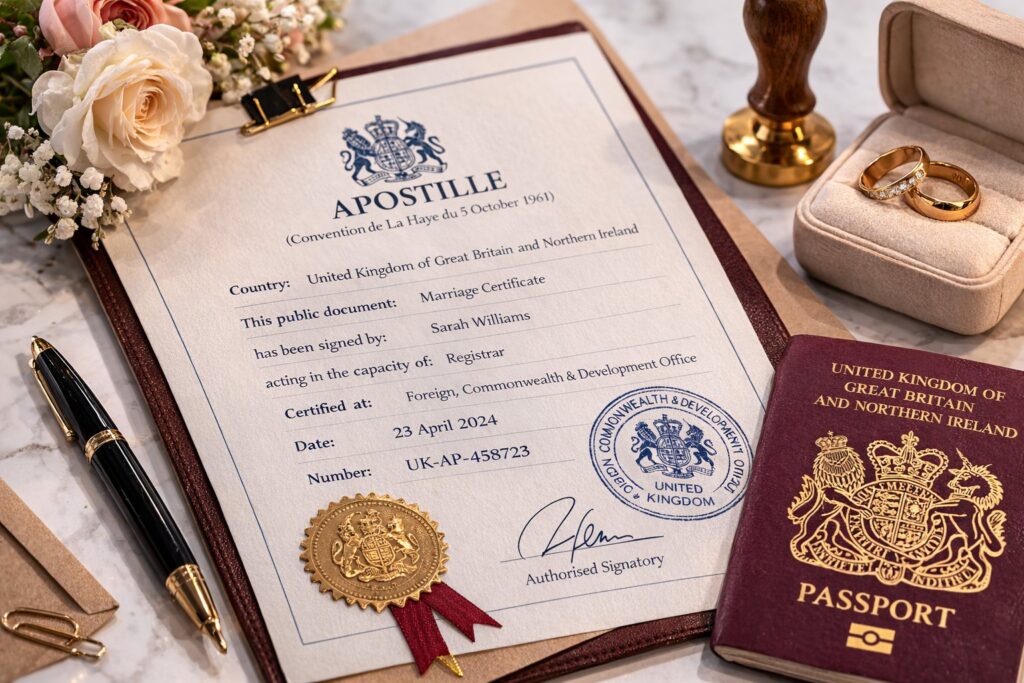
The Foreign, Commonwealth & Development Office verifies the signature on the document and issues the apostille certificate.
This certificate is attached to the document and includes:
- Official seal
- Unique reference number
- Signature verification
Step 4: Receive Your Apostilled Documents
Once the process is complete, your documents are returned with the apostille certificate attached.
They are now ready for use abroad.
Many people use a professional service such as:
to avoid delays or errors during the process.
Typical Apostille Processing Times
Processing times vary depending on the method used.
Standard Service
Usually takes:
5–10 working days
Fast-Track Service
Professional apostille providers may offer:
1–3 day processing
This is useful for urgent situations such as:
- Visa deadlines
- Job offers abroad
- Overseas weddings
Common Mistakes When Getting an Apostille
Many applications are delayed due to avoidable errors.
Submitting Incorrect Documents
Not all copies are acceptable.
For example:
- Photocopies may require solicitor certification.
- Some certificates must be originals.
Using Damaged Documents
The FCDO may reject:
- Laminated certificates
- Damaged paperwork
- Illegible documents
Missing Notarisation
Certain documents require a notary public signature before apostille.
Skipping this step causes delays.
Choosing the Wrong Legalisation Process
If the destination country is not part of the Hague Convention, an apostille alone may not be enough.
Embassy legalisation may be required.
Why Use a Professional Apostille Service?
Handling the process yourself can be confusing, especially if you are unfamiliar with legal documentation.
A professional apostille service UK can help by:
- Checking document requirements
- Arranging solicitor certification
- Managing the FCDO apostille process
- Handling embassy legalisation if needed
- Offering fast-track services
This saves time and ensures your documents are processed correctly the first time.
Frequently Asked Questions
1. What is the difference between apostille and legalisation?
An apostille is a certificate issued by the FCDO for countries in the Hague Convention.
Legalisation may involve additional embassy verification for countries outside the convention.
2. How long does it take to get an apostille in the UK?
Standard processing typically takes 5–10 working days, although faster services may complete it in 1–3 days.
3. Do all countries accept apostilles?
No. Apostilles are accepted only by countries that are members of the Hague Apostille Convention. Other countries require embassy legalisation.
4. Can I apostille a photocopy of a document?
Yes, but the copy usually must be certified by a solicitor or notary public before submission.
5. Do university degrees require notarisation before apostille?
Often yes. Many academic documents require notary certification before an apostille can be issued.
6. Is an apostille valid forever?
The apostille certificate itself does not expire, but the document it is attached to may have validity limits depending on the country or authority requesting it.
Conclusion
Understanding the difference between apostille vs legalisation is essential when preparing UK documents for international use.
In simple terms:
- Apostille is a streamlined certification used by Hague Convention countries.
- Legalisation is a longer process involving additional embassy authentication.
Whether you need to apostille birth certificates, marriage certificates, academic qualifications, or business documents, ensuring the process is handled correctly will prevent delays with visas, employment, or international legal matters.
If you want a fast, reliable solution, professional assistance can make the process much easier.
✅ Get your documents processed quickly and securely with a trusted apostille provider.
Visit:
https://2eapostille.co.uk/apostille-service-uk/
The team at 2eApostille can help you obtain an FCDO apostille, manage the full document legalisation UK process, and ensure your apostille documents UK are accepted internationally without stress.