
Do I need both an apostille and embassy attestation?
Introduction
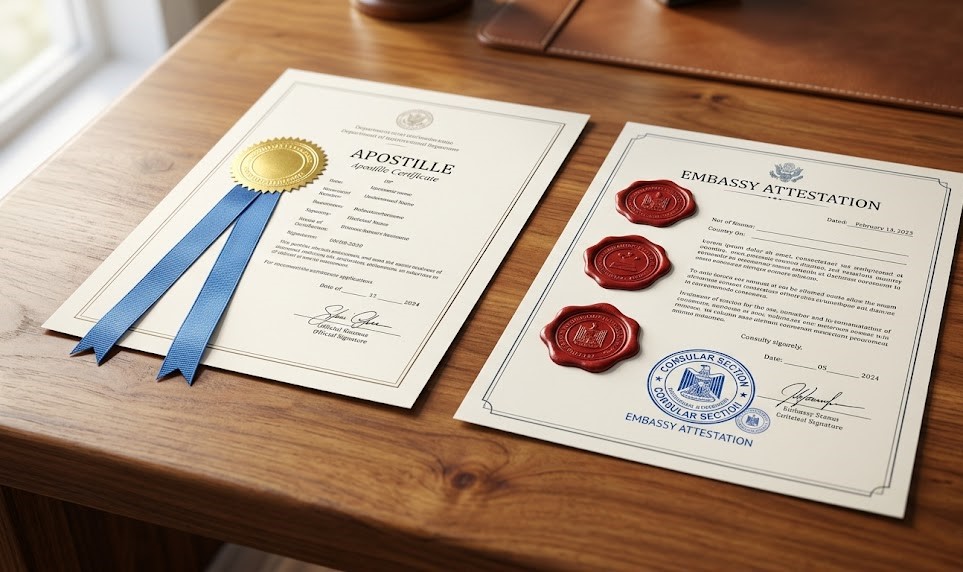
When preparing UK documents for use abroad, one of the most common questions people ask is: “Do I need both an apostille and embassy attestation?” The confusion is understandable, especially if you are dealing with international paperwork for the first time.
Whether you are planning to work overseas, get married abroad, study internationally, or expand your business, your documents must be properly verified before they are accepted in another country. This process is known as document legalisation UK, and it ensures that your documents are genuine and legally recognised.
However, different countries have different requirements. Some accept an apostille UK, while others require a more detailed process called embassy attestation. In some cases, you may even need both as part of a multi-step process.
In this guide, we will explain everything clearly and simply—what an apostille is, when you need embassy attestation, whether both are required, and how to complete the process correctly. By the end, you will have a clear understanding of how to prepare your documents without delays or stress.
What Is an Apostille?
An apostille is an official certificate issued by the Foreign, Commonwealth & Development Office (FCDO) in the UK. It confirms that a document is genuine and can be recognised in another country.
When Is an Apostille Required?
An apostille is required when your documents are being used in countries that are part of the Hague Apostille Convention.
Key Features of an Apostille
- Issued by the UK government (FCDO apostille)
- A one-step process
- Accepted in over 120 countries
- Quick and straightforward
Examples of Apostille Countries
- France
- Spain
- Italy
- United States
- Australia
What Is Embassy Attestation?
Embassy attestation is a more detailed form of document legalisation used for countries that are not part of the Hague Convention.
When Is Embassy Attestation Required?
If your destination country does not accept apostille, you will need embassy attestation.
Key Features of Embassy Attestation
- Multi-step process
- Includes verification by the FCDO and the destination country’s embassy
- Takes longer than apostille
- Required for certain countries in the Middle East and Asia
Examples of Countries Requiring Embassy Attestation
- United Arab Emirates (UAE)
- Qatar
- Kuwait
- China
Do You Need Both Apostille and Embassy Attestation?
The Short Answer
In most cases, you do NOT need both separately—but sometimes both are part of the same process.
When You Only Need an Apostille
If your destination country is part of the Hague Convention, you only need an apostille UK.
When You Need Embassy Attestation
If your destination country is not part of the Hague Convention, you will need embassy attestation.
When You May Need Both
For non-Hague countries, the process often includes:
- Apostille (FCDO verification)
- Embassy attestation (final approval)
In this case, the apostille is just one step within the full legalisation process.
How to Get an Apostille in the UK
Step 1: Prepare Your Documents
Ensure your documents are original or certified copies.
Step 2: Check Certification
Some documents require notarisation by a UK solicitor.
Step 3: Submit to the FCDO
Send documents for FCDO apostille processing.
Step 4: Receive Apostille
Documents are returned with the apostille attached.
Which Documents Commonly Require Apostille?
Personal Documents
- Birth certificates
- Marriage certificates
- Divorce documents
Educational Documents
- Degree certificates
- Diplomas
- Academic transcripts
Business Documents
- Certificates of incorporation
- Commercial agreements
Legal Documents
- Power of attorney
- Affidavits
Timelines for Apostille and Embassy Attestation
Understanding timelines helps you plan effectively.
Apostille Processing Time
- Standard: 5–10 working days
- Express: 1–3 working days
Embassy Attestation Time
- Usually 1–3 weeks or longer
- Depends on embassy requirements
Common Mistakes to Avoid
1. Assuming You Need Both
Not all countries require both processes.
2. Choosing the Wrong Legalisation Method
Always confirm country-specific requirements.
3. Delaying the Process
Start early to avoid urgent situations.
4. Submitting Incorrect Documents
Ensure all documents are valid and properly certified.
5. Ignoring Professional Help
Mistakes can be costly—expert support helps avoid them.
Why Use a Professional Apostille Service UK?
Handling apostille documents UK alone can be confusing. A professional apostille service UK ensures:
- Correct document preparation
- Faster processing
- Reduced risk of rejection
- Full guidance throughout
👉 For expert assistance, visit:
https://2eapostille.co.uk/apostille-service-uk/
Practical Tips for a Smooth Process
- Confirm destination country requirements
- Prepare documents in advance
- Use certified copies where required
- Keep track of deadlines
- Work with a trusted provider
Frequently Asked Questions (FAQ)
1. Do I need both apostille and embassy attestation?
Usually no, but for non-Hague countries, apostille is part of the embassy attestation process.
2. What happens if I use the wrong process?
Your documents may be rejected, causing delays.
3. Is apostille enough for UAE?
No, UAE requires embassy attestation.
4. How long does the full process take?
Apostille: a few days. Full legalisation: 1–3 weeks or more.
5. Do all documents need notarisation?
No, only certain documents require notarisation.
6. Can I get help with the process?
Yes, professional services can manage everything for you.
Conclusion
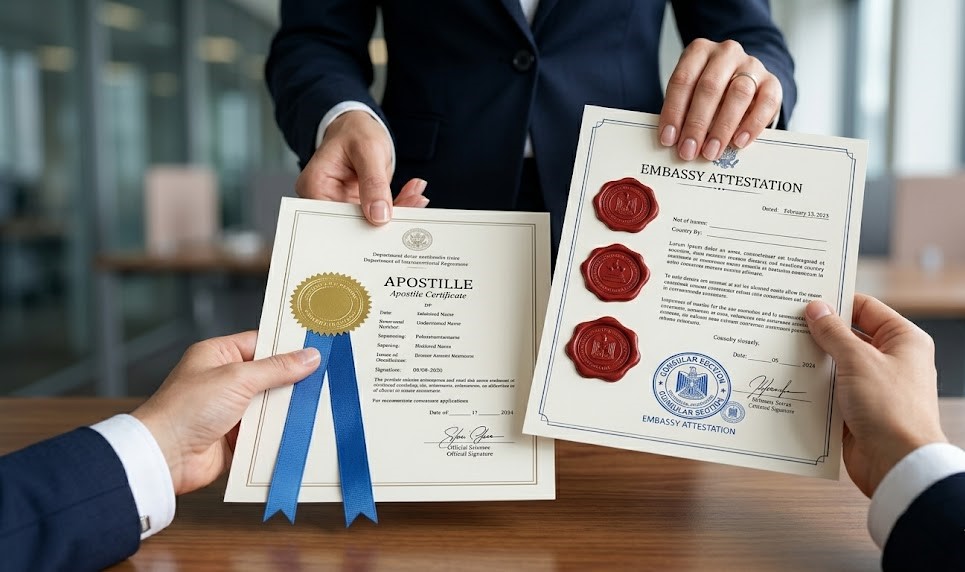
So, do you need both an apostille and embassy attestation? The answer depends on the country where your documents will be used.
- For Hague Convention countries: apostille UK is enough
- For non-Hague countries: embassy attestation is required, and the apostille is often part of that process
Understanding this difference is key to avoiding delays and ensuring your documents are accepted internationally.