
Do I need solicitor certification before apostille?
Introduction
If you are planning to use UK documents abroad, you may have come across the term “apostille” and wondered whether you also need solicitor certification before applying. This is one of the most common questions people ask when dealing with document legalisation UK processes.
The answer is not always straightforward. Some documents can be apostilled directly, while others must first be certified by a UK solicitor or notary public before they are accepted by the Foreign, Commonwealth & Development Office (FCDO).
Understanding when solicitor certification is required can save you time, money, and frustration. In this guide, we will explain everything in simple terms—what an apostille is, when certification is needed, how the process works, and common mistakes to avoid.
What Is an Apostille and Why Is It Required?
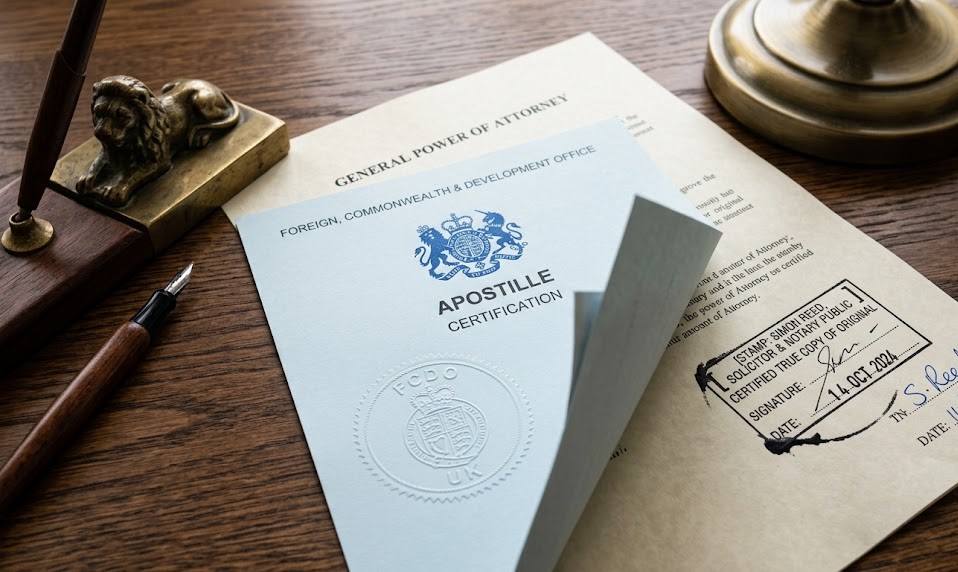
An apostille is an official certificate issued by the FCDO that verifies the authenticity of a UK document. It confirms that the signature, stamp, or seal on the document is genuine.
This is part of the apostille UK and document legalisation UK process, allowing documents to be recognised in foreign countries that are part of the Hague Apostille Convention.
When Do You Need an Apostille?
You may need an apostille service UK for:
- Working abroad
- Studying overseas
- Getting married in another country
- Opening a business internationally
- Handling legal or financial matters abroad
Without an apostille, your documents may not be accepted outside the UK.
Understanding Solicitor Certification
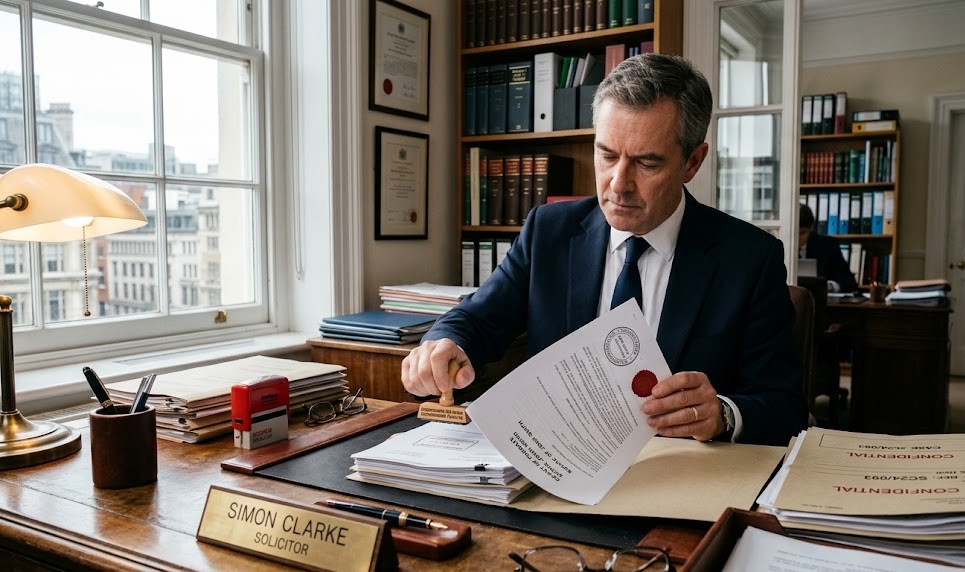
Solicitor certification means a qualified UK solicitor confirms that a document is genuine or that a copy matches the original.
What Does a Solicitor Do?
A solicitor will:
- Verify your identity
- Check original documents
- Certify copies as true copies
- Witness signatures if required
This step is sometimes necessary before applying for an FCDO apostille.
Do You Always Need Solicitor Certification?
The short answer is: No, not always.
Whether you need solicitor certification depends on the type of document you are submitting.
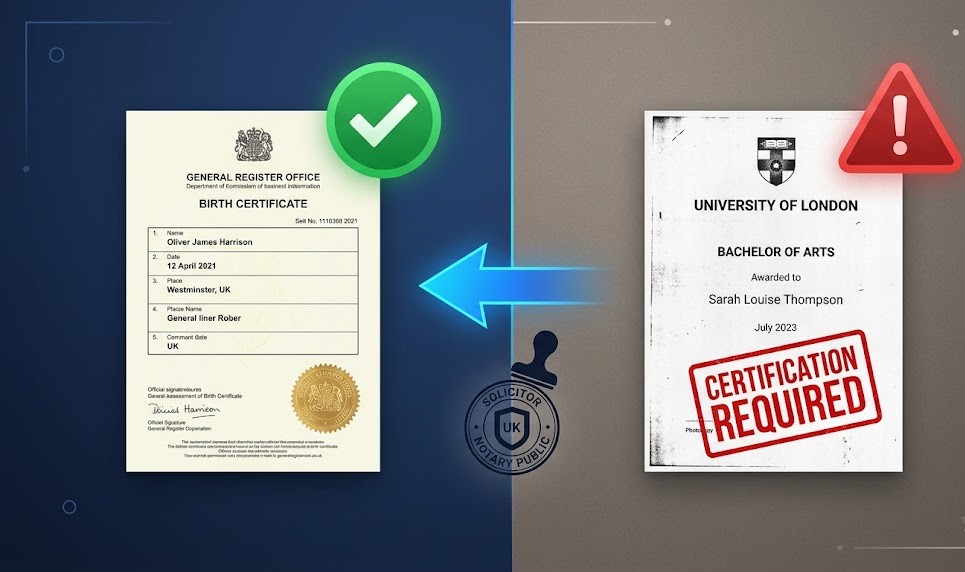
Documents That Usually DO NOT Need Certification
These documents can often be apostilled directly:
- UK birth certificates
- UK marriage certificates
- Death certificates
- Court-issued documents
These are official documents issued by recognised authorities, so the FCDO can verify them without additional certification.
Documents That Usually REQUIRE Certification
These documents typically need solicitor certification first:
- Photocopies of documents
- Degree certificates (in some cases)
- Power of attorney
- Affidavits
- Company documents not issued by Companies House
In these cases, the FCDO needs a recognised signature (such as a solicitor’s) to verify authenticity
How the Apostille Process Works in the UK
Understanding the full process helps clarify where certification fits in.
Step-by-Step Process
- Prepare your documents
- Check if solicitor certification is required
- Get documents certified if needed
- Submit to the FCDO
- Verification process
- Apostille certificate attached
- Documents returned to you
If certification is required and skipped, your application may be rejected.
When Is Solicitor Certification Mandatory?
1. For Copies of Original Documents
If you are not sending an original document:
- A solicitor must certify the copy
- The certification confirms it is a true copy
2. For Signed Documents
For documents like:
- Power of attorney
- Legal agreements
A solicitor must witness the signature.
3. For Educational Documents
Some degree certificates may require:
- Certification by a solicitor or
- Verification from the issuing institution
4. For Business Documents
Certain company documents require:
- Director signatures
- Solicitor certification before apostille
Common Mistakes to Avoid
Many applications are delayed due to simple mistakes.
Not Knowing When Certification Is Needed
Submitting uncertified documents when certification is required leads to rejection.
Sending Photocopies Without Certification
Photocopies must always be certified by a solicitor.
Incorrect Certification Format
The solicitor must include:
- Signature
- Stamp
- Date
- Statement confirming authenticity
Using Unqualified Individuals
Only a UK solicitor or notary public should certify documents.
How Long Does the Process Take?
With Solicitor Certification
- Certification: 1–2 days
- Apostille processing: 2–5 working days
- Delivery: 1–3 days
Total Time
Approximately 3–10 working days depending on urgency.
Using a professional apostille service UK can speed up the process.
Why Use a Professional Apostille Service UK?
Handling certification and apostille requirements can be confusing. A professional service ensures everything is done correctly.
Benefits
- Expert document checking
- Advice on certification requirements
- Faster processing
- Reduced risk of rejection
- Secure handling and delivery
For a reliable service, visit:
https://2eapostille.co.uk/apostille-service-uk/
Solicitor vs Notary Public – What’s the Difference?
Solicitor
- Certifies copies
- Witnesses signatures
- Common for most apostille cases
Notary Public
- Required for international legal documents
- More formal authentication
- Often used for business or legal transactions abroad
Which Documents Commonly Require Certification Before Apostille?
Personal Documents
- Copies of passports
- Copies of certificates
Educational Documents
- Degree certificates
- Diplomas
Business Documents
- Contracts
- Company resolutions
Legal Documents
- Power of attorney
- Affidavits
Understanding this helps ensure your apostille documents UK are accepted without delay.
Practical Example
Suppose you need to use a degree certificate abroad. If you send the original, it may be accepted directly. However, if you send a copy, it must be certified by a solicitor first. Without this step, the FCDO will reject the application.
Frequently Asked Questions (FAQ)
1. Do all documents need solicitor certification before apostille?
No, only certain documents such as copies or signed documents require certification.
2. Can I apostille a photocopy without certification?
No, photocopies must be certified by a solicitor before apostille.
3. How do I know if my document needs certification?
It depends on the type of document. Professional apostille services can advise you.
4. Is solicitor certification expensive?
Costs vary but are generally affordable and depend on the document type.
5. Can a notary public replace a solicitor?
Yes, especially for international legal documents, but it depends on requirements.
6. What happens if I skip certification?
Your application may be rejected by the FCDO, causing delays.
Conclusion
Solicitor certification is not always required before obtaining an apostille in the UK, but it is essential for certain types of documents. Knowing when certification is needed can help you avoid delays, rejections, and unnecessary stress.
If you are unsure, it is always best to seek professional guidance. The apostille process can seem complex, but with the right support, it becomes straightforward and efficient.
Need help with solicitor certification and apostille UK services?
Visit https://2eapostille.co.uk/apostille-service-uk/ today and let experts handle your document legalisation UK process quickly, securely, and professionally.