
Can I Apostille a Private Medical Report from a Clinic That Has Now Closed?
Introduction
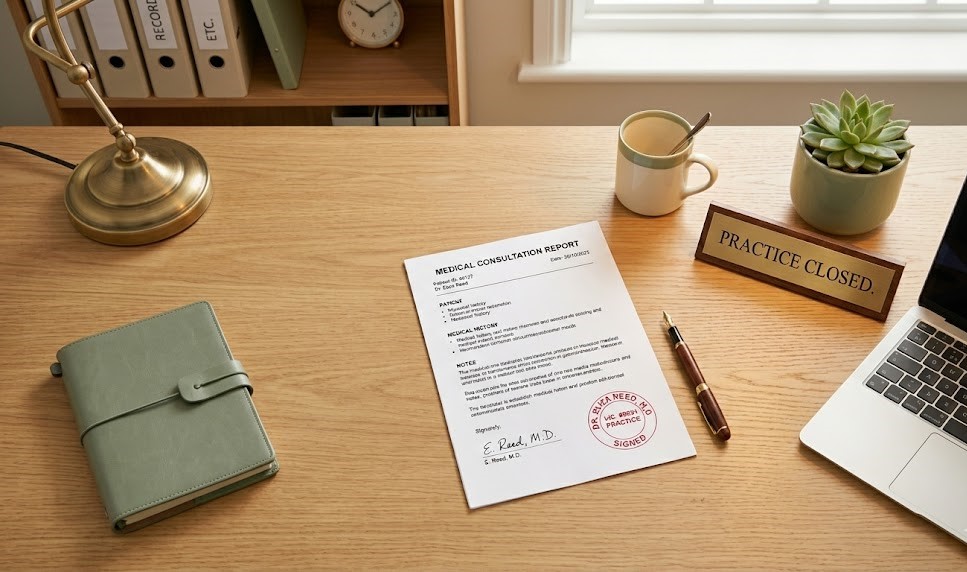
If you need to use a UK medical report overseas, obtaining an apostille is often a crucial step. Foreign authorities regularly request medical documentation for immigration applications, visa processing, overseas employment, residency permits, insurance claims, adoption procedures, and medical treatment abroad. To ensure that these documents are accepted internationally, they often need official authentication through the UK apostille process.
However, many people encounter a unique challenge. They possess a private medical report issued years ago by a clinic that has since closed, merged with another healthcare provider, or ceased trading altogether. Naturally, this raises an important question: can you still obtain an apostille for a medical report if the clinic that issued it no longer exists?
The answer is often yes, but the process may require additional steps depending on the type of report, who signed it, and whether the signature can still be authenticated. Understanding how the apostille UK process works can save significant time, prevent delays, and help ensure your documents are accepted abroad.
If you need professional assistance with document legalisation UK services, visit our dedicated Apostille Service page:
Watch: Quick Guide to Apostilling a Medical Report from a Closed Clinic
Before reading the full guide, you may find our short video helpful:
This short explains the key considerations when seeking an apostille for a private medical report issued by a clinic that has now closed.
What Is an Apostille?
An apostille is an official certificate issued by the Foreign, Commonwealth & Development Office (FCDO) in the United Kingdom.
The purpose of an apostille is to confirm that a document is genuine and that the signature, seal, or stamp appearing on the document is authentic.
The apostille verifies:
- The authenticity of the signature
- The authority of the person who signed the document
- The validity of any official seal or stamp
Importantly, the apostille does not verify the contents of the document itself. Instead, it confirms that the document has been properly executed by a recognised individual or authority.
The apostille system operates under the Hague Convention, allowing documents from one member country to be recognised in another without further legalisation in many cases.
When Is an Apostille Required?
You may require an apostille when presenting UK documents to foreign authorities.
Common situations include:
- Immigration applications
- Residency permits
- Overseas employment
- International education
- Marriage abroad
- Foreign property transactions
- Adoption proceedings
- Medical treatment overseas
- Visa applications
- Insurance claims abroad
Medical reports are frequently requested as supporting evidence during these processes.
Can a Private Medical Report Be Apostilled?
Yes, many private medical reports can be apostilled.
Examples include:
- Specialist consultant reports
- Psychiatric assessments
- Medical fitness reports
- Occupational health reports
- Disability assessments
- Private healthcare evaluations
- Medical treatment summaries
- Surgical reports
However, private medical reports differ from government-issued documents because the FCDO may not always be able to directly verify the doctor’s signature.
This becomes especially relevant when the issuing clinic has closed.
Does a Closed Clinic Prevent an Apostille?
Not necessarily.
A common misconception is that once a clinic closes, any documents issued by that clinic automatically become unusable for apostille purposes.
In reality, the key issue is not whether the clinic still operates but whether the signature on the document can be authenticated.
The FCDO verifies signatures rather than businesses.
Therefore, if the doctor’s signature can still be authenticated or the document can be properly certified by a solicitor, an apostille may still be possible.
Why Closed Clinics Create Additional Challenges
When a clinic closes, several complications may arise.
Difficulty Verifying the Original Signature
The FCDO maintains specimen signatures for many public officials and recognised professionals.
If the signature on a private medical report cannot be matched against available records, direct apostille may not be possible.
Records May Be Unavailable
Some clinics retain records through successor organisations, while others cease operations entirely.
Obtaining replacement reports may become more difficult.
Contacting the Original Doctor May Be Impossible
The doctor may have retired, relocated, or joined another practice.
This can complicate efforts to verify the report.
Foreign Authorities May Request Additional Evidence
Some overseas organisations may seek confirmation regarding the authenticity of older medical reports.
How Can a Medical Report from a Closed Clinic Be Apostilled?
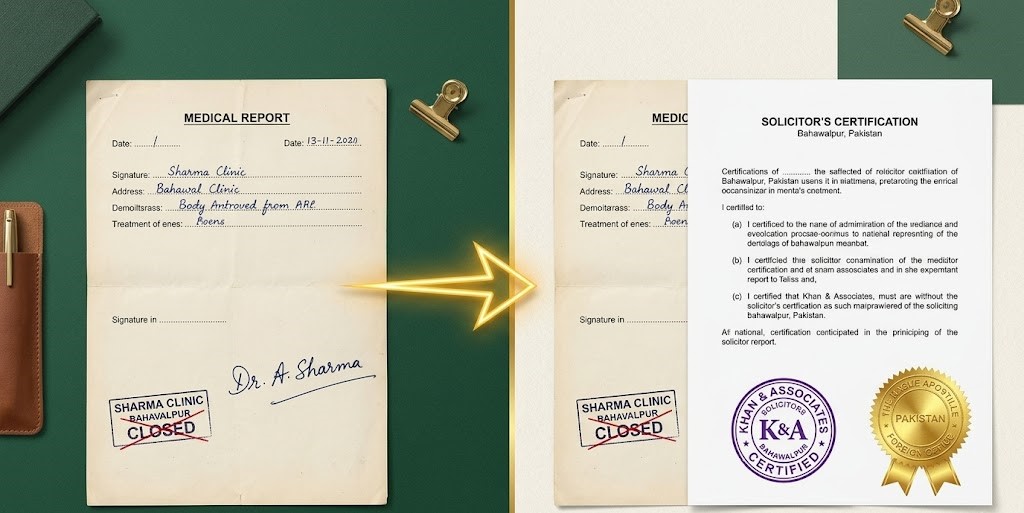
The most common solution involves solicitor certification.
Step 1: Present the Original Medical Report
A solicitor reviews the original document.
Step 2: Certification
The solicitor certifies a copy as a true copy of the original document.
Step 3: Apostille Application
The certified copy is submitted to the FCDO.
Step 4: FCDO Verification
The FCDO verifies the solicitor’s signature rather than the original doctor’s signature.
Step 5: Apostille Issued
An apostille certificate is attached to the solicitor-certified copy.
This route often provides a practical solution when direct verification of the original medical report is difficult.
What If the Doctor Has Retired or Left the Profession?
Many applicants worry when the doctor who signed the report has retired.
Fortunately, retirement does not automatically invalidate the document.
The report remains a genuine historical document.
However, obtaining direct authentication of the doctor’s signature may be more challenging.
In such situations, solicitor certification is often the preferred route for obtaining an apostille.
Can I Obtain a Replacement Medical Report?
Possibly.
Depending on the circumstances, medical records may still exist.
Potential sources include:
- Successor clinics
- NHS records departments
- Private healthcare groups
- Medical archives
- The individual doctor
A replacement report issued on current letterhead may simplify the apostille process.
However, this is not always possible, especially if the report was created many years ago.
Which Medical Documents Commonly Require Apostille?
Many healthcare-related documents may require apostille documents UK services.
Examples include:
Medical Certificates
Frequently used for immigration and visa purposes.
Specialist Reports
Often required for residency or healthcare applications.
Disability Assessments
Used for legal and administrative purposes overseas.
Occupational Health Reports
Commonly requested by foreign employers.
Vaccination Records
Required by educational institutions and immigration authorities.
Fit-to-Fly Certificates
Necessary for certain international travel arrangements.
Psychological Assessments
Often required in adoption and immigration cases.
Other Documents Commonly Requiring Apostille
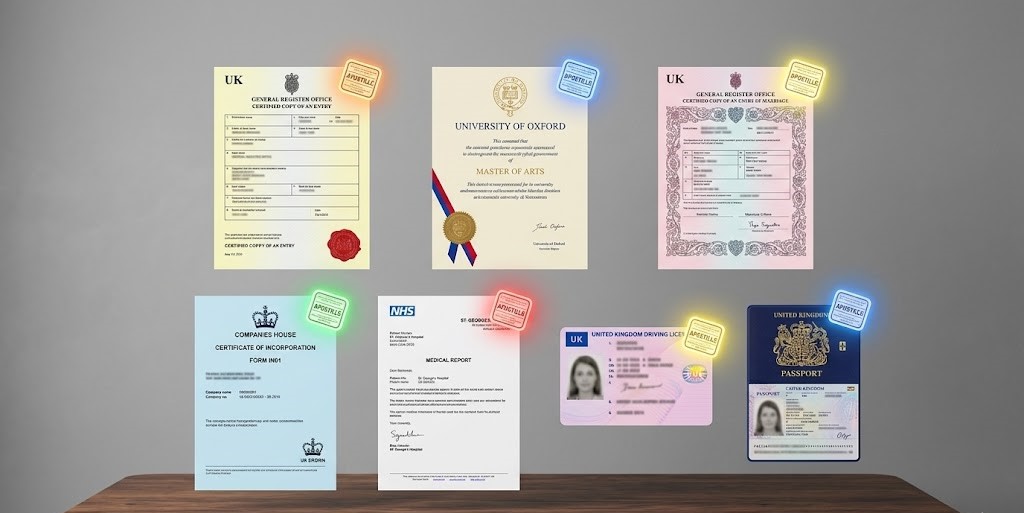
In addition to medical reports, many other documents require apostille UK processing.
These include:
Personal Documents
- Birth certificates
- Marriage certificates
- Death certificates
- Adoption certificates
- Divorce decrees
Educational Documents
- Degree certificates
- Diplomas
- Academic transcripts
- Professional qualifications
Business Documents
- Certificates of incorporation
- Articles of association
- Contracts
- Powers of attorney
- Board resolutions
The process varies depending on the document type and destination country.
How Does the UK Apostille Process Work?
The apostille process is generally straightforward.
Step 1: Document Assessment
Determine whether the document is suitable for apostille.
Step 2: Certification (If Required)
Certain documents need solicitor certification before submission.
Step 3: FCDO Submission
The document is sent to the Foreign, Commonwealth & Development Office.
Step 4: Verification
The FCDO verifies the signature or certification.
Step 5: Apostille Issued
An apostille certificate is attached.
Step 6: Return Delivery
The document is returned for overseas use.
Typical Processing Times
Processing times can vary.
Factors include:
- FCDO workload
- Type of document
- Certification requirements
- Delivery method selected
Typical timelines include:
- Standard processing: several working days
- Priority services: often faster
Using a professional apostille service UK provider can help minimise delays and avoid errors.
Common Mistakes to Avoid
Assuming the Clinic Must Still Be Open
The closure of the clinic does not automatically prevent apostille.
Sending Documents Without Checking Requirements
Different documents require different approaches.
Ignoring Certification Needs
Many private documents require solicitor certification.
Using Poor Quality Copies
Foreign authorities often reject unclear copies.
Waiting Until the Last Minute
International applications frequently have strict deadlines.
Not Checking Destination Country Requirements
Some countries require additional embassy legalisation beyond the FCDO apostille.
Why Professional Assistance Matters
Medical documents often present unique authentication challenges.
Professional document legalisation UK services can:
- Review document suitability
- Recommend the correct certification route
- Arrange solicitor certification
- Manage FCDO submissions
- Prevent avoidable delays
- Handle complex cases involving closed clinics
This expertise can be especially valuable when documents are urgently needed for overseas use.
Frequently Asked Questions
Can I apostille a private medical report from a clinic that no longer exists?
Yes, in many cases you can. The document may need solicitor certification before being submitted for apostille.
Does the clinic need to be operating for the apostille to be issued?
No. The key issue is whether the document can be authenticated, not whether the clinic remains open.
What if the doctor who signed the report has retired?
Retirement does not automatically invalidate the document. Alternative authentication routes may still be available.
Can a solicitor certify a copy of my medical report?
Yes. A solicitor can often certify a copy as a true copy of the original document.
Will foreign authorities accept an apostilled medical report from a closed clinic?
In many cases, yes. Acceptance ultimately depends on the requirements of the receiving authority.
How long does the apostille process take?
Processing times vary, but many applications are completed within several working days depending on the service selected.
Conclusion
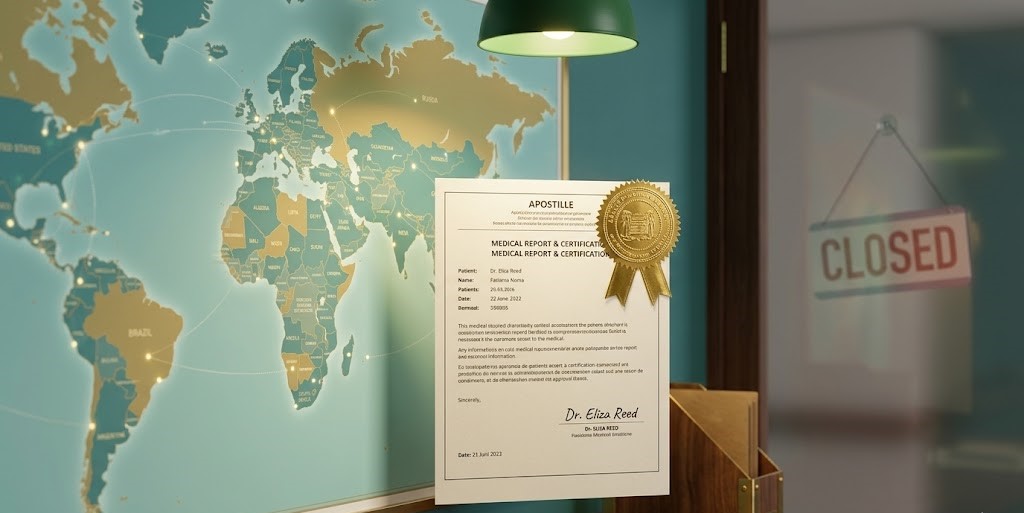
If your private medical report was issued by a clinic that has now closed, obtaining an apostille is often still possible. The closure of the clinic does not automatically make the document invalid. What matters most is whether the document can be properly authenticated through the correct legalisation process.
In many situations, solicitor certification provides an effective solution, allowing the FCDO apostille to be applied even when direct verification of the original doctor’s signature is difficult. Understanding the available options, gathering the necessary documentation, and seeking expert guidance can significantly improve the chances of a successful outcome.
Whether you need a medical report apostilled for immigration, overseas employment, residency, healthcare, education, or legal purposes abroad, professional support can help ensure the process runs smoothly.
For fast, reliable, and professional apostille documents UK services, contact 2eApostille today. Our experienced team can assess your documents, advise on certification requirements, and manage the entire apostille UK process on your behalf.
Visit https://2eapostille.co.uk/apostille-service-uk/ to get started with your apostille service UK requirements today.