
Can I get a refund if my document is rejected?
Introduction
Applying for an apostille can already feel stressful, especially when important deadlines are involved. Whether you are preparing documents for immigration, overseas employment, marriage abroad, university admission, or international business, the last thing you want is for your documents to be rejected during the apostille process.
One of the most common concerns people have is: “Can I get a refund if my document is rejected?”
The answer depends on why the document was rejected, how far the application progressed, and the policy of the apostille service UK provider you used. In some situations, partial refunds may be available, while in others the government fee or processing charges may still apply.
Understanding why documents are rejected and how refunds typically work can help you avoid unnecessary delays and costs. In this guide, we explain the apostille process in the UK, common rejection reasons, refund situations, and practical steps you can take to minimise the risk of rejection.
If you are unfamiliar with apostille documents UK procedures, this article will help you understand the process clearly and confidently.
What Is an Apostille?
An apostille is an official certificate issued by the Foreign, Commonwealth & Development Office (FCDO) in the UK. It confirms that a UK document is genuine and can be recognised in another country that is part of the Hague Apostille Convention.
The apostille verifies:
- The authenticity of the signature
- The authority of the person signing the document
- The official seal or stamp
The apostille itself does not confirm that the content of the document is accurate. Instead, it confirms that the document was properly issued or certified in the UK.
This process is often referred to as:
- Apostille UK
- FCDO apostille
- Document legalisation UK
- Apostille service UK
Why Are Apostilles Required?
Many foreign authorities require UK documents to be legalised before they can be accepted overseas.
An apostille may be required for:
- Immigration applications
- Visa processing
- Overseas employment
- International marriages
- Residency permits
- Studying abroad
- Business registration overseas
- Property transactions abroad
Without proper document legalisation UK procedures, foreign authorities may reject your paperwork.
Which Documents Commonly Require Apostille?
Many different types of apostille documents UK applications are submitted every day.
Personal Documents
- Birth certificates
- Marriage certificates
- Death certificates
- Divorce decrees
- Adoption certificates
- Police certificates
- DBS checks
Educational Documents
- Degree certificates
- Diplomas
- Academic transcripts
- Professional qualifications
Business Documents
- Certificates of incorporation
- Powers of attorney
- Contracts
- Board resolutions
- Export paperwork
Different documents have different requirements, which is why some are more likely to be rejected than others.
What Does It Mean if a Document Is Rejected?
A rejected apostille application means the FCDO was unable to issue the apostille certificate for the submitted document.
This can happen for several reasons, including:
- Incorrect document type
- Missing certification
- Unclear signatures
- Damaged documents
- Unverified signatures
- Incorrect notarisation
A rejection does not always mean the process is over. In many cases, the issue can be corrected and the document resubmitted.
Common Reasons Documents Are Rejected
Understanding the most common rejection reasons can help you avoid problems before submission.
The Document Was Not Properly Certified
Some documents require solicitor certification or notarisation before the FCDO apostille can be issued.
For example:
- Degree certificates often require certification
- Passport copies usually need solicitor certification
- Business documents may require notarisation
If certification is missing, the application may be rejected.
The Signature Cannot Be Verified
The FCDO must be able to verify the signature or seal on the document.
Problems occur if:
- The signatory is not registered
- The signature differs from official records
- The stamp is unclear
Photocopies Were Submitted Incorrectly
Plain photocopies are usually not accepted unless they have been properly certified.
Documents Are Damaged
Torn, heavily marked, or altered documents may not be accepted for apostille processing.
Incorrect Document Version
Some authorities require recently issued certificates rather than older originals.
For example:
- Some countries require newly issued birth certificates
- Certain embassies reject laminated documents
Missing Information
Applications missing payment details, return addresses, or instructions may face delays or rejection.
Can You Get a Refund if Your Document Is Rejected?

This depends on several factors.
Government Fees Are Often Non-Refundable
If the FCDO has already processed the application, government fees may not be refundable, even if the document is rejected.
This is because administrative work has already been carried out.
Service Fees May Depend on the Provider
Different apostille service UK providers have different refund policies.
Some companies may:
- Refund unused courier fees
- Refund unprocessed service fees
- Offer reduced resubmission costs
- Help correct documents free of charge
Others may charge for work already completed.
Always check the provider’s refund policy before submitting documents.
When Might a Refund Be Possible?
Refunds are more likely in situations where:
- The application was not submitted yet
- The error was identified early
- Duplicate payments were made
- A service could not be provided
Some providers may also offer goodwill refunds or partial refunds depending on the circumstances.
When Refunds Are Less Likely
Refunds are usually less likely when:
- The FCDO already processed the application
- Courier services were already used
- Third-party certification work was completed
- Embassy legalisation had already started
This is because real processing costs were already incurred.
How Professional Apostille Services Help Prevent Rejections
One major advantage of using a professional apostille service UK provider is pre-checking documents before submission.
Professional services can:
- Verify document suitability
- Confirm certification requirements
- Check signatures and stamps
- Identify missing information
- Prevent avoidable rejection
This reduces the risk of wasted fees and delays.
You can learn more about professional UK apostille services here:
The UK Apostille Process Explained
Understanding the apostille process helps explain where problems can happen.
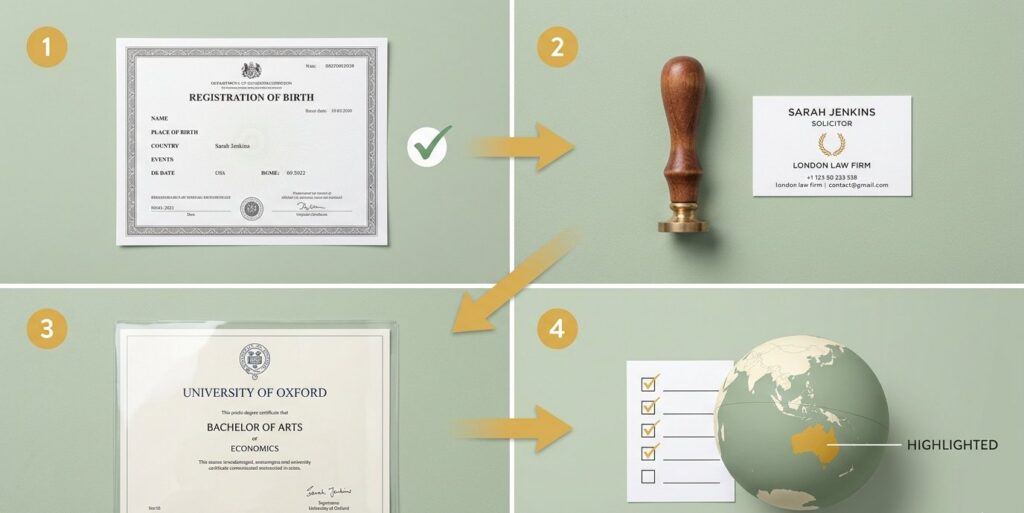
Step 1: Prepare the Documents
Gather the documents you need for overseas use.
Check whether they are:
- Original documents
- Certified copies
- Digitally signed documents
- Notarised documents
Step 2: Certification or Notarisation
Some documents require additional certification before apostille.
Examples include:
- Solicitor certification
- Notary public authentication
- Registrar verification
Step 3: Submit to the FCDO
The documents are submitted for FCDO apostille processing.
Step 4: Verification Process
The FCDO verifies:
- Signatures
- Stamps
- Official status
- Certification validity
If verification fails, the document may be rejected.
Step 5: Apostille Issued
If approved, the apostille certificate is attached.
Step 6: Return Delivery
Documents are returned by courier or post.
How Long Does Apostille Processing Take?
Timelines vary depending on:
- Document type
- Certification requirements
- Service level
- Delivery method
- Embassy legalisation requirements
Standard Processing
Usually takes several working days plus postage time.
Urgent Processing
Fast-track services may be available for certain documents.
Embassy Legalisation
Countries outside the Hague Convention may require additional embassy legalisation, increasing processing time.
What Happens After Rejection?
A rejection is not always permanent.
In many cases, you can:
- Correct the issue
- Obtain proper certification
- Replace damaged documents
- Submit updated copies
- Resubmit the application
Professional guidance can make the correction process much easier.
How to Reduce the Risk of Rejection
There are several important ways to minimise rejection risks.
Use Original Documents Where Required
Some documents must be originals rather than copies.
Obtain Correct Certification
Always check whether solicitor or notary certification is needed.
Avoid Damaged Documents
Keep documents clean, unfolded, and protected.
Double-Check Country Requirements
Different countries have different legalisation rules.
Use a Trusted Apostille Service
Professional checking can prevent many common errors.
Are Rejections Common?
Most apostille applications are successful when documents are properly prepared.
However, problems can occur more frequently with:
- Academic certificates
- Business documents
- Certified copies
- Powers of attorney
- Older documents
This is why expert checking is valuable.
Do Different Countries Have Different Rules?
Yes.
Some countries have stricter requirements regarding:
- Translation
- Certification
- Document age
- Embassy legalisation
For example:
- UAE usually requires embassy legalisation after apostille
- Some EU countries may require certified translations
- Certain embassies request specific formats
Always confirm destination-country requirements before applying.
What If the Rejection Was the Service Provider’s Fault?
If the rejection occurred because of an error made by the apostille company itself, some providers may:
- Resubmit documents free of charge
- Refund service fees
- Cover additional processing costs
This varies between companies, so choosing a reliable provider matters.
Questions to Ask Before Choosing an Apostille Service
Before using an apostille UK provider, consider asking:
- What happens if documents are rejected?
- Are refunds available?
- Are document checks included?
- Is tracking provided?
- Do they offer urgent processing?
- Can they help with embassy legalisation?
Clear answers help avoid misunderstandings later.
Why Refund Policies Matter
Transparent refund policies are important because apostille services involve:
- Government fees
- Courier charges
- Certification fees
- Administrative work
Knowing which fees are refundable helps customers understand the financial risks before submitting important documents.
Frequently Asked Questions
Can I get a full refund if my document is rejected?
Not always. Government processing fees are often non-refundable once the application has been processed.
Why would the FCDO reject a document?
Common reasons include incorrect certification, unverifiable signatures, damaged documents, or missing information.
Can I resubmit rejected documents?
Yes, in many cases the issue can be corrected and the document resubmitted.
Are apostille service fees refundable?
This depends on the provider’s refund policy and how much work has already been completed.
How can I avoid rejection?
Use properly certified documents, check country requirements carefully, and consider using a professional apostille service UK provider.
Can professional services check documents before submission?
Yes. Many providers offer document pre-checking to reduce the risk of rejection.
Conclusion
Having a document rejected during the apostille process can feel frustrating, especially when international deadlines are involved. However, most rejections happen because of avoidable issues such as incorrect certification, missing information, or unsuitable document copies.
Whether you can receive a refund depends on the stage of processing, the type of fees paid, and the policy of the apostille service UK provider handling your application. In many cases, government fees are non-refundable once processing begins, but some service providers may offer partial refunds or assistance with resubmission.
If you need professional help with apostille UK services, FCDO apostille processing, solicitor certification, or embassy legalisation, visit:
2eApostille UK Apostille Services
2eApostille offers reliable and professional support for individuals and businesses needing secure, accurate, and efficient apostille services in the UK.