
Can photocopies of documents be apostilled?
Introduction
When dealing with international paperwork, one of the most common questions people ask is: Can photocopies of documents be apostilled? It sounds simple, but misunderstanding this can lead to delays, rejections, and even missed deadlines for visas, jobs, or legal processes abroad.
If you are preparing documents for use overseas, understanding how apostille services work in the UK is essential. Whether you are submitting personal, educational, or business documents, knowing when photocopies are acceptable—and when they are not—can save you time and stress.
In this guide, we explain everything in clear, simple terms so you can confidently navigate the apostille UK process.
What Is an Apostille and Why Is It Important?
An apostille is an official certificate issued by the UK government that verifies the authenticity of a document. It confirms that a signature, seal, or stamp on a document is genuine and recognised by foreign authorities.
In the UK, apostilles are issued by the Foreign, Commonwealth & Development Office (FCDO). This is often referred to as an FCDO apostille.
You typically need an apostille when:
- Moving abroad for work or study
- Getting married overseas
- Opening a business in another country
- Handling legal matters internationally
Without an apostille, your documents may not be accepted outside the UK.
Can Photocopies Be Apostilled in the UK?
The Short Answer: Yes—but with conditions
Photocopies can be apostilled, but not on their own. The FCDO will not apostille a plain photocopy unless it has been properly certified.
What Does “Certified Copy” Mean?
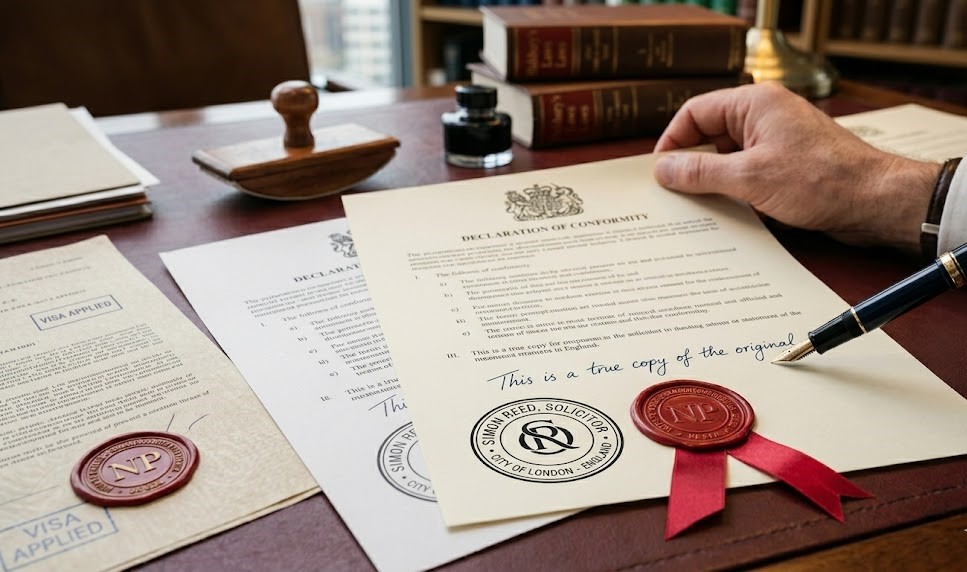
A certified copy is a photocopy of an original document that has been officially verified as a true copy. This is usually done by a UK solicitor or notary public.
The certification typically includes:
- A statement such as “This is a true copy of the original”
- The solicitor’s signature
- The solicitor’s stamp or seal
- The date of certification
Once certified, the document becomes eligible for an apostille service UK.
When Can You Use a Certified Copy Instead of the Original?
In many cases, you do not need to submit the original document. A certified copy is often accepted and even preferred.
Common Examples:
Personal Documents
- Passports
- Driving licences
- ID cards
Educational Documents
- Degree certificates
- Diplomas
- Transcripts
Business Documents
- Contracts
- Company certificates
- Financial records
For these types of apostille documents UK, a certified copy is usually sufficient.
When Are Original Documents Required?
While certified copies are widely accepted, there are situations where original documents are necessary.
Examples:
- Birth certificates
- Marriage certificates
- Death certificates
- Court-issued documents
These are considered official public documents, and the FCDO prefers originals issued by the relevant authority.
Submitting a photocopy—even if certified—may result in rejection.
Step-by-Step Process: Apostilling a Photocopy in the UK
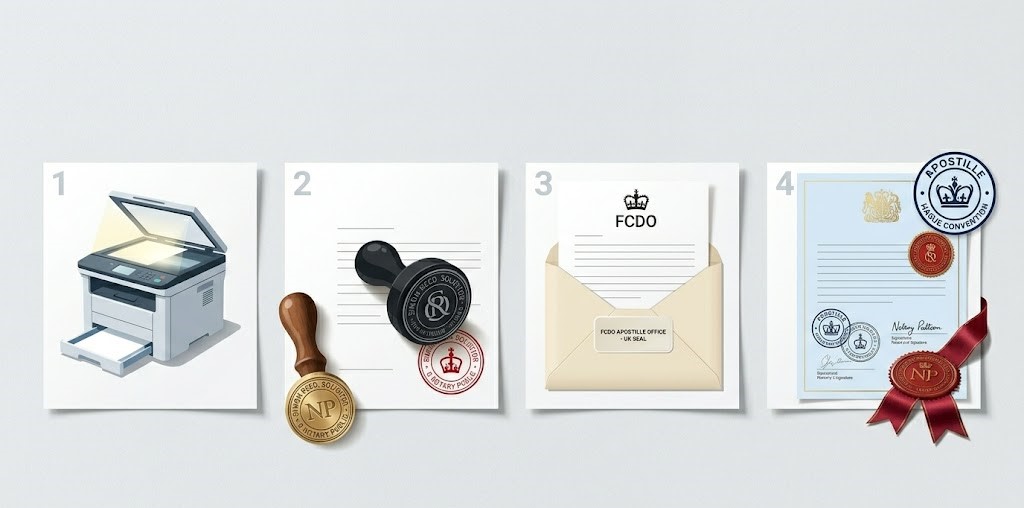
Understanding the process helps avoid mistakes and delays. Here’s how to apostille a photocopy correctly:
Step 1: Make a Clear Photocopy
Ensure the copy is:
- Complete
- Legible
- Not cropped or altered
Step 2: Get the Copy Certified
Take the photocopy to:
- A UK solicitor
- A notary public
They will verify it against the original and certify it.
Step 3: Submit to the FCDO
Send the certified document to the FCDO for apostille processing.
Step 4: Receive the Apostille
Once approved, the apostille certificate is attached to the document.
Timelines for Apostille Services in the UK
Processing times can vary depending on how you apply.
Standard Service
- Typically 2 to 10 working days
Urgent / Same-Day Service
- Available through professional providers
- Often completed within 24 hours
Using a professional apostille service UK can significantly speed up the process and reduce the risk of errors.
Typical Requirements for Apostilling Photocopies
Before submitting your documents, ensure you meet these requirements:
- The copy must be certified by a recognised professional
- The certification must include signature and stamp
- The document must be in English (or officially translated)
- The document must not be damaged or altered
Failure to meet these requirements can result in rejection.
Common Mistakes to Avoid
Many applications are delayed due to simple but avoidable mistakes.
1. Sending Uncertified Photocopies
The FCDO will reject plain photocopies without certification.
2. Using an Unauthorised Certifier
Only qualified solicitors or notaries should certify documents.
3. Poor Quality Copies
Blurry or incomplete copies may not be accepted.
4. Submitting the Wrong Type of Document
Some documents must be originals, not copies.
5. Ignoring Country-Specific Requirements
Different countries may have different rules regarding document legalisation UK.
Do All Countries Accept Certified Copies?
Not always. While many countries accept apostilled certified copies, some require original documents.
For example:
- Some EU countries accept certified copies
- Others may insist on originals for official records
Always check the requirements of the country where you will use the document.
Why Use a Professional Apostille Service in the UK?
Handling apostille applications yourself is possible, but it can be confusing—especially when dealing with certified copies.
A professional service can:
- Check your documents before submission
- Advise whether originals or copies are needed
- Arrange certification if required
- Speed up processing times
If you want a smooth and stress-free experience, consider using a trusted provider like
https://2eapostille.co.uk/apostille-service-uk/
Apostille vs Legalisation: Does It Affect Photocopies?
Yes, it can.
Apostille (Hague Convention Countries)
- Certified copies are often accepted
- Process is simpler
Legalisation (Non-Hague Countries)
- Additional embassy attestation may be required
- Originals are more commonly requested
Understanding this difference is crucial when preparing apostille documents UK.
Practical Tips for Getting It Right
- Always check whether your document can be copied
- Use a qualified solicitor for certification
- Confirm requirements with the destination country
- Consider using a professional apostille UK service
- Start early to avoid delays
Frequently Asked Questions (FAQs)
1. Can I apostille a scanned copy of a document?
No, scanned or digital copies must first be printed and certified before they can be apostilled.
2. Who can certify a photocopy in the UK?
A UK solicitor or notary public can certify documents for apostille purposes.
3. Is it better to use original documents?
It depends on the document type. Official records usually require originals, while others can use certified copies.
4. How long does it take to apostille a certified copy?
Standard processing takes a few days, but urgent services can complete it within 24 hours.
5. Will all countries accept apostilled photocopies?
No, some countries require original documents. Always check specific requirements.
6. Can I certify my own documents?
No, self-certification is not accepted for FCDO apostille purposes.
Conclusion
So, can photocopies of documents be apostilled? Yes—but only if they are properly certified. Understanding this distinction is essential to avoid delays, rejections, and unnecessary stress.
Whether you are dealing with personal, educational, or business paperwork, getting the process right the first time is key. If you are unsure, professional guidance can make all the difference.
For fast, reliable, and expert support, use a trusted provider like
https://2eapostille.co.uk/apostille-service-uk/
Let 2eApostille handle your apostille service UK needs so you can focus on what matters most—your plans abroad.