
Can powers of attorney be apostilled?
Introduction
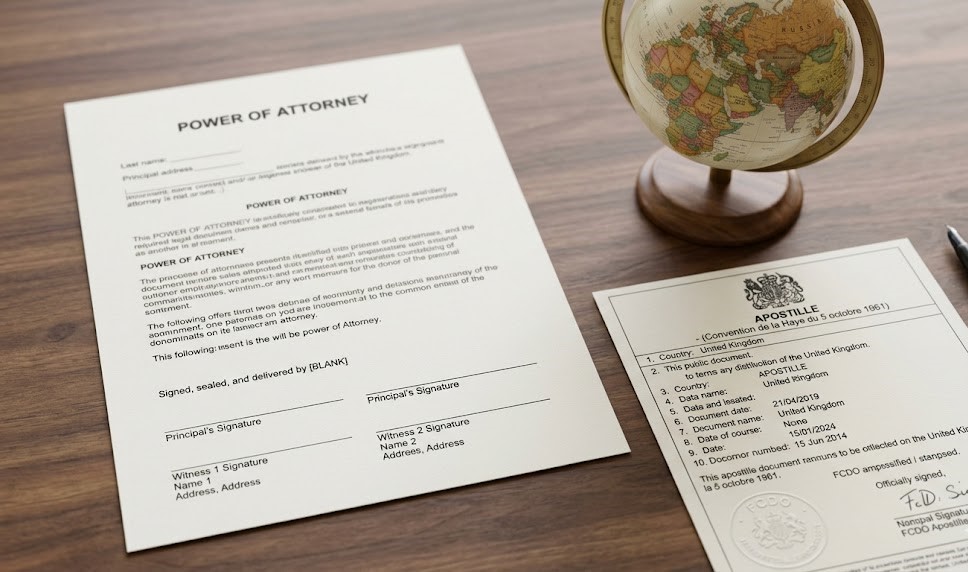
When dealing with legal matters abroad—such as managing property, handling finances, or representing someone in official matters—you may be asked to provide a Power of Attorney (POA). However, simply having the document is not enough. Foreign authorities often require it to be officially verified before they accept it.
This is where apostille services become essential. A common question people ask is: Can powers of attorney be apostilled in the UK? The answer is yes—but only if the document meets specific requirements.
In this detailed guide, we explain everything you need to know about apostilling a Power of Attorney in the UK, including the process, requirements, timelines, and common mistakes to avoid.
What Is an Apostille and Why Is It Required?
An apostille is an official certificate issued by the UK government that confirms a document is genuine. It verifies the authenticity of a signature, stamp, or seal on a document so that it can be accepted abroad.
In the UK, apostilles are issued by the Foreign, Commonwealth & Development Office (FCDO). This is commonly referred to as an FCDO apostille.
You typically need an apostille when:
- Using UK documents in another country
- Appointing someone to act on your behalf abroad
- Handling legal, financial, or property matters internationally
Without an apostille, your documents may not be recognised by foreign authorities.
Can Powers of Attorney Be Apostilled in the UK?
Yes—But They Must Be Properly Executed
Powers of Attorney can absolutely be apostilled in the UK. However, unlike some official documents (such as birth certificates), a POA is considered a private legal document. This means it must meet additional requirements before it can be apostilled.
Key Requirement: Certification by a Solicitor or Notary
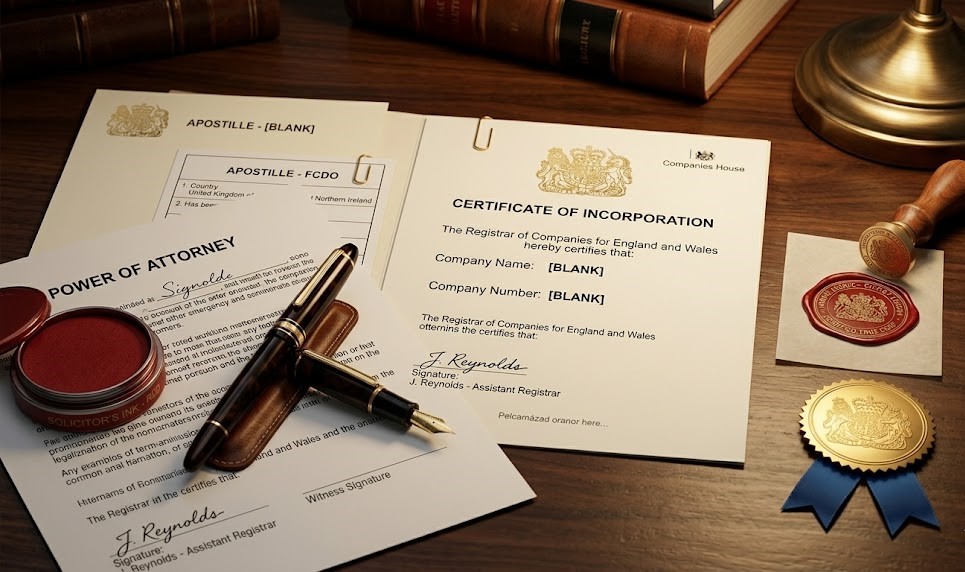
Before submitting a Power of Attorney for an apostille UK, it must be properly signed and witnessed.
Typically, This Means:
- The document must be signed by the person granting the power
- A UK solicitor or notary public must witness the signature
- The solicitor/notary must add their signature, stamp, and details
In many cases, a notary public is preferred—especially for international use—because their signature is more widely recognised.
Without proper certification, the FCDO apostille cannot be issued.
When Do You Need to Apostille a Power of Attorney?
Apostilled POAs are commonly required in situations such as:
1. Property Transactions Abroad
If you are buying, selling, or managing property in another country, a POA allows someone to act on your behalf.
2. Financial Matters
Banks or financial institutions overseas may require an apostilled POA.
3. Business Transactions
You may need to authorise someone to sign documents or manage operations internationally.
4. Legal Representation
If you cannot attend legal proceedings abroad, a POA enables someone to represent you.
Step-by-Step Process: Apostilling a Power of Attorney in the UK
Understanding the process ensures everything is done correctly the first time.
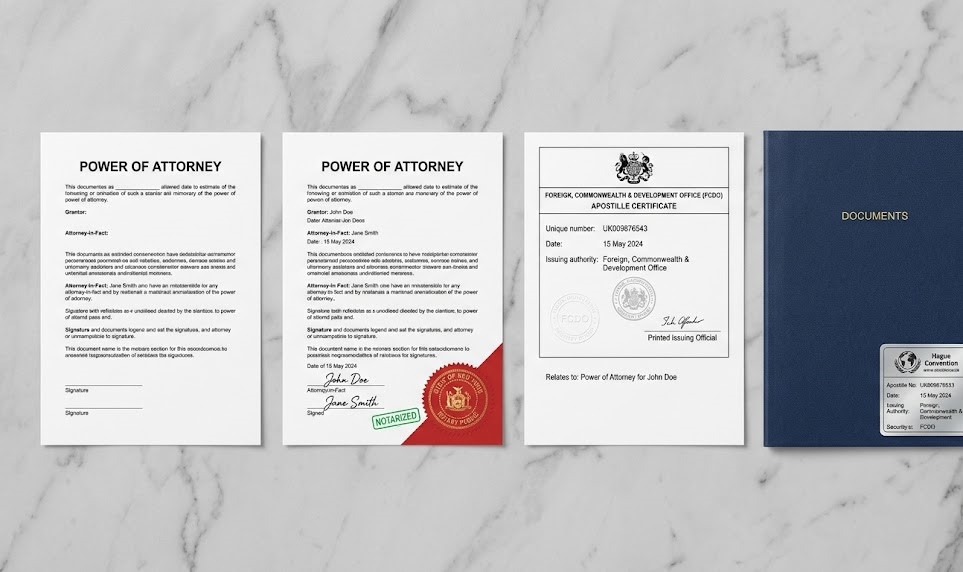
Step 1: Draft the Power of Attorney
Prepare your POA document clearly, including:
- Names of all parties
- Scope of authority
- Duration of the agreement
Step 2: Sign in Front of a Solicitor or Notary
The document must be:
- Signed by you (the donor)
- Witnessed by a solicitor or notary public
Step 3: Certification
The solicitor or notary will:
- Verify your identity
- Confirm the document is properly executed
- Apply their signature and official stamp
Step 4: Submit for Apostille
Send the certified document to the FCDO for document legalisation UK.
Step 5: Receive the Apostille
The apostille certificate is attached to your document, making it valid for use abroad.
How Long Does the Apostille Process Take?
Standard Service
- Typically 2 to 10 working days
Urgent / Same-Day Service
- Available via professional providers
- Often completed within 24 hours
If you are dealing with urgent legal matters, using a professional apostille service UK can save valuable time.
Do Powers of Attorney Require Additional Legalisation?
This depends on the destination country.
Hague Convention Countries
- Only an apostille is required
Non-Hague Countries
- Additional embassy or consular legalisation may be necessary
This is an important part of document legalisation UK, especially for legal documents like POAs.
Other Documents Commonly Apostilled in the UK
While Powers of Attorney are frequently apostilled, many other documents also require this process:
Personal Documents
- Birth certificates
- Marriage certificates
- Adoption certificates
Educational Documents
- Degree certificates
- Diplomas
- Transcripts
Business Documents
- Certificates of incorporation
- Contracts
- Company agreements
All these fall under apostille documents UK and may require verification depending on your needs.
Common Mistakes to Avoid
Mistakes in the apostille process can lead to delays or rejection.
1. Not Using a Solicitor or Notary
A POA must be properly witnessed and certified.
2. Signing the Document Incorrectly
Signing without a witness can invalidate the document.
3. Using Incomplete or Incorrect Information
Errors in names or details can cause rejection.
4. Ignoring Country-Specific Requirements
Different countries may have different rules for accepting POAs.
5. Delaying the Process
Legal matters are often time-sensitive—start early.
Why Use a Professional Apostille Service in the UK?
While it is possible to handle the process yourself, many people choose a professional service for convenience and reliability.
Benefits Include:
- Expert guidance on document preparation
- Assistance with solicitor or notary certification
- Faster processing times
- Reduced risk of rejection
- Support with additional embassy legalisation
For a smooth and reliable experience, you can use:
https://2eapostille.co.uk/apostille-service-uk/
Practical Tips for Apostilling a Power of Attorney
- Always sign your POA in front of a qualified professional
- Use a notary public for international use where possible
- Double-check all details before submission
- Confirm requirements with the destination country
- Keep copies of your documents for records
Frequently Asked Questions (FAQs)
1. Can I apostille a Power of Attorney without a solicitor?
No, the document must be witnessed and certified by a solicitor or notary.
2. Is a notary public better than a solicitor for POA?
For international use, a notary public is often preferred as their certification is widely recognised.
3. How long does it take to apostille a POA?
Standard processing takes a few days, while urgent services can complete it within 24 hours.
4. Do I need embassy legalisation after an apostille?
Only if the destination country is not part of the Hague Convention.
5. Can I prepare the POA myself?
Yes, but it must still be properly signed and certified.
6. Is an apostille valid forever?
The apostille itself does not expire, but some authorities may require recently issued documents.
Conclusion
Powers of Attorney can absolutely be apostilled in the UK—but only when properly signed, witnessed, and certified. Because these are legal documents, accuracy and compliance are critical.
Whether you are handling property, business, or legal matters abroad, ensuring your POA is correctly legalised is essential for smooth international transactions.
For fast, secure, and expert assistance, use a trusted provider like:
https://2eapostille.co.uk/apostille-service-uk/
Let 2eApostille handle your apostille service UK needs so you can manage your international affairs with confidence and peace of mind.