
Can Wills or Probate Documents Be Apostilled?
Introduction
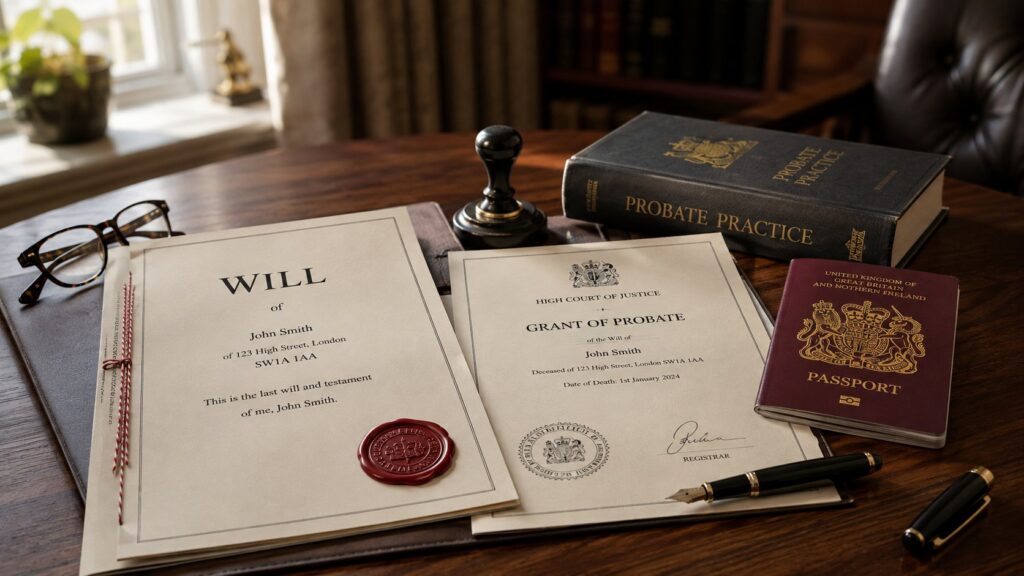
When a person dies and their estate involves property, bank accounts, investments or beneficiaries in another country, UK legal documents may need to be presented to a foreign authority. This can include wills, grants of probate, letters of administration and other documents connected with estate administration.
A common question is: Can wills or probate documents be apostilled?
In many cases, UK wills and probate-related documents can be prepared for international use and may be eligible for an FCDO apostille. However, the exact process depends on the document, how it was issued or certified, and the requirements of the country where it will be used.
An apostille is an official form of authentication used for documents intended for countries that recognise the Hague Apostille Convention. It helps the receiving authority verify the authenticity of the relevant signature, seal or certification on a UK document.
For anyone unfamiliar with apostille service UK procedures, the important point is that you should establish the receiving country’s requirements before sending an original will or probate document for legalisation.
If you need professional help with an apostille service UK, you can find more information about 2eApostille’s service here:
You can also watch this short video for a simple explanation of the apostille process:
What Is an Apostille?
An apostille is an official certificate attached to a public document to authenticate the signature, seal or stamp appearing on that document.
In the UK, an FCDO apostille is issued by the Foreign, Commonwealth & Development Office’s Legalisation Office.
An apostille can be required when a UK document needs to be used officially in another country that recognises the Hague Apostille Convention.
The apostille does not prove that the information inside a document is true. Instead, it authenticates the relevant signature, seal or stamp so that the overseas authority can have greater confidence in the document’s origin.
For example, if an overseas authority needs to see a UK probate document, it may ask for that document to be apostilled before accepting it.
What Is a Will?
A will is a legal document in which a person sets out their wishes concerning their estate after death.
A will can contain instructions relating to:
- Property
- Money and investments
- Personal possessions
- Beneficiaries
- Executors
- Guardianship arrangements
- Other aspects of estate administration
A will may become relevant internationally if the deceased owned assets in another country or if beneficiaries or executors are based overseas.
For example, an overseas bank or property authority may ask for evidence of the deceased person’s wishes or the authority of an executor before releasing assets.
In such circumstances, the foreign authority may request a legalised or apostilled copy of the relevant UK document.
What Are Probate Documents?
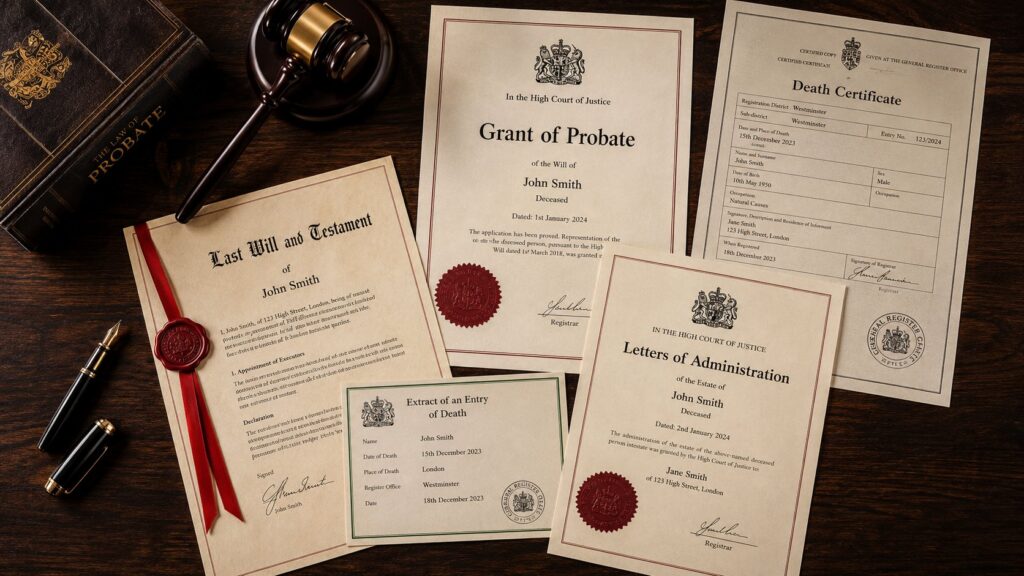
Probate documents are documents associated with the legal administration of a deceased person’s estate.
One of the most important documents is the Grant of Probate.
A Grant of Probate is issued when the deceased left a will and an executor applies for authority to administer the estate.
Where there is no valid will, or where the circumstances require it, a Grant of Letters of Administration may be relevant instead.
Other documents connected with an estate can include:
- Grants of probate
- Grants of letters of administration
- Wills
- Death certificates
- Court documents
- Powers of attorney
- Affidavits
- Estate-related declarations
- Certified copies of legal documents
Not every document will follow the same apostille process.
Can a Will Be Apostilled?
A will may be capable of being apostilled, but the process can be different from apostilling a straightforward public document such as a government-issued certificate.
A will is generally a private legal document. Depending on its form and the requirements of the destination country, it may need to be certified by an appropriate UK professional before an apostille can be issued.
This is why you should not simply assume that you can send an original will directly for an apostille.
The appropriate procedure may involve:
- Identifying the exact document required overseas.
- Checking whether an original or certified copy is required.
- Having the document appropriately certified if necessary.
- Obtaining the FCDO apostille.
- Arranging translation if required.
- Completing additional legalisation if the destination country requires it.
A professional apostille service UK can help you understand which steps may apply.
Can a Grant of Probate Be Apostilled?
A Grant of Probate may be suitable for apostille legalisation when it needs to be presented to an overseas authority.
However, the precise requirements depend on how the document was issued and what the receiving authority requires.
The foreign authority may request:
- The original grant
- An official copy
- A certified copy
- An apostilled copy
- A translated version
- Additional embassy legalisation
The wording of the overseas request is therefore extremely important.
If the authority has specifically asked for an apostilled Grant of Probate, it is sensible to confirm whether it requires the original document or a particular certified version.
Why Would Probate Documents Need an Apostille?
There are several reasons a foreign authority may request an apostille.
Overseas Property
If the deceased owned property abroad, local authorities, lawyers or land registries may need evidence confirming who has legal authority to deal with the estate.
Overseas Bank Accounts
Banks in another country may request legalised probate documents before releasing funds or transferring assets to beneficiaries.
International Investments
Shares, investments or other financial assets held overseas may require supporting documentation before they can be transferred or closed.
Foreign Inheritance Proceedings
If an estate is being dealt with under foreign legal procedures, UK probate documents may need authentication before they can be accepted.
Overseas Beneficiaries
A beneficiary living abroad may need documentation confirming the executor’s or administrator’s authority.
The UK Apostille Process for Wills and Probate Documents
Step 1: Identify the Exact Document Required
Before arranging legalisation, find out exactly what the foreign authority wants.
Do they require:
- The will?
- Grant of Probate?
- Letters of Administration?
- Death certificate?
- Court document?
- Certified copy?
- Several documents?
This avoids spending money legalising documents that are not actually required.
Step 2: Check Whether Certification Is Required
Some legal documents may need certification before they can be submitted for an FCDO apostille.
This can be particularly relevant for private documents.
A solicitor or notary may need to certify a document or copy, depending on the circumstances and the applicable legalisation route.
Step 3: Obtain the Apostille
Once the document meets the relevant requirements, it can be submitted to the FCDO Legalisation Office.
The FCDO checks the relevant signature, seal or stamp and issues the apostille if the document meets its legalisation requirements.
Step 4: Arrange Translation if Necessary
If the destination country requires documents in a language other than English, you may need a certified translation.
Do not automatically assume that every apostille must be translated.
The translation requirements come from the authority receiving the document.
It may require:
- Translation of the will
- Translation of the probate document
- Translation of the apostille
- Translation of the complete document package
Always check before arranging translation.
Step 5: Check for Additional Legalisation
An apostille may not always be the final step.
Some countries or authorities may have additional requirements, depending on the applicable rules and the purpose of the document.
This is an important part of document legalisation UK because the correct procedure depends on the destination.
Which Probate Documents Commonly Need Legalisation?
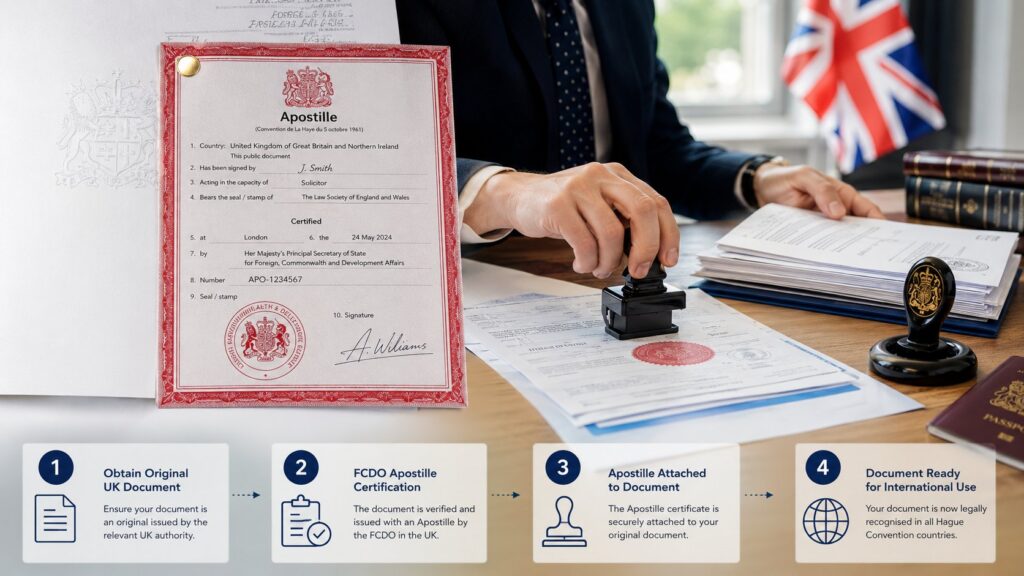
Different estates require different documentation. Some documents that may be requested for overseas use include:
Wills
A foreign authority may need an authenticated will when determining inheritance rights or dealing with overseas assets.
Grants of Probate
These can demonstrate the executor’s authority to administer an estate.
Letters of Administration
These may be required where an administrator has been appointed to manage an estate.
Death Certificates
A foreign organisation may request an authenticated death certificate when dealing with assets or inheritance matters.
Court Documents
Documents issued by UK courts may need legalisation before being presented to foreign courts or government bodies.
Powers of Attorney
An executor or beneficiary may sometimes need to authorise someone overseas to act on their behalf. A Power of Attorney can have its own certification and legalisation requirements.
How Long Does Apostilling Probate Documents Take?
Processing times vary depending on the document and service used.
Factors that can affect the overall timeline include:
- Whether certification is required
- FCDO processing time
- Availability of a solicitor or notary
- Translation requirements
- Courier delivery
- Embassy legalisation
- Requirements of the receiving country
If probate documents are required for an overseas deadline, do not leave legalisation until the last minute.
It is particularly important to allow extra time when several documents need to be processed.
Common Mistakes to Avoid
1. Apostilling the Wrong Document
Always confirm the exact document requested by the foreign authority.
Apostilling a will when the authority actually requires a Grant of Probate could result in unnecessary delays.
2. Sending an Original Will Without Checking
Wills can be important original legal documents. Before sending one through the post, establish whether the receiving authority requires the original or whether an appropriate certified copy will be accepted.
3. Forgetting Certification
Some documents may require certification before an apostille can be issued.
4. Ignoring Translation Requirements
If the receiving country operates in another language, confirm whether a certified translation is required.
5. Assuming an Apostille Is Always Enough
Some international document procedures may involve additional authentication or legalisation.
6. Waiting Until the Last Minute
Estate matters can already involve complicated legal and administrative deadlines. Starting the legalisation process early can help reduce avoidable delays.
What Other Documents May Need Apostille After a Death?
Probate is not the only area where international document legalisation may be required.
Depending on the circumstances, families or executors may need to legalise:
- Death certificates
- Marriage certificates
- Birth certificates
- Powers of Attorney
- Court documents
- Affidavits
- Financial or business documents
- Property-related documents
The correct process depends on the document and destination.
Why Use a Professional Apostille Service UK?
International legalisation can be confusing, particularly when dealing with sensitive estate documents.
A professional apostille provider can help you understand the process and identify potential issues before documents are submitted.
A service may assist with:
- Document checking
- Certification arrangements
- FCDO apostille applications
- Courier handling
- Certified translations
- Additional legalisation requirements
- Secure return of documents
This can be especially useful when probate documents are needed overseas and accuracy is important.
Frequently Asked Questions
1. Can a UK will be apostilled?
A UK will may be capable of being legalised with an apostille, but additional certification may be required depending on the document and destination country’s requirements.
2. Can a Grant of Probate be apostilled?
Yes, a Grant of Probate may be eligible for an apostille when it needs to be used overseas, subject to the applicable FCDO requirements.
3. Does a will need an apostille to be used abroad?
Not necessarily. The requirement depends on the country and the organisation receiving the document.
4. Does a probate document need to be translated?
It may need translation if the receiving authority requires documents in another language. Always check the authority’s specific requirements.
5. Is an apostille the same as legalisation?
An apostille is one form of document authentication used under the Hague Apostille Convention. Other countries or circumstances may require different legalisation procedures.
6. Can 2eApostille help with probate document legalisation?
A professional apostille service UK can assist with the preparation and legalisation process for eligible UK documents, including guidance on FCDO apostille requirements and related services.
Conclusion
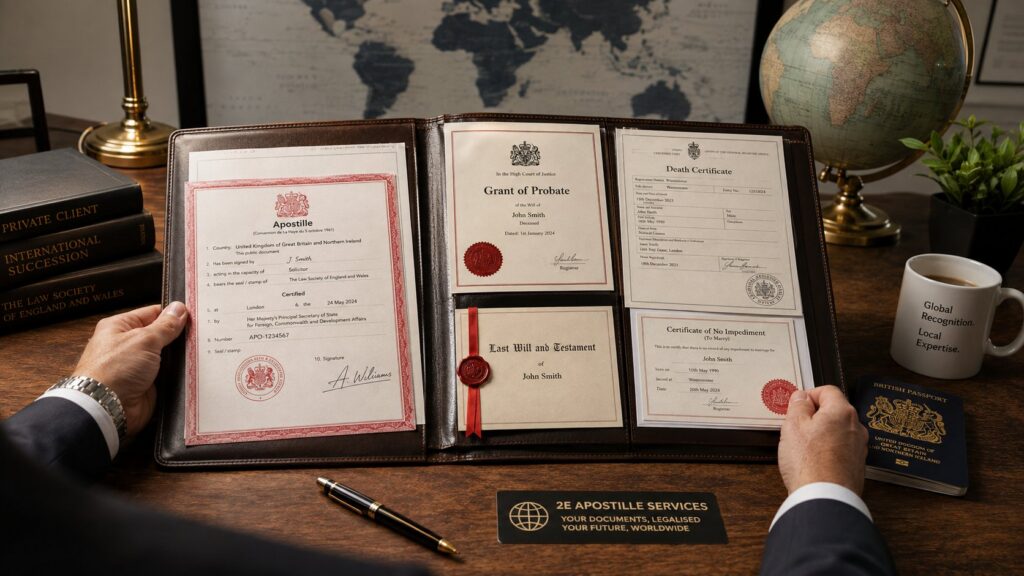
Wills, Grants of Probate and other probate documents may need an apostille when they are being used for official purposes overseas. However, the correct process depends on the type of document, how it was issued or certified, and the requirements of the destination country.
Before submitting sensitive estate documents, check whether the receiving authority requires an original, certified copy, apostille, translation or additional legalisation.
If you need help with an FCDO apostille, apostille documents UK, or wider document legalisation UK services, 2eApostille can help guide you through the process.
Visit the 2eApostille Apostille Service UK page to find out more and get assistance preparing your UK documents for international use.