
Common Mistakes to Avoid When Applying for an Apostille
Introduction
Applying for an apostille may seem like a simple administrative task, but in reality, many people encounter delays, rejections, and unnecessary stress due to avoidable mistakes. Whether you are preparing documents for working abroad, studying overseas, getting married in another country, or expanding your business internationally, ensuring your documents are properly legalised is essential.
An apostille confirms that your UK documents are genuine and can be recognised abroad. However, even small errors — such as submitting the wrong version of a document or missing a required certification — can result in delays that disrupt your plans.
For example, a missed apostille requirement could delay a visa application, postpone a wedding abroad, or even affect an international job opportunity.
This guide explains the most common mistakes people make when applying for an apostille in the UK and, more importantly, how to avoid them. By understanding the process and preparing correctly, you can ensure your apostille documents UK are processed quickly and without complications.
What Is an Apostille?
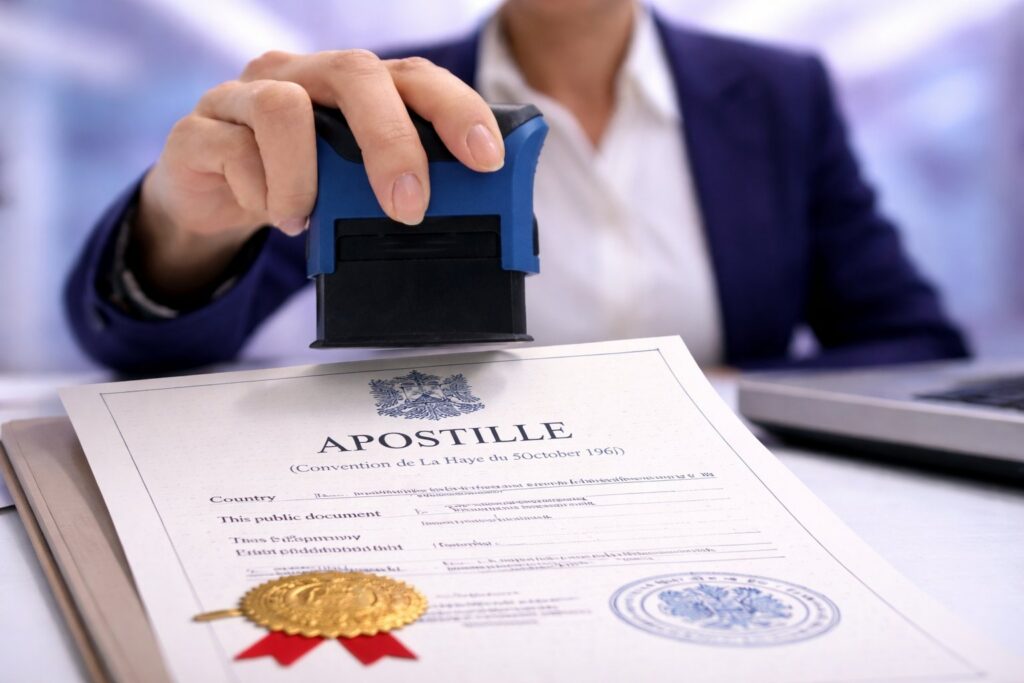
An apostille is an official certificate issued by the Foreign, Commonwealth & Development Office (FCDO) that verifies the authenticity of a document.
It confirms:
- The signature on the document is genuine
- The person signing it had the authority to do so
- The seal or stamp is valid
Once attached, the document becomes legally recognised in countries that are members of the Hague Apostille Convention.
This process is a key part of document legalisation UK, ensuring your documents are accepted abroad without additional verification (in many cases).
When Do You Need an Apostille?
You may require an apostille in a wide range of situations:
- Employment abroad
- International education
- Marriage overseas
- Immigration and visa applications
- Overseas business operations
In all these cases, foreign authorities require proof that your documents are authentic — which is exactly what an FCDO apostille provides.
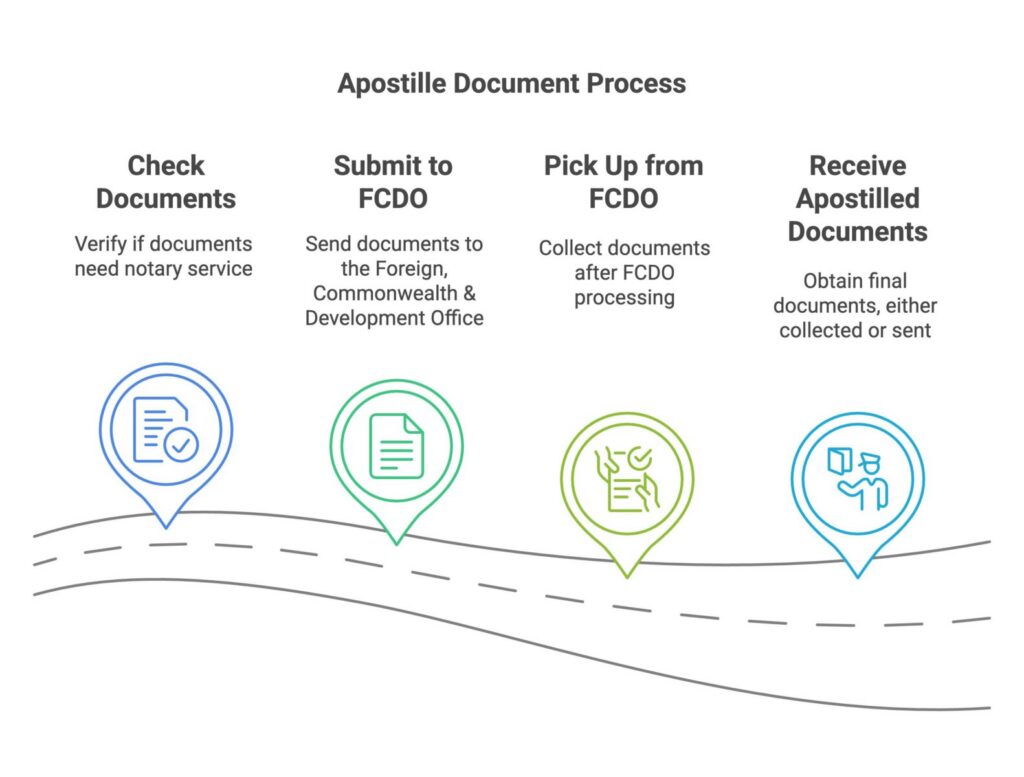
The Apostille Process in the UK
Understanding the process helps you avoid common mistakes.
Step 1: Identify Required Documents
Confirm which documents are needed by the overseas authority.
Step 2: Prepare Documents
Ensure they are original or properly certified.
Step 3: Notarisation (If Required)
Some documents must be certified by a solicitor or notary.
Step 4: Submit to FCDO
Documents are verified and issued with an apostille certificate.
Step 5: Receive Documents
Your apostilled documents are returned and ready for use abroad.
Which Documents Commonly Require Apostille?
Personal Documents
- Birth certificates
- Marriage certificates
- Divorce certificates
- Death certificates
Educational Documents
- Degree certificates
- Diplomas
- Academic transcripts
Legal Documents
- Power of attorney
- Affidavits
- Court documents
Business Documents
- Certificate of incorporation
- Articles of association
- Commercial agreements
Common Mistakes to Avoid When Applying for an Apostille
This is the most important section — avoiding these mistakes can save you time and stress.
1. Submitting the Wrong Type of Document
One of the most frequent mistakes is submitting the incorrect document version.
Common Issues:
- Sending photocopies instead of originals
- Providing uncertified copies
- Using outdated certificates
How to Avoid It:
Always check whether the authority requires:
- Original documents
- Certified copies
- Notarised documents
2. Not Getting Documents Notarised When Required
Some documents must be certified by a solicitor or notary before they can receive an apostille.
Common Examples:
- Degree certificates
- Business agreements
- Translated documents
Solution:
Check requirements carefully or use a professional apostille service UK to ensure compliance.
3. Ignoring Country-Specific Requirements
Not all countries have the same legalisation requirements.
Key Point:
- Hague Convention countries → Apostille only
- Non-Hague countries → Additional embassy legalisation
Mistake:
Assuming an apostille alone is always enough.
4. Leaving the Application Too Late
Many people only realise they need an apostille shortly before a deadline.
Risks:
- Missed visa deadlines
- Delayed travel
- Postponed events
Tip:
Start the process early and allow at least 5–10 working days.
5. Submitting Damaged or Laminated Documents
The FCDO may reject documents that are:
- Laminated
- Torn or damaged
- Illegible
Solution:
Use clean, original documents in good condition.
6. Incorrect Names or Mismatched Information
Inconsistent details across documents can cause serious delays.
Examples:
- Different spellings of names
- Mismatched dates of birth
Solution:
Ensure all documents are accurate and consistent.
7. Not Using a Reliable Apostille Service
Handling the process alone can lead to mistakes, especially if you are unfamiliar with legal requirements.
A professional apostille service UK provider can:
- Check document requirements
- Handle notarisation
- Manage submission to the FCDO
- Ensure fast processing
8. Choosing the Wrong Processing Method
Mistake:
Using postal applications when time is limited.
Better Option:
Use courier or express services for urgent cases.
9. Failing to Check Translation Requirements
Some countries require documents to be translated before legalisation.
Tip:
- Use certified translators
- Ensure translations are also notarised if required
10. Not Keeping Copies of Documents
Always keep copies of important documents before submission.
This helps in case of loss or delays.
Typical Apostille Processing Times
Processing times depend on several factors:
- Standard service: 5–10 working days
- Express service: 1–3 working days
- Postal applications: Longer due to delivery
Delays often occur due to the mistakes listed above.
Practical Tips to Avoid Apostille Mistakes
- Double-check document requirements
- Use original or certified copies
- Confirm notarisation requirements
- Start early
- Use a professional service
- Keep copies of all documents
Why Use a Professional Apostille Service in the UK?
Using a professional provider offers:
- Faster processing
- Expert guidance
- Reduced risk of rejection
- Complete handling of document legalisation
For a reliable and efficient service, visit:
Frequently Asked Questions
1. What is the most common apostille mistake?
Submitting incorrect or uncertified documents is the most common issue.
2. Do all documents need notarisation?
No. Some documents can be apostilled directly, while others require notarisation.
3. How long does apostille processing take?
Typically 5–10 working days, or faster with express services.
4. Can damaged documents be apostilled?
No. Damaged or laminated documents may be rejected.
5. Do I need an apostille for every country?
Only countries in the Hague Convention accept apostilles. Others require additional legalisation.
6. Can I avoid mistakes by using a service?
Yes. A professional apostille service UK can handle the process correctly and efficiently.
Conclusion
Applying for an apostille may seem straightforward, but small mistakes can lead to delays, stress, and missed opportunities. By understanding the most common errors — from submitting incorrect documents to ignoring legalisation requirements — you can ensure a smooth and successful process.
Whether you are preparing apostille documents UK for work, study, marriage, or business, careful preparation is essential.
For the best results, many people choose to work with a trusted professional provider.
✅ If you want a fast, reliable, and hassle-free experience, use a trusted apostille service UK.
👉 Get started today:
https://2eapostille.co.uk/apostille-service-uk/
With expert support from 2eApostille, your FCDO apostille and document legalisation UK process will be handled efficiently — giving you complete peace of mind.