
Which Countries Accept Electronic Apostilles?
Introduction
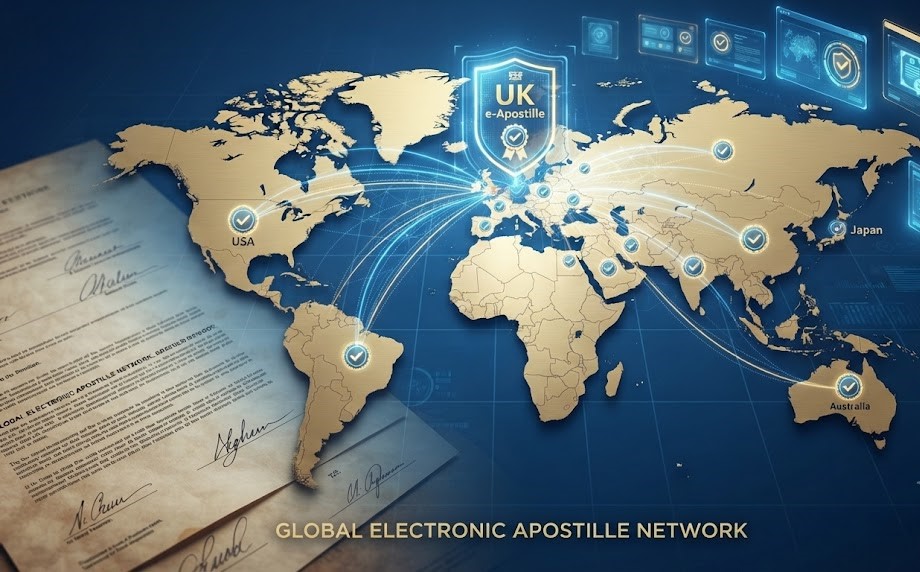
As more official processes become digital, many people ask which countries accept electronic apostilles before submitting their UK documents overseas. Understanding where electronic apostilles are recognised can help you avoid delays and choose the right apostille service UK.
While electronic documents and digital signatures have become increasingly common, not every country accepts electronic apostilles. Some countries readily recognise digitally issued apostilles, while others still require traditional paper documents with a physical apostille certificate attached. Understanding these differences before submitting your paperwork can save time, money, and unnecessary delays.
Whether you need an apostille UK for personal, educational, legal, or business purposes, knowing which countries accept electronic apostilles is an important part of the document legalisation UK process.
In this guide, we’ll explain what an electronic apostille is, how it differs from a traditional apostille, which countries generally accept e-Apostilles, and how you can ensure your documents meet the requirements of the country where they will be used.
If you need professional assistance with your documents, visit our Apostille Service UK page:
Before continuing, watch this short video explaining electronic apostilles and their international acceptance. It provides a quick overview before we explore the topic in more detail.
What Is an Apostille?
An apostille is an official certificate issued by the Foreign, Commonwealth & Development Office (FCDO) in the United Kingdom. It confirms that a signature, seal, or stamp on a document is genuine so that the document can be recognised in another country that is a member of the Hague Apostille Convention.
An apostille does not verify the contents of the document. Instead, it authenticates the official signature or certification attached to it.
Many foreign authorities require an FCDO apostille before accepting UK-issued documents for legal or administrative purposes.
What Is an Electronic Apostille?
An electronic apostille, commonly referred to as an e-Apostille, is a digital version of a traditional apostille certificate.
Instead of being physically attached to a paper document, an electronic apostille is issued digitally and is protected using secure technology such as digital signatures, encryption, or QR code verification.
Its purpose is exactly the same as a paper apostille—it confirms the authenticity of a document so that it can be accepted abroad.
Electronic apostilles are becoming more popular as governments and organisations move towards digital document management, but their acceptance varies between countries and authorities.
Why Are Apostilles Required?
An apostille helps foreign authorities trust that a UK document is genuine without needing further authentication.
You may need an apostille for:
- Visa applications
- Immigration
- Overseas employment
- International education
- Marriage abroad
- Residency permits
- Property purchases overseas
- Business expansion
- International court proceedings
- Medical treatment abroad
Without an apostille, many overseas organisations may refuse to accept your UK documents.
Traditional Apostille vs Electronic Apostille
Although both serve the same purpose, there are some important differences.
Traditional Apostille
A traditional apostille is printed on paper and physically attached to your original document or certified copy. This remains the most widely recognised format across the world.
Advantages include:
- Accepted by virtually all Hague Convention member countries.
- Suitable for original paper documents.
- Familiar to government authorities worldwide.
- Preferred where original paperwork is required.
Electronic Apostille
An electronic apostille is issued digitally and is normally attached to an electronic document.
Advantages include:
- Faster digital processing.
- Easier online verification.
- Secure electronic authentication.
- Convenient for digital document workflows.
- Reduces the need for paper copies.
However, acceptance depends on whether the receiving country and organisation recognise electronic apostilles.
Do All Countries Accept Electronic Apostilles?
No.
This is one of the most common misunderstandings about electronic document legalisation.
Although many countries are members of the Hague Apostille Convention, not every member country has implemented or fully adopted the e-Apostille Programme.
Some countries:
- Accept both paper and electronic apostilles.
- Accept electronic apostilles only in certain circumstances.
- Continue to require traditional paper apostilles.
- Leave the decision to individual government departments or institutions.
For this reason, it is always advisable to check the specific requirements of the authority requesting your documents before beginning the apostille service UK process.
Why Acceptance Differs Between Countries

Several factors influence whether a country accepts electronic apostilles.
Digital Infrastructure
Some governments have invested heavily in secure digital verification systems, making it easy to verify electronic apostilles online.
Others continue to rely primarily on paper documentation.
National Regulations
Even within Hague Convention countries, local legislation may determine whether electronic documents are accepted.
Individual Authority Policies
A country’s immigration office may accept electronic apostilles while its courts or universities may still request paper originals.
Type of Document
Some documents are more commonly accepted in digital form, while others still require original paper versions.
Understanding these differences helps avoid delays when preparing your apostille documents UK.
Which Countries Commonly Accept Electronic Apostilles?
Electronic apostilles are becoming increasingly recognised around the world as more governments adopt secure digital document systems. However, acceptance is not universal, and the exact requirements can vary depending on both the country and the authority requesting your documents.
Many countries participating in the e-APP (electronic Apostille Programme) support electronic apostilles for certain types of documents. Examples include:
- Australia
- New Zealand
- Spain
- Belgium
- Colombia
- Estonia
- Kazakhstan
- Moldova
- Uruguay
- Certain states and jurisdictions in the United States
Other countries continue to rely primarily on traditional paper apostilles, even if they are members of the Hague Apostille Convention.
It is also important to remember that acceptance may differ between government departments. For example, an immigration authority may accept an electronic apostille, while a university or employer in the same country may request a paper document with a physical FCDO apostille attached.
For this reason, always confirm the document requirements with the organisation requesting your paperwork before submitting your application.
How Does the UK Apostille Process Work?
Whether you require a traditional or electronic apostille, the overall process follows a similar structure.
Step 1: Review Your Documents
The first step is to determine whether your document is eligible for an apostille.
Check that it is:
- Complete
- Clear and readable
- Properly signed where necessary
- Issued by the appropriate authority
Step 2: Determine Whether Certification Is Required
Some private documents require solicitor certification before they can receive an apostille.
Examples include:
- Employer reference letters
- Medical letters
- Company documents
- Private agreements
Public documents such as birth certificates or marriage certificates often do not require additional certification.
Step 3: Submit to the FCDO
Your documents are submitted to the Foreign, Commonwealth & Development Office for authentication.
The FCDO verifies the signature, seal, or certification attached to the document.
Step 4: Apostille Is Issued
If the document satisfies all requirements, the FCDO issues the apostille certificate.
For traditional applications, the certificate is attached to the paper document.
Where applicable, electronic apostilles are issued digitally.
Step 5: Documents Are Returned
Your completed documents are securely returned using your selected delivery option.
Many professional apostille service UK providers offer tracked and courier delivery for both UK and international customers.
Which Documents Commonly Require an Apostille?
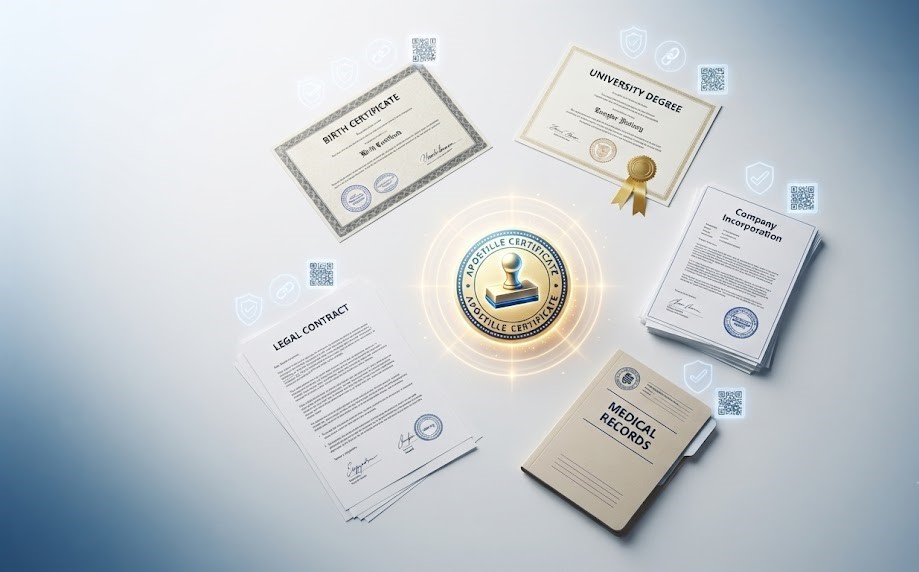
Many different documents require document legalisation UK before they can be used overseas.
Common examples include:
Personal Documents
- Birth certificates
- Marriage certificates
- Death certificates
- Adoption certificates
- Decree Absolute
- Change of name documents
Educational Documents
Universities and employers abroad frequently request authenticated academic records.
Examples include:
- Degree certificates
- Diplomas
- Academic transcripts
- Teaching qualifications
- Professional certificates
Business Documents
International companies often require legalised commercial paperwork.
Examples include:
- Certificates of Incorporation
- Company resolutions
- Articles of Association
- Commercial invoices
- Contracts
- Powers of Attorney
Medical Documents
Healthcare documents may also require an apostille before being accepted overseas.
Examples include:
- Medical reports
- Doctor’s letters
- Vaccination records
- Fit-to-fly certificates
- Disability assessments
Common Mistakes to Avoid
Preparing your documents carefully can prevent unnecessary delays.
Assuming Every Country Accepts Electronic Apostilles
Acceptance varies between countries and even between different authorities within the same country.
Sending the Wrong Format
If the receiving authority requests an original paper document, an electronic apostille may not be suitable.
Failing to Verify Requirements
Always check with the embassy, employer, university, or government department requesting your documents.
Using Uncertified Copies
Some documents require solicitor certification before they can receive an apostille.
Waiting Until the Last Minute
International applications often involve strict deadlines.
Applying early gives you time to resolve any unexpected issues.
Not Seeking Professional Advice
Every country has different legalisation requirements.
An experienced apostille service UK provider can help you choose the correct route and avoid unnecessary delays.
Frequently Asked Questions
Can all countries accept electronic apostilles?
No. While many countries recognise electronic apostilles, some still require traditional paper apostilles. Always check the requirements of the authority requesting your documents.
Can I choose between an electronic and paper apostille?
It depends on your document type and the country where it will be used. Some situations require a traditional paper apostille, while others may accept an electronic version.
Are electronic apostilles legally valid?
Yes. Electronic apostilles are legally valid where they are recognised by the receiving country and comply with the Hague Apostille Convention requirements.
Which UK documents can receive an apostille?
Many documents can be apostilled, including birth certificates, marriage certificates, degree certificates, employer reference letters, medical documents, powers of attorney, and business documents.
How long does the apostille process take?
Processing times vary depending on the document type, whether certification is required, and FCDO processing times. Using a professional apostille service can often help speed up the process.
How can I find out whether my destination country accepts electronic apostilles?
The safest approach is to check with the embassy, consulate, employer, university, or government authority requesting your documents. A professional apostille service can also advise you on the correct legalisation route.

Conclusion
Electronic apostilles are becoming increasingly popular as governments around the world adopt secure digital document systems. They offer a faster and more convenient way to authenticate documents and can simplify international transactions where they are accepted. However, it is important to remember that not every country or authority recognises electronic apostilles, and many still require traditional paper documents with a physical FCDO apostille attached.
Before submitting your documents overseas, always confirm the specific legalisation requirements of the organisation requesting them. Whether you are preparing documents for immigration, employment, education, business, marriage, or legal matters abroad, choosing the correct apostille method can help you avoid unnecessary delays and ensure your documents are accepted the first time.
If you are unsure whether you need an electronic or traditional apostille, the experienced team at 2eApostille is here to help. We can review your documents, explain the most suitable option for your destination country, and manage the entire apostille service UK process on your behalf.
Visit our Apostille Service UK page at:
to get started with your apostille UK, document legalisation UK, FCDO apostille, and apostille documents UK requirements quickly, securely, and professionally.