
Getting Married in Spain: Documents and Apostille Requirements for UK Couples
Introduction
Spain has long been one of the most popular destinations for couples dreaming of a romantic wedding abroad. With its stunning Mediterranean coastline, charming historic towns, beautiful islands, and warm climate, it offers an unforgettable setting for a destination wedding. From the golden beaches of Mallorca to the vibrant streets of Barcelona, Spain provides countless breathtaking venues for couples looking to celebrate their special day in style.
For many British couples, the appeal of a Spanish wedding lies in the combination of spectacular scenery, excellent hospitality, and the opportunity to celebrate with friends and family in a relaxed holiday atmosphere. However, while Spain is a fantastic destination for weddings, the legal requirements for getting married there can be more complex than in some other countries.
Foreign couples planning a civil marriage in Spain must prepare several official documents, many of which need to be translated and legalised with an apostille issued by the UK’s Foreign, Commonwealth & Development Office (FCDO). Failing to prepare the required paperwork in advance can lead to delays or even cancellation of the ceremony.
This guide explains everything UK citizens need to know about getting married in Spain, including the required documents, apostille requirements, the legalisation process, and helpful tips to ensure your destination wedding runs smoothly.

Why Spain Is a Popular Destination for Weddings
Spain consistently ranks among the top wedding destinations for couples from the United Kingdom. The country offers a unique blend of natural beauty, culture, and romantic settings that make it ideal for a memorable ceremony.
Stunning Wedding Locations
Spain offers a wide range of breathtaking wedding locations, including:
- Mediterranean beaches
- Historic castles and villas
- Rustic countryside estates
- Luxury seaside resorts
- Charming old towns and plazas
Some of the most popular destinations include:
- Mallorca – famous for beach weddings and scenic landscapes
- Barcelona – ideal for city weddings with stunning architecture
- Ibiza – perfect for stylish and relaxed ceremonies
- Costa del Sol – known for sunny weather and luxury venues
- Seville – romantic historic venues and cultural charm
These locations provide the perfect backdrop for wedding photographs and unforgettable celebrations.
Civil vs Religious Weddings in Spain
Before planning a wedding in Spain, couples must decide whether they want a civil ceremony or a religious ceremony.
Civil Weddings
Civil weddings are conducted by local authorities such as:
- Town halls
- Judges
- Civil registrars
For foreign couples, this option often involves more documentation and administrative procedures.
Religious Weddings
Religious ceremonies, particularly Catholic weddings, are common in Spain. However, they also require documentation and approval from religious authorities.
Many international couples choose a symbolic ceremony in Spain after completing the legal marriage in the UK, as this can simplify the legal process.
Legal Requirements for UK Citizens Marrying in Spain
Spain has stricter marriage laws for foreign couples compared to many other wedding destinations. UK citizens planning a civil marriage in Spain must prepare several official documents.
These requirements can vary depending on the region, but commonly requested documents include:
- Birth certificate
- Certificate of No Impediment (CNI)
- Valid passport
- Proof of residence (in some cases)
Each of these documents must usually be officially recognised in Spain, which means they may require translation and apostille certification.
Required Documents for UK Couples
Preparing the correct documentation is one of the most important steps when planning a wedding in Spain.
Birth Certificate
A full UK birth certificate is typically required to confirm identity and nationality.
Spanish authorities may request:
- An original certificate
- A recently issued copy
- A certified translation into Spanish
Because this document originates in the UK, it usually needs to be legalised with an apostille.
Certificate of No Impediment (CNI)
A Certificate of No Impediment confirms that a person is legally free to marry.
UK citizens can obtain this certificate from their local register office.
In many cases, the certificate must:
- Be officially translated into Spanish
- Receive an apostille certificate
This document is essential for proving that there are no legal barriers to the marriage.
Passport
A valid UK passport is required for identification purposes.
Couples should ensure that:
- Their passport is valid during travel
- Personal details match all supporting documents
Proof of Residence
In some Spanish regions, authorities may require proof that one partner has lived in Spain for a certain period.
This requirement varies by location, which is why couples should always confirm local regulations before making arrangements.
Understanding Apostille Requirements
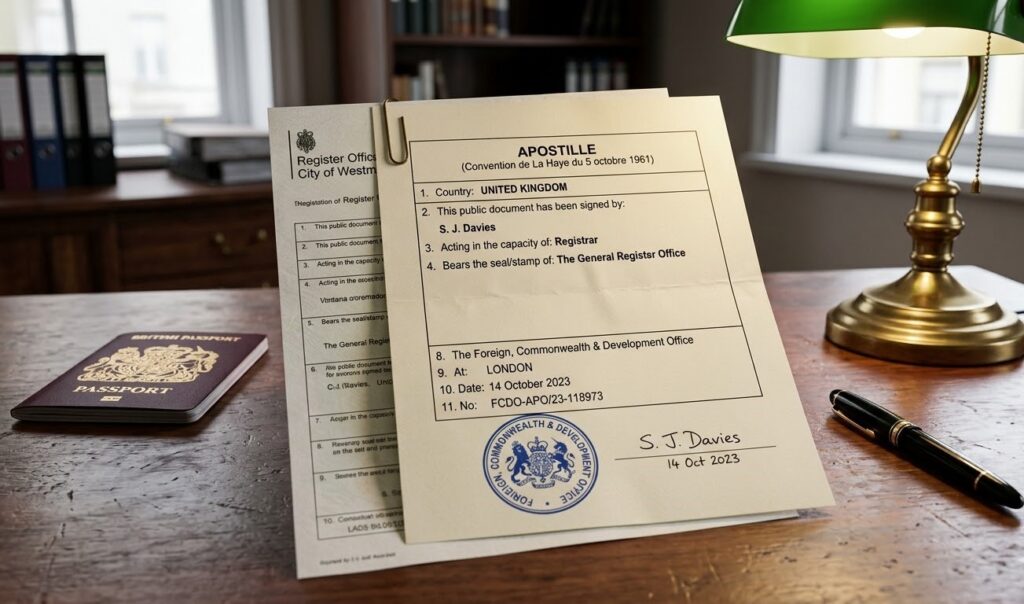
One of the most important steps when preparing documents for a wedding in Spain is obtaining an apostille certificate.
What Is an Apostille?
An apostille is an official certificate that confirms the authenticity of a document so it can be legally recognised in another country.
The apostille system is part of the Hague Apostille Convention, which allows documents issued in one member country to be accepted in another.
For UK documents, apostilles are issued by the Foreign, Commonwealth & Development Office (FCDO).
Why Apostilles Are Required for Spanish Weddings
Spanish authorities require proof that foreign documents are genuine.
An apostille confirms that:
- The document is authentic
- The signature is valid
- The issuing authority is legitimate
Without an apostille, Spanish officials may refuse to accept UK-issued documents.
How to Legalise Documents in the UK
The process of legalising documents involves submitting them to the Foreign, Commonwealth & Development Office.
The UK government provides guidance on the process here:
https://www.gov.uk/get-document-legalised
Typical steps include:
- Obtaining the original document
- Submitting the document for apostille certification
- Receiving the document with an attached apostille certificate
- Arranging translation if required
This process can take several days or longer depending on demand.
The Importance of Preparing Documents Early
Many couples underestimate how long the paperwork process can take when planning a wedding abroad.
Preparing documents early helps avoid last-minute complications and ensures the ceremony can proceed as planned.
Real Example from a Bride
One bride shared her experience of almost cancelling her wedding after discovering just days before travelling that her birth certificate had not been apostilled.
Because the document was required for the ceremony, it had to be processed urgently.
Fortunately, the apostille was obtained in time and the wedding in Santorini went ahead successfully.
You can read the full story here:
This example highlights how important it is to check document requirements well in advance.
Real Experiences from Couples Planning Weddings Abroad
Couples planning destination weddings often share their experiences online.
These stories provide useful insights into how the apostille process works and why preparation is essential.
For example, a couple preparing for their wedding in Rhodes shared their experience in a review explaining how apostille services helped ensure their documents were ready before the ceremony.
You can read the review here:
https://nz.trustpilot.com/review/2eapostille.co.uk
Reviews like this demonstrate the value of professional assistance when dealing with legal paperwork for international weddings.
Step-by-Step Guide to Getting Married in Spain
Understanding the process step by step can help couples plan their wedding more easily.
Step 1: Choose Your Wedding Location
Decide where in Spain you want to marry.
Popular choices include:
- Mallorca
- Barcelona
- Ibiza
- Costa del Sol
Step 2: Check Local Marriage Requirements
Each region may have slightly different rules.
Contact the local civil registry or town hall for accurate information.
Step 3: Gather Required Documents
Prepare all required documents including:
- Birth certificate
- Certificate of No Impediment
- Passport
Step 4: Obtain Apostille Certification
Submit UK documents for apostille legalisation.
Allow enough time for processing.
Step 5: Translate Documents
Many Spanish authorities require official Spanish translations of documents.
Step 6: Submit Documents to Local Authorities
Send the completed documentation to the relevant office in Spain.
Step 7: Attend the Ceremony
Once all paperwork is approved, couples can proceed with the wedding ceremony.
Tips for Planning a Destination Wedding in Spain
Planning ahead can make the process much easier.
Start Planning Early
Begin preparing documents several months in advance.
Confirm Legal Requirements
Check the specific rules for your chosen Spanish region.
Work with a Wedding Planner
Local planners can help navigate legal procedures.
Consider a Symbolic Ceremony
Some couples legally marry in the UK and hold a symbolic celebration in Spain.
Allow Time for Apostille Processing
Always allow extra time in case documents need urgent corrections.
Frequently Asked Questions (FAQ)
Can UK citizens legally marry in Spain?
Yes, UK citizens can legally marry in Spain, but they must meet local legal requirements and provide the necessary documentation.
Do UK documents need an apostille for weddings in Spain?
Yes, most UK-issued documents must be legalised with an apostille certificate before they can be accepted by Spanish authorities.
How long does the apostille process take in the UK?
Processing time can vary, but it typically takes several working days depending on the service used.
Do documents need to be translated into Spanish?
Yes, many Spanish authorities require official translations of foreign documents.
Is a UK marriage recognised in Spain?
Yes, marriages conducted legally in Spain are generally recognised in the United Kingdom.
Can couples avoid paperwork by having a symbolic ceremony?
Yes, many couples complete the legal marriage in the UK and then hold a symbolic wedding ceremony in Spain.
Conclusion
Spain remains one of the most romantic and sought-after destinations for British couples planning a wedding abroad. With its stunning beaches, historic venues, and Mediterranean atmosphere, it offers the perfect setting for an unforgettable celebration.
However, couples must be aware that Spain has strict legal requirements for civil marriages involving foreign nationals. Important documents such as birth certificates, Certificates of No Impediment, and passports must often be prepared, translated, and legalised with an apostille from the Foreign, Commonwealth & Development Office.
By understanding the documentation process and preparing paperwork early, couples can avoid unnecessary stress and focus on enjoying their special day. Careful planning ensures that the dream of a destination wedding in Spain becomes a smooth and memorable reality.