
Is an apostille the same as embassy attestation?
Introduction
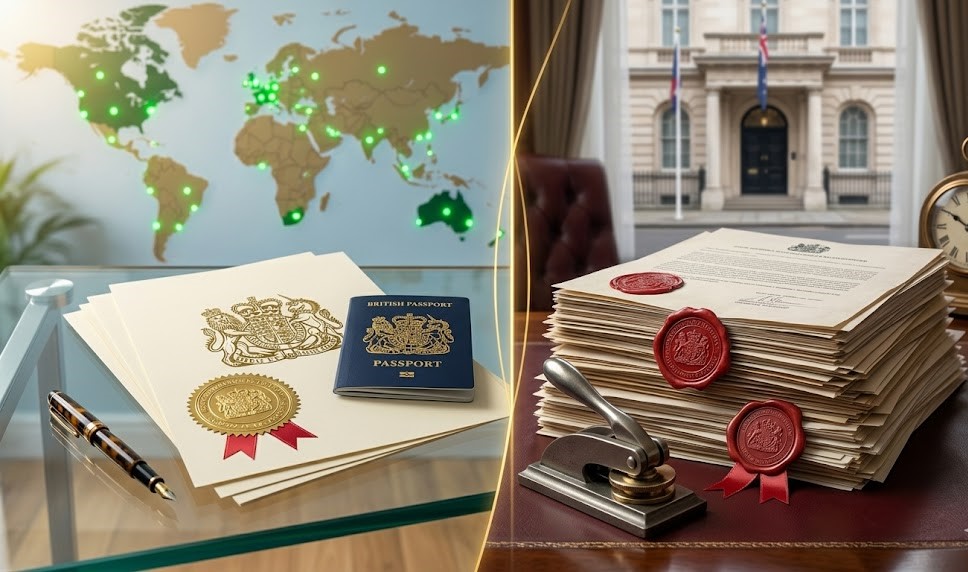
When dealing with international paperwork, many people in the UK come across terms like apostille, legalisation, and embassy attestation. At first, these terms can seem confusing, especially if you are preparing documents for use abroad for the first time.
Whether you are getting married overseas, applying for a job, studying internationally, or expanding a business, ensuring your documents are legally recognised is essential. Submitting incorrect or incomplete paperwork can lead to delays, rejection, or unnecessary stress.
This is where understanding the difference between an apostille UK and embassy attestation becomes crucial. While both processes fall under document legalisation UK, they are not the same. Each serves a different purpose depending on the country where your documents will be used.
In this guide, we will explain everything you need to know in simple, practical terms—from what an apostille is to how embassy attestation works, which documents require legalisation, timelines, common mistakes, and how to complete the process efficiently.
What Is an Apostille?
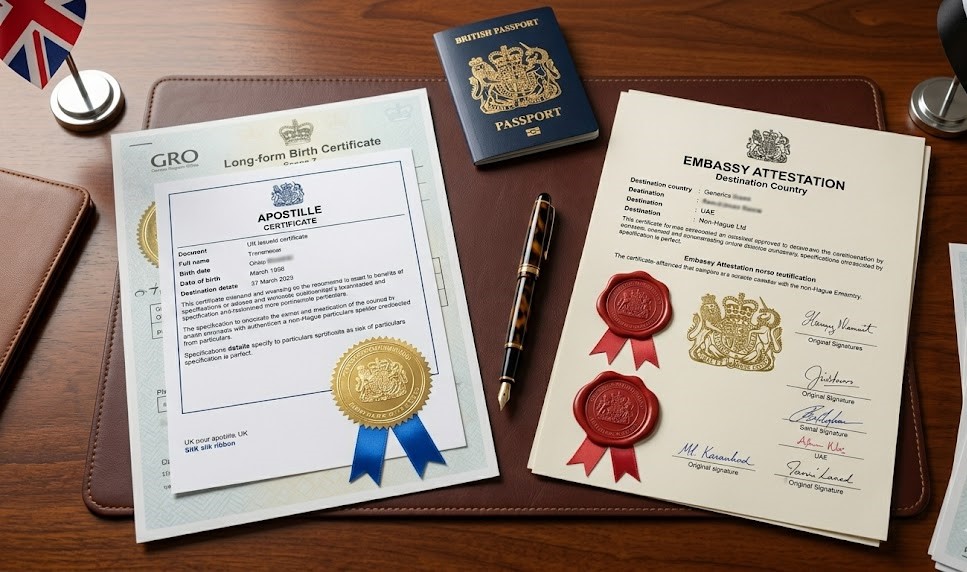
An apostille is an official certificate issued by the Foreign, Commonwealth & Development Office (FCDO) in the UK. It confirms that a document is genuine and can be recognised in another country.
When Is an Apostille Required?
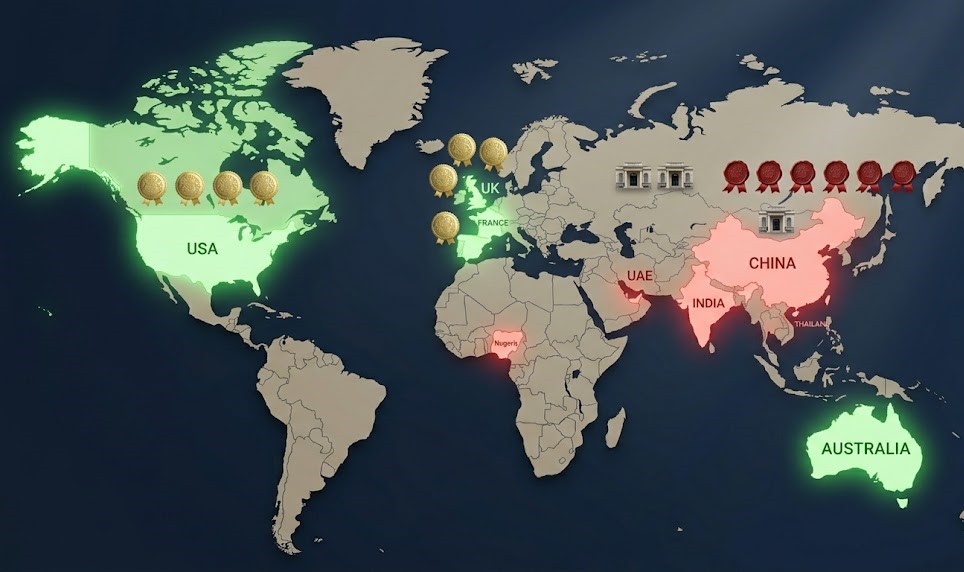
An apostille is required when your destination country is part of the Hague Apostille Convention. This international agreement simplifies document verification between member countries.
Key Features of an Apostille
- Issued by the UK government (FCDO apostille)
- A single-step process
- Recognised in over 120 countries
- Faster and simpler than embassy attestation
Examples of Countries That Accept Apostille
- France
- Spain
- Italy
- United States
- Australia
What Is Embassy Attestation?
Embassy attestation (also known as full legalisation) is a more detailed process used when documents are being sent to countries that are not part of the Hague Convention.
When Is Embassy Attestation Required?
If your destination country does not accept apostille, you will need embassy attestation.
Key Features of Embassy Attestation
- Multi-step verification process
- Includes approval from the UK authorities and the destination country’s embassy
- Takes longer than apostille
- Required for certain countries in the Middle East and Asia
Examples of Countries Requiring Embassy Attestation
- United Arab Emirates (UAE)
- Qatar
- Kuwait
- China
Apostille vs Embassy Attestation: Key Differences
| Feature | Apostille | Embassy Attestation |
|---|---|---|
| Process | One-step | Multi-step |
| Authority | FCDO | FCDO + Embassy |
| Countries | Hague Convention countries | Non-Hague countries |
| Time | Faster | Slower |
| Complexity | Simple | More complex |
Why Understanding the Difference Is Important
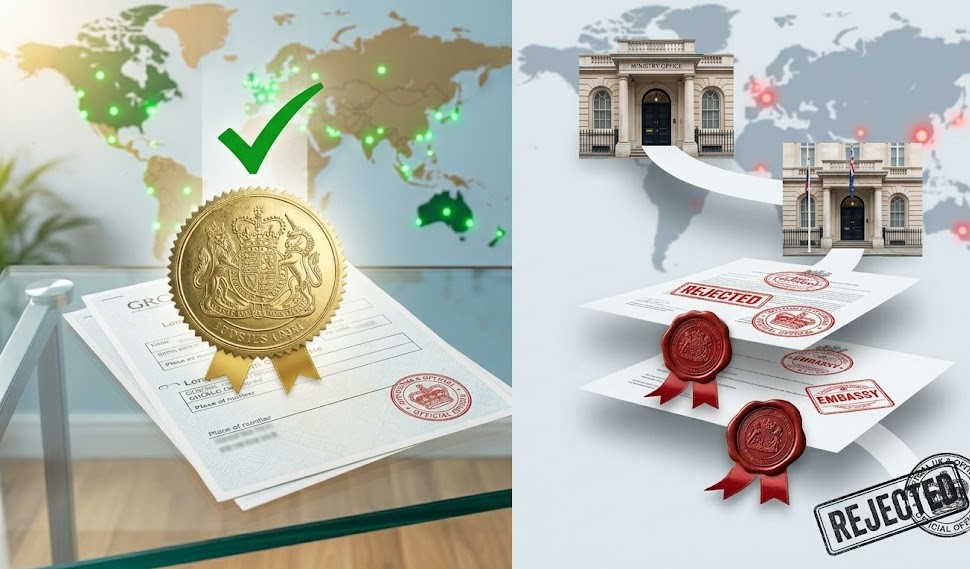
Choosing the wrong type of document legalisation UK can lead to:
- Delays in visa or application processing
- Rejection of documents
- Additional costs
- Missed deadlines
By identifying whether you need an apostille service UK or embassy attestation, you can avoid unnecessary complications.
How to Get an Apostille in the UK
Obtaining an apostille in the UK is a straightforward process when done correctly.
Step 1: Prepare Your Documents
Ensure your documents are original or certified copies.
Step 2: Check Certification Requirements
Some documents (such as power of attorney) may need to be notarised by a UK solicitor.
Step 3: Submit to the FCDO
Send your documents for FCDO apostille processing.
Step 4: Receive Apostilled Documents
Your documents will be returned with an official apostille certificate attached.
Which Documents Commonly Require Apostille?
Many types of apostille documents UK require verification before being used abroad.
Personal Documents
- Birth certificates
- Marriage certificates
- Divorce certificates
Educational Documents
- Degree certificates
- Diplomas
- Academic transcripts
Business Documents
- Certificates of incorporation
- Company agreements
- Commercial contracts
Legal Documents
- Power of attorney
- Affidavits
- Statutory declarations
Timelines for Apostille and Embassy Attestation
Understanding timelines helps you plan ahead effectively.
Apostille Processing Time
- Standard: 5–10 working days
- Express: 1–3 working days
Embassy Attestation Time
- Typically 1–3 weeks or longer
- Depends on embassy requirements
Common Mistakes to Avoid
Avoid these common errors when applying for an apostille UK or embassy attestation:
1. Choosing the Wrong Process
Always confirm whether your destination country requires apostille or attestation
2. Submitting Incorrect Documents
Ensure all documents are valid, complete, and properly certified.
3. Delaying the Process
Start early to avoid last-minute stress.
4. Ignoring Notarisation
Some documents must be notarised before submission.
5. Not Checking Country-Specific Requirements
Different countries may have additional rules.
Why Use a Professional Apostille Service UK?
Handling apostille documents UK on your own can be time-consuming and confusing. A professional apostille service UK offers:
- Expert guidance
- Faster processing
- Reduced risk of errors
- Complete peace of mind
For reliable and efficient support, visit:
👉 https://2eapostille.co.uk/apostille-service-uk/
Practical Tips for Smooth Document Legalisation
- Start the process early
- Double-check document requirements
- Keep copies of all documents
- Confirm requirements with the destination country
- Use a trusted service provider
Frequently Asked Questions (FAQ)
1. Is an apostille the same as embassy attestation?
No, an apostille is a one-step process for Hague countries, while embassy attestation is a multi-step process for non-Hague countries.
2. Do I always need an apostille?
Only if your destination country accepts apostille.
3. Can I use apostille for UAE?
No, UAE requires embassy attestation.
4. How long does apostille take in the UK?
Typically 5–10 working days, or faster with express service.
5. Do all documents need notarisation?
No, only certain documents require notarisation.
6. Can a professional service help with the process?
Yes, using an expert service can simplify the process and reduce errors.
Conclusion
Understanding the difference between apostille and embassy attestation is essential when preparing your documents for international use. While both processes fall under document legalisation UK, they are used for different countries and follow different procedures.
An apostille UK is a quick and simple solution for countries within the Hague Convention, while embassy attestation is required for countries outside it and involves additional steps.
By planning ahead, avoiding common mistakes, and choosing the correct process, you can ensure your documents are accepted without delays.