
Step-by-Step Guide to Getting an Apostille in the UK
Introduction
In today’s global world, many people in the United Kingdom need to use their official documents abroad. Whether you are planning to work overseas, study at an international university, get married in another country, or expand your business internationally, foreign authorities often require proof that your UK documents are genuine.
This is where apostille certification becomes essential.
An apostille is a form of official verification that confirms a document issued in the UK is authentic and can be recognised by authorities in other countries. Without this certification, many institutions abroad – including government offices, employers, universities, and courts – may refuse to accept your documents.
For example, if you need to present a birth certificate for a marriage abroad, a degree certificate for overseas employment, or business documents for international trade, those documents will often need to go through document legalisation in the UK before they can be used overseas.
The apostille process may sound complicated at first, especially if you have never encountered it before. However, once you understand how it works, obtaining an apostille UK certificate can be a straightforward process.
This guide provides a clear step-by-step explanation of how to get an apostille in the UK, including which documents require legalisation, how long the process takes, common mistakes to avoid, and how a professional apostille service UK provider can simplify the entire process.
What Is an Apostille?
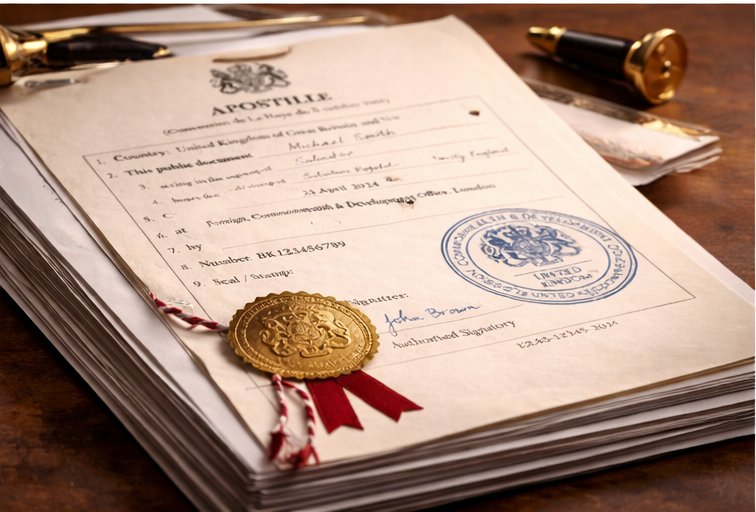
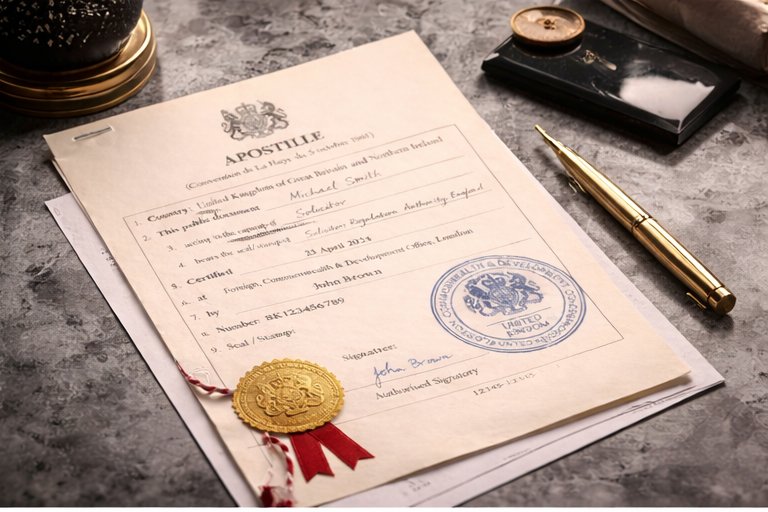
An apostille is an official certificate issued by a government authority that confirms the authenticity of a document so it can be used in another country.
In the UK, apostilles are issued by the Foreign, Commonwealth & Development Office (FCDO).
The apostille verifies:
- The authenticity of the signature on the document
- The capacity in which the person signing the document acted
- The validity of any official seal or stamp
Once the FCDO apostille is attached, the document becomes legally recognised in countries that are members of the Hague Apostille Convention.
This international agreement simplifies the process of verifying documents between participating countries. Instead of needing multiple levels of verification, the apostille serves as a single certificate confirming authenticity.
When Is an Apostille Required?
Many people require apostille services when dealing with legal or administrative processes abroad.
Common situations include:
Working Abroad
Employers in other countries often require apostilled documents such as:
- Degree certificates
- Professional qualifications
- Criminal background checks
This confirms that the documents are legitimate.
Studying Overseas
International universities may request apostilled academic documents, including:
- Degree certificates
- Academic transcripts
- School diplomas
Getting Married Abroad
Couples planning a wedding overseas may need apostilled documents such as:
- Birth certificates
- Certificates of No Impediment
- Divorce certificates
Immigration and Visa Applications
Immigration authorities may request apostilled documents to verify identity and personal status.
International Business Activities
Businesses expanding into global markets may need to legalise corporate documents such as:
- Certificate of incorporation
- Articles of association
- Power of attorney
- Commercial agreements
In all of these situations, apostille documents UK certification ensures that foreign authorities recognise the authenticity of the documents.
Understanding Document Legalisation in the UK
Document legalisation refers to the process of verifying that an official document issued in one country is genuine so that it can be accepted in another.
In the UK, this process typically involves:
- Preparing the original document
- Ensuring the document is properly certified or notarised if necessary
- Submitting the document to the Foreign, Commonwealth & Development Office
- Receiving the document with the apostille certificate attached
This process is commonly referred to as document legalisation UK.
Step-by-Step Guide to Getting an Apostille in the UK
Obtaining an apostille in the UK usually follows a series of clear steps.
Step 1: Identify the Documents That Need Apostille
The first step is confirming which documents must be legalised.
Different authorities abroad may require different documents. It is important to check the exact requirements with the organisation requesting the document.
Common examples include:
- Birth certificates
- Marriage certificates
- Academic certificates
- Legal declarations
- Business documentation
Ensuring that you submit the correct document version is crucial for avoiding delays.
Step 2: Ensure the Document Is Eligible for Apostille
Not all documents can be apostilled immediately.
Some documents must first be:
- Signed by a UK official
- Certified by a solicitor
- Notarised by a notary public
For example, copies of documents often need to be certified as true copies before they can receive an apostille.
Step 3: Prepare the Original Document
The document must be in good condition and contain a recognised signature or seal.
Examples of acceptable documents include:
- Original government-issued certificates
- Official court documents
- Notarised legal documents
If the document is damaged, altered, or incomplete, it may be rejected.
Step 4: Submit the Document to the FCDO
The next step is submitting the document to the Foreign, Commonwealth & Development Office.
The FCDO will verify the authenticity of the signature or seal.
If everything is valid, the office issues an apostille certificate.
This certificate is typically attached to the document using an official stamp or seal.
Step 5: Receive Your Apostilled Document
Once the verification process is complete, the document is returned with the apostille attached.
The document can then be used in any country that recognises apostilles under the Hague Convention.
Typical Timeframes for Apostille Services
Processing times can vary depending on demand and the method used to submit the document.
Typical timelines include:
- Standard processing: several working days
- Express services: sometimes completed within 24 hours
Using a professional apostille service UK provider can help speed up the process and reduce the risk of errors.
Common Documents That Require Apostille in the UK
A wide variety of documents may require apostille certification depending on the situation.
Personal Documents
These are frequently required for immigration, marriage, or residency purposes.
Examples include:
- Birth certificates
- Marriage certificates
- Death certificates
- Adoption certificates
- Divorce decrees
Educational Documents
Students and professionals working abroad often need to legalise academic documents.
Examples include:
- Degree certificates
- Diplomas
- Academic transcripts
- Teaching qualifications
Legal Documents
Some legal documents must be apostilled before being used internationally.
Examples include:
- Affidavits
- Court documents
- Power of attorney
- Statutory declarations
Business Documents
Businesses expanding internationally often need apostille certification for corporate paperwork.
Examples include:
- Certificate of incorporation
- Articles of association
- Company registration documents
- Commercial contracts
Common Mistakes to Avoid When Applying for an Apostille
Many applications are delayed due to simple mistakes.
Avoiding these common issues can save significant time.
Submitting the Wrong Document Type
Some authorities require original certificates rather than copies.
Submitting the incorrect version may result in rejection.
Forgetting Notarisation
Certain documents must first be certified by a solicitor or notary public before the FCDO apostille can be issued.
Leaving the Process Too Late
Many people only realise they need an apostille shortly before their deadline.
This can create unnecessary stress.
Starting the process early is always recommended.
Using Damaged Documents
Documents that are damaged, incomplete, or altered may be rejected by the FCDO.
Always check documents before submission.
Benefits of Using a Professional Apostille Service in the UK
Although individuals can apply directly to the FCDO, many people prefer to use a professional apostille service UK provider.
A specialist service offers several advantages.
Faster Processing
Professional services often provide expedited apostille processing.
Expert Advice
They ensure documents meet all requirements before submission.
Reduced Risk of Errors
Experienced providers understand the legalisation process and help avoid common mistakes.
Convenience
A professional service manages the entire process on your behalf.
You can learn more about the apostille service UK offered by 2eApostille here:
Practical Tips for Preparing Apostille Documents
If you need to obtain an apostille, the following steps can help ensure a smooth process.
- Confirm exactly which documents are required by the overseas authority.
- Obtain original certificates where necessary.
- Check whether documents need notarisation.
- Ensure names and details match across all documents.
- Allow sufficient time for processing and delivery.
Good preparation can prevent delays and ensure your documents are accepted abroad.
Frequently Asked Questions About Apostille Services
What is an apostille certificate?
An apostille is an official certificate issued by the Foreign, Commonwealth & Development Office confirming that a document is genuine and can be used abroad.
How long does it take to get an apostille in the UK?
Standard processing usually takes several working days, although express services can sometimes complete the process faster.
Which countries accept apostille documents?
Countries that are members of the Hague Apostille Convention recognise apostille certification.
Do all documents need notarisation before an apostille?
No. Some documents, such as original government-issued certificates, can be apostilled directly. Others must first be notarised.
Can copies of documents receive an apostille?
Certified copies may be apostilled if they are properly certified by a solicitor or notary.
Is an apostille the same as notarisation?
No. Notarisation confirms the authenticity of a signature, while an apostille verifies the notarisation or official signature.
Conclusion
Obtaining an apostille in the UK is an essential step when using official documents abroad. Whether you are planning to work overseas, study internationally, marry in another country, or conduct international business, document legalisation UK ensures that foreign authorities recognise your documents as authentic.
By understanding the step-by-step apostille process, preparing documents correctly, and avoiding common mistakes, you can ensure that your paperwork is processed efficiently and without unnecessary delays.
However, because the process can involve several legal and administrative steps, many individuals and businesses choose to use a professional apostille service UK provider.
If you need assistance with apostille UK certification or document legalisation, the experienced team at 2eApostille can help simplify the process.
Visit the following page to learn more and get started:
With professional support, your apostille documents UK can be prepared quickly and correctly, giving you confidence when dealing with international paperwork.