
How Do I Verify an e-Apostille?
Introduction
If you need to verify an e-apostille before submitting your documents overseas, understanding the official verification process is essential. Whether you are applying for a visa, employment, education, or legal purposes, knowing how to verify an e-apostille helps ensure your documents are accepted without unnecessary delays.
However, many people have one important question: How do I verify an e-Apostille to make sure it is genuine?
Verifying an e-Apostille is an essential step because overseas authorities, employers, universities, and government departments need to confirm that the document has been officially issued and has not been altered. Fortunately, the verification process is usually straightforward when you know where to look.
In this guide, we’ll explain how to verify an e-Apostille, how electronic apostilles differ from traditional paper apostilles, when they’re accepted, and how the apostille UK process works. We’ll also cover common mistakes to avoid and explain how a professional apostille service UK can help ensure your documents are accepted overseas.
If you need expert assistance with document legalisation UK, visit our dedicated Apostille Service UK page:
Before reading further, watch this short video that explains how to verify a UK e-Apostille and what to look for when checking its authenticity.
What Is an Apostille?
An apostille is an official certificate issued by the Foreign, Commonwealth & Development Office (FCDO) that confirms the authenticity of a signature, seal, or stamp on a UK document. It allows documents issued in the United Kingdom to be recognised in countries that are members of the Hague Apostille Convention.
An apostille does not confirm that the information within the document is accurate. Instead, it verifies that the signature or official certification on the document is genuine.
An FCDO apostille is commonly required when UK documents are being presented to foreign authorities for legal, educational, employment, immigration, or business purposes.
What Is an e-Apostille?
An e-Apostille, or electronic apostille, is the digital equivalent of a traditional paper apostille.
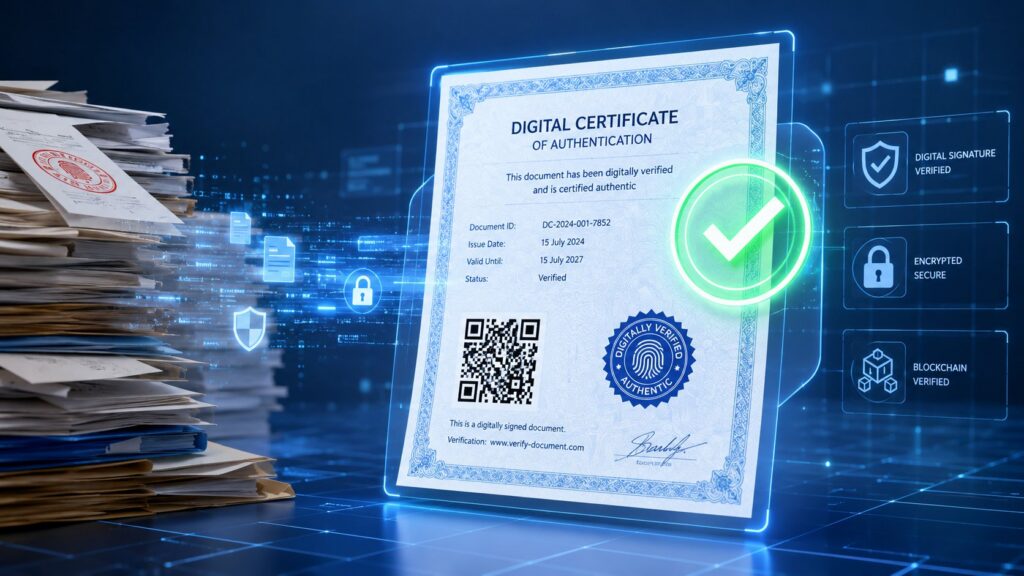
Rather than attaching a paper certificate to a physical document, an e-Apostille is issued electronically and secured using digital authentication technology. Depending on the issuing authority, it may include:
- A unique verification number
- A QR code
- A secure digital signature
- An online verification link
- Electronic encryption
These security features allow anyone receiving the document to confirm that it is authentic and has not been altered since it was issued.
The UK now offers e-Apostilles for certain eligible digital documents, making the legalisation process quicker and more convenient in appropriate cases.
When Is an e-Apostille Required?
An electronic apostille may be suitable if your document was originally issued in digital format and the receiving authority accepts electronic legalisation.
Common situations include:
- Immigration applications
- Visa applications
- Overseas employment
- University admissions
- Professional registrations
- International business transactions
- Legal proceedings abroad
- Property purchases overseas
- Residency applications
Before requesting an e-Apostille, always check whether the country and organisation receiving your document accepts electronic apostilles.
How Do I Verify an e-Apostille?
Verifying an e-Apostille is generally a simple process, but it is important to follow the correct steps.
Check the Verification Link
Many e-Apostilles include an official verification website where the document’s authenticity can be confirmed.
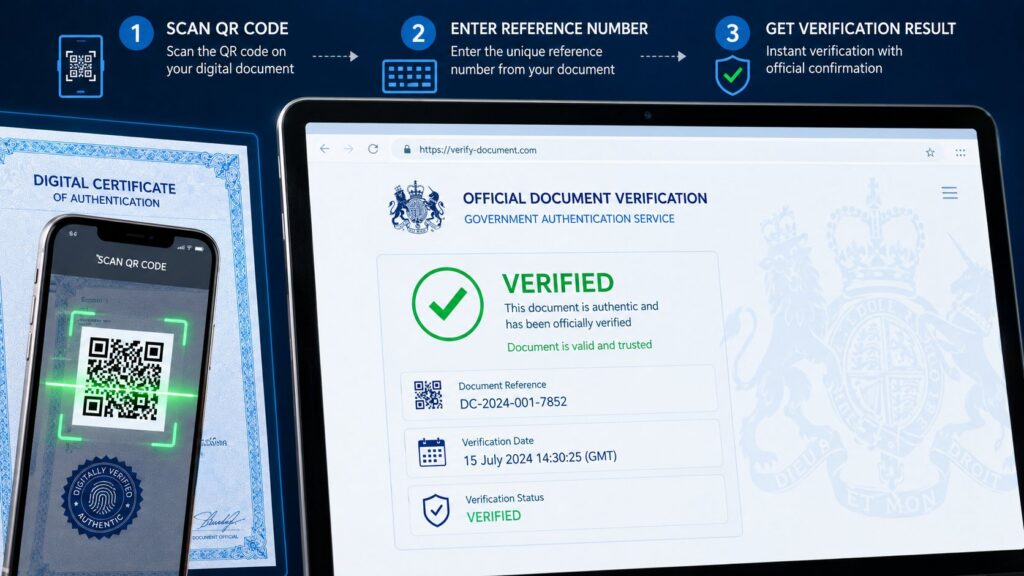
Entering the unique reference number or scanning the QR code allows the receiving authority to verify that the apostille was genuinely issued.
Scan the QR Code
Many modern e-Apostilles contain a QR code.
When scanned with a smartphone or QR reader, it directs you to the official verification page where the apostille details can be checked.
This helps confirm that the document has not been modified or forged.
Verify the Digital Signature
Electronic apostilles often contain a secure digital signature.
If the signature is valid, your PDF software or verification platform will indicate that the document has not been altered since it was issued.
If the digital signature is missing or invalid, the receiving authority may reject the document.
Check the Reference Number
Every genuine e-Apostille includes a unique identification number.
This reference number can usually be searched through the issuing authority’s verification system to confirm the authenticity of the apostille.
Review the Document Details
When verifying an e-Apostille, ensure that:
- The document title matches.
- The issue date is correct.
- The issuing authority is correct.
- The reference number matches.
- The digital certificate is valid.
Any inconsistencies should be investigated before the document is submitted overseas.
Why Is Verification So Important?
Verification protects both the document holder and the organisation receiving the document.
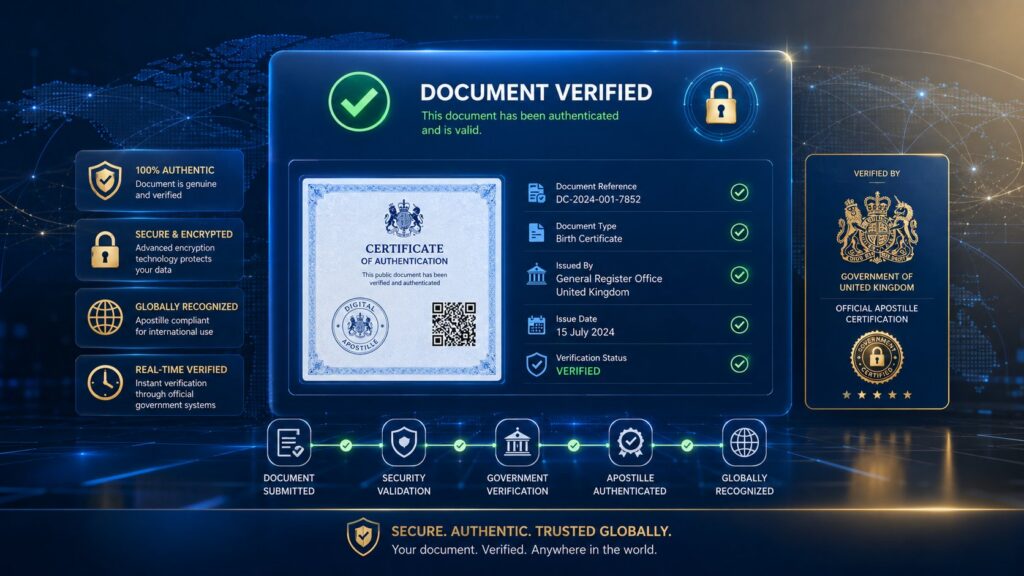
A verified e-Apostille provides confidence that:
- The document has been officially authenticated.
- The apostille was issued by the correct authority.
- The document has not been tampered with.
- The digital signature remains valid.
- The information is authentic and trustworthy.
Many employers, universities, courts, and immigration authorities now verify electronic apostilles before accepting documents.
For this reason, understanding the verification process can help avoid unnecessary delays in your international application.
How Does the UK e-Apostille Process Work?
Whether you require a traditional paper apostille or an electronic apostille, the authentication process follows a similar structure. The main difference is that an e-Apostille is issued digitally rather than being physically attached to a paper document.
Step 1: Check Whether Your Document Is Eligible
The first step is determining whether your document can receive an electronic apostille.
The document should:
- Be complete and clearly readable
- Be issued by a recognised UK authority or appropriately certified
- Meet the FCDO’s requirements for electronic authentication
- Be accepted in electronic format by the receiving country
If the document does not meet these conditions, a traditional paper apostille may be more appropriate.
Step 2: Determine Whether Certification Is Required
Not every document can be submitted directly to the FCDO.
Some private documents require certification by a UK solicitor before an apostille can be issued.
These commonly include:
- Employer reference letters
- Medical letters
- Powers of Attorney
- Company documents
- Private agreements
- Affidavits
Public documents such as birth certificates, marriage certificates and death certificates often do not require solicitor certification because they are issued by official government bodies.
Step 3: Submit the Document for Apostille
Once the document is ready, it is submitted for authentication.
The Foreign, Commonwealth & Development Office (FCDO) checks:
- The signature
- Official seal
- Certification
- Authority of the person who signed the document
Once these checks have been completed successfully, the apostille is issued.
Step 4: The e-Apostille Is Issued
If the document qualifies for an electronic apostille, the authenticated certificate is issued digitally.
The e-Apostille normally includes several security features, including:
- A unique reference number
- Digital authentication
- Secure verification system
- QR code
- Electronic signature
These features allow overseas authorities to verify the document quickly and securely.
Step 5: Verify Before Sending Overseas
Before sending your document abroad, it is good practice to verify the e-Apostille yourself.
Checking the verification link, QR code or reference number ensures that everything is working correctly and avoids unnecessary delays if the receiving authority carries out its own verification.
Which Documents Commonly Require an Apostille?
Many different UK documents require authentication before they can be accepted overseas.
Examples include:
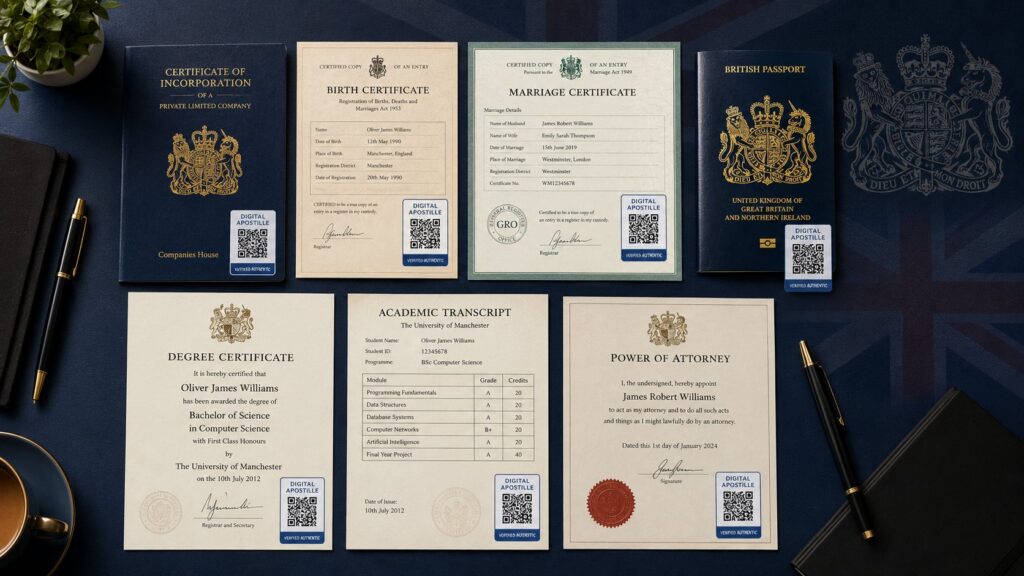
Personal Documents
Personal documents are among the most frequently legalised.
These include:
- Birth certificates
- Marriage certificates
- Death certificates
- Civil partnership certificates
- Change of name deeds
- Adoption certificates
These documents are commonly required for immigration, residency, marriage abroad and family applications.
Educational Documents
Educational qualifications often require an apostille UK before being accepted by foreign employers or universities.
Examples include:
- Degree certificates
- Diplomas
- Academic transcripts
- Professional qualifications
- Teaching certificates
- School records
Employment Documents
People moving overseas for work often need employment-related documents legalised.
These include:
- Employer reference letters
- Employment contracts
- HR confirmation letters
- Salary verification letters
- Experience certificates
Medical Documents
Medical documents are frequently requested by overseas immigration authorities and healthcare providers.
Examples include:
- Doctor’s letters
- Medical reports
- Vaccination records
- Disability assessments
- Fit-to-fly certificates
- Occupational health reports
Business Documents
Businesses expanding internationally may need a variety of commercial documents authenticated.
Examples include:
- Certificate of Incorporation
- Articles of Association
- Company resolutions
- Powers of Attorney
- Commercial invoices
- Contracts
- Shareholder documents
Professional document legalisation UK services can help businesses prepare these documents correctly before submission.
How Long Does the Apostille Process Take?
The exact processing time depends on several factors.
These include:
- The document type
- Whether solicitor certification is required
- FCDO processing times
- Delivery method
- Whether an electronic or paper apostille is needed
Typical services include:
Standard Service
Usually completed within several working days.
Priority Service
Urgent applications may be processed more quickly where available.
Courier Delivery
Tracked courier services can significantly reduce overall delivery times, especially for international customers.
Using a trusted apostille service UK provider often helps avoid unnecessary delays by ensuring documents are correctly prepared before submission.
Common Mistakes to Avoid
Many applications are delayed because of avoidable mistakes.
Not Checking Whether the Destination Country Accepts e-Apostilles
Not every country accepts electronic apostilles.
Always confirm the requirements before submitting your documents.
Sending the Wrong Document Format
Some overseas authorities insist on original paper documents with a traditional FCDO apostille attached.
Forgetting to Verify the e-Apostille
Even if your e-Apostille has been issued successfully, it is sensible to verify it before forwarding it to an overseas organisation.
Using Uncertified Private Documents
Private documents often require solicitor certification before they can receive an apostille.
Waiting Until the Last Minute
Visa applications, university admissions and overseas employment deadlines often leave little room for unexpected delays.
Applying early reduces stress and gives time to resolve any issues.
Attempting the Process Without Professional Advice
Different countries have different legalisation requirements.
An experienced apostille service UK provider can help ensure your documents are prepared correctly and accepted without unnecessary complications.
Why Choose a Professional Apostille Service?
Applying for an apostille may appear straightforward, but every document type has its own requirements. Using a professional apostille service UK can save time, reduce errors, and provide reassurance throughout the process.
A specialist provider can:
- Review your documents before submission.
- Advise whether an electronic or paper apostille is appropriate.
- Arrange solicitor certification where required.
- Submit documents to the FCDO on your behalf.
- Check that your documents meet country-specific requirements.
- Help minimise delays and reduce the risk of rejection.
Whether you’re legalising documents for work, study, immigration, business, or personal matters, professional guidance can make the process much smoother.
Frequently Asked Questions
How can I verify an e-Apostille?
Most e-Apostilles can be verified using the official verification website, QR code, or unique reference number provided with the document.
Are e-Apostilles legally valid?
Yes. An e-Apostille is legally valid when it has been issued by the appropriate authority and is accepted by the receiving country.
Can every country accept an e-Apostille?
No. While many Hague Convention countries accept electronic apostilles, some authorities still require traditional paper apostilles.
Which UK documents can receive an apostille?
Many documents can be apostilled, including birth certificates, marriage certificates, degree certificates, employer reference letters, medical documents, business documents, and Powers of Attorney.
How long does it take to obtain an apostille?
Processing times vary depending on the document type, certification requirements, and FCDO processing times. A professional apostille service can often help speed up the process.
Should I verify my e-Apostille sending it overseas?
Yes. Verifying your e-Apostille before submission helps ensure the document is genuine and reduces the risk of delays or rejection by overseas authorities.
Conclusion
Electronic apostilles are transforming the way UK documents are authenticated for international use, offering a secure and efficient alternative to traditional paper certificates. However, receiving an e-Apostille is only part of the process. Verifying its authenticity is equally important to ensure that overseas employers, universities, government departments, and legal authorities can trust and accept your documents.
By checking the official verification link, scanning the QR code, confirming the unique reference number, and validating the digital signature, you can quickly confirm that your e-Apostille has been issued correctly and remains secure. Taking a few minutes to verify your document before sending it abroad can help prevent unnecessary delays and give you confidence that your paperwork will be accepted.
Whether you need an e-Apostille or a traditional FCDO apostille, understanding the apostille UK process and the requirements of your destination country is essential. Every document and every application is different, so obtaining professional advice can save time and reduce the risk of complications.
If you need reliable assistance with apostille documents UK, document legalisation UK, or verifying whether your documents are suitable for an electronic or paper apostille, the experienced team at 2eApostille is ready to help.
Visit our Apostille Service UK page today:
Our specialists can guide you through every stage of the process, arrange certification where required, manage your FCDO apostille application, and ensure your documents are prepared for international use quickly, securely, and professionally. Whether you’re applying for a visa, studying overseas, accepting an international job offer, conducting business abroad, or handling legal matters in another country, 2eApostille provides a trusted apostille service UK tailored to your needs.