
What If My Name on the Document Doesn’t Match My Passport?
Introduction
What if my name on the document doesn’t match my passport? This is one of the most common concerns for people applying for an apostille UK. If you’re planning to use a UK document overseas, one of the first things you may notice is that the name on your document doesn’t exactly match the name on your passport. Perhaps you’ve recently married and changed your surname, reverted to your maiden name, added or removed a middle name, or your passport has been renewed with updated personal details. Whatever the reason, it’s natural to wonder whether this difference will affect your ability to obtain an apostille.
Many people assume that a mismatch between their passport and official documents automatically means their application will be rejected. Fortunately, this is not always the case. In many situations, you can still obtain an apostille UK for your document, provided you can demonstrate why the names differ and supply any additional supporting documents if required by the receiving authority.
Understanding how document legalisation UK works is essential before sending your documents abroad. While the FCDO apostille verifies the authenticity of a signature, seal, or stamp on a document, it does not confirm that the information within the document—including your name—is correct. This distinction is important because overseas authorities may have their own requirements regarding name consistency.
Before reading further, you may also find this short video helpful, which explains this topic in a simple and easy-to-understand way.
Watch here:
If you need professional assistance with your documents, our dedicated Apostille Service UK can help guide you through the process from start to finish:
What Is an Apostille?
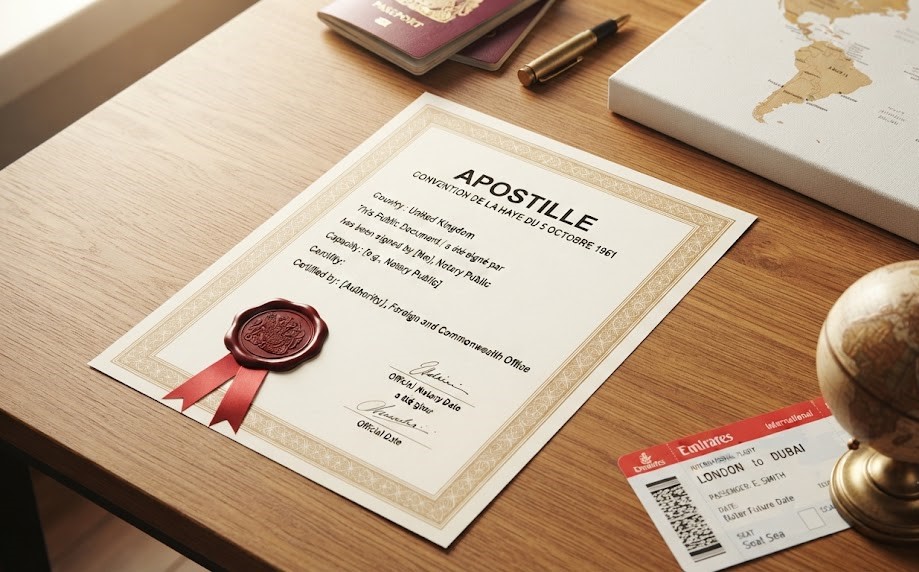
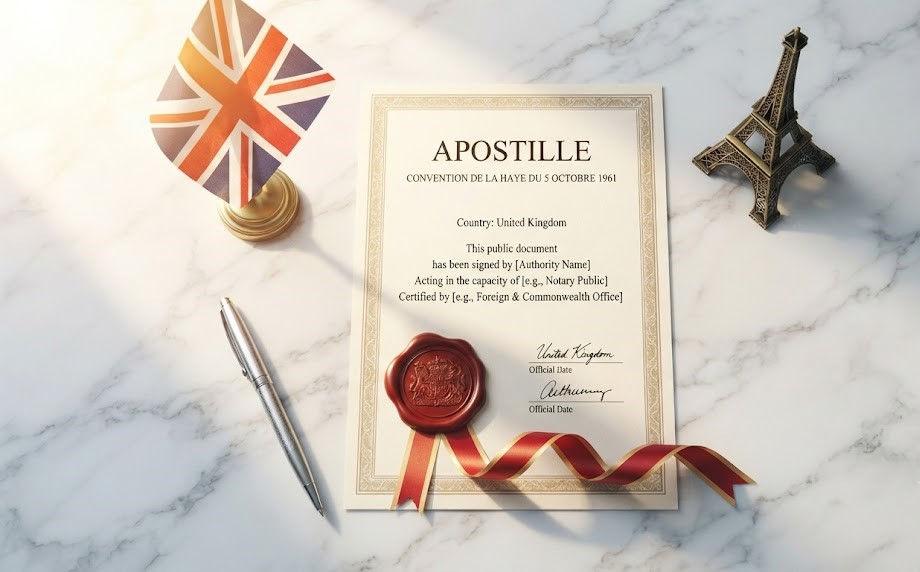
An apostille is an official certificate issued by the Foreign, Commonwealth & Development Office (FCDO) in the United Kingdom. Its purpose is to verify that a signature, seal, or stamp on a UK document is genuine so that the document can be accepted by authorities in another country that is a member of the Hague Apostille Convention.
An apostille does not certify that the information written on the document is accurate. Instead, it confirms that:
- The signature is genuine.
- The person signing the document had the authority to do so.
- Any official seal or stamp is authentic.
This means that the FCDO apostille authenticates the document itself rather than checking whether the name matches your passport.
When Is an Apostille Required?
Many foreign organisations and government departments require UK documents to be apostilled before they will accept them.
Common situations include:
- Immigration applications
- Overseas employment
- Student visa applications
- Marriage abroad
- Residency permits
- International business transactions
- Adoption procedures
- Property purchases overseas
- Foreign court proceedings
- Medical treatment abroad
Whether you’re relocating permanently or temporarily, obtaining an apostille service UK ensures your UK documents are recognised internationally.
Does a Name Mismatch Stop You from Getting an Apostille?
In most cases, no.
A name difference does not automatically prevent you from obtaining an apostille.
The reason is simple.
The FCDO is responsible for authenticating signatures—not checking whether your passport matches every document you submit.
However, while you may successfully obtain an apostille, the organisation overseas requesting your document may ask you to explain why the names differ.
This is why it’s important to understand both the apostille process and the destination country’s document requirements.
How Does the UK Apostille Process Work?
Obtaining an apostille is generally straightforward when your documents have been correctly prepared.
Step 1: Review Your Documents
Check that your documents are:
- Original where required
- Complete
- Clearly legible
- Properly signed
- Free from damage
If there is a name difference, identify any supporting documents that explain it.
Step 2: Determine Whether Certification Is Required
Some documents, such as birth certificates, can often be apostilled directly.
Others, including private documents, employer reference letters, or certain medical letters, may require solicitor certification before submission.
Step 3: Submit the Documents
Your documents are submitted to the Foreign, Commonwealth & Development Office either directly or through a professional apostille service UK provider.
Step 4: Verification by the FCDO
The FCDO verifies the relevant signature or official seal.
If everything is in order, the apostille certificate is attached.
Step 5: Return of Your Documents
Your documents are returned and are generally ready for use overseas, subject to any additional legalisation requirements of the destination country.
How Can You Prove That Both Names Belong to the Same Person?
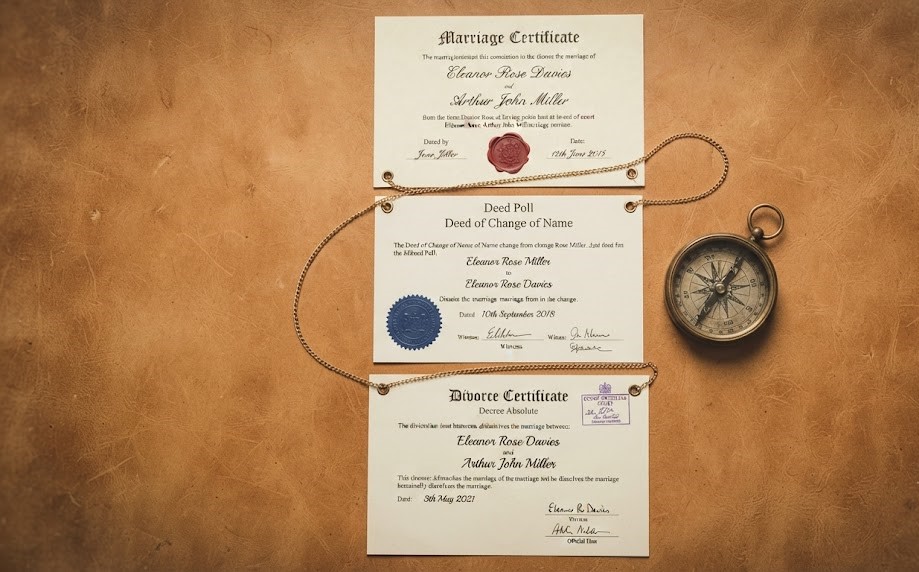
Although the FCDO apostille does not compare your passport with your documents, the organisation overseas may ask for evidence that both names belong to the same individual.
Providing the correct supporting documents can prevent unnecessary delays and make the process much smoother.
Marriage Certificate
If your surname changed after marriage, your marriage certificate is usually the most commonly accepted supporting document. It clearly links your maiden name to your married name and is often requested when presenting birth certificates, academic qualifications, or employment records abroad.
Deed Poll Certificate
If you legally changed your name by deed poll, submitting the official deed poll document alongside your apostilled document helps establish your identity.
Civil Partnership Certificate
Individuals who have entered into a civil partnership and changed their name can usually use their civil partnership certificate as supporting evidence.
Divorce Certificate
If you reverted to your maiden name after divorce, a divorce certificate may help explain why your passport and older documents show different surnames.
Adoption Certificate
For adopted individuals whose names changed following adoption, the adoption certificate can demonstrate the legal change of identity.
Statutory Declaration
In some situations, particularly where historical documents contain slight name variations, a solicitor may recommend preparing a statutory declaration explaining the difference. This may be useful depending on the requirements of the country receiving the documents.
Does the FCDO Check Whether My Name Matches My Passport?
This is one of the most common misunderstandings about the apostille process.
The answer is no.
The Foreign, Commonwealth & Development Office is responsible for verifying:
- The authenticity of the signature.
- The authority of the person who signed the document.
- The official seal or stamp where applicable.
The FCDO does not compare your passport with your birth certificate, degree certificate, marriage certificate, employment letter, or other personal documents.
However, the foreign authority receiving your documents may carry out those checks themselves.
Why the Name on Your Document Doesn’t Match Your Passport
Many people requiring an apostille service UK experience perfectly legitimate name differences.
Here are some common examples.
Maiden Name on Birth Certificate
A birth certificate always records the name given at birth. If you later change your surname after marriage, your passport may display your married surname while your birth certificate remains unchanged.
This is completely normal.
Degree Certificate in an Old Name
Many people completed their university education before getting married or legally changing their name.
As a result, degree certificates frequently display an earlier surname.
Most overseas employers accept this provided suitable supporting evidence is available.
Employment Documents
Older employment references may contain a previous surname or include different middle names.
Again, this is usually not a problem when appropriate documentation accompanies the application.
Passport Renewal
Some passport renewals include additional middle names or corrected spellings that older documents may not contain.
Minor differences of this kind are often easily explained.
What Documents Commonly Require an Apostille?
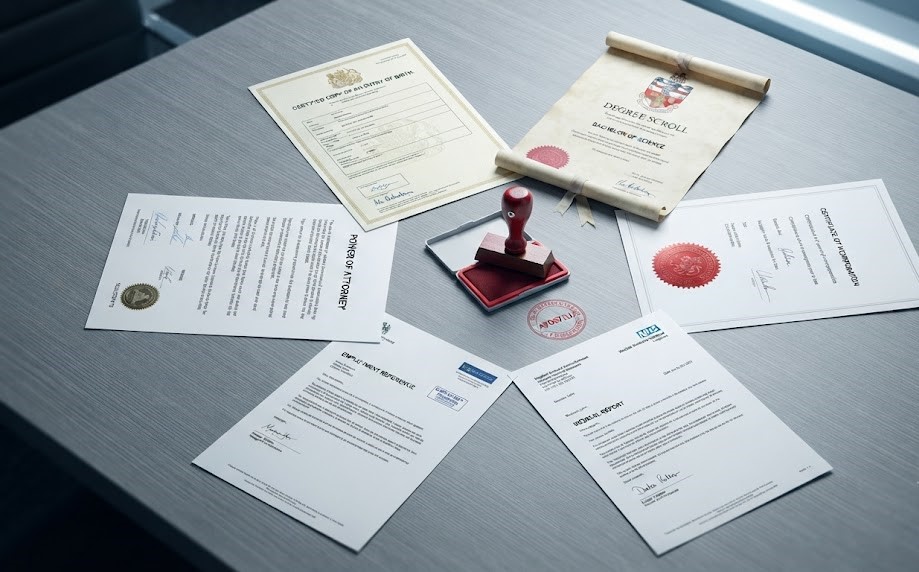
Whether or not your name has changed, many UK documents regularly require document legalisation UK before being used overseas.
These include:
Birth Certificates
Required for immigration, citizenship, visas, and residency applications.
Marriage Certificates
Used when registering marriages abroad or applying for family visas.
Degree Certificates
Often requested by overseas employers, universities, and professional licensing bodies.
Academic Transcripts
Required by educational institutions and employers overseas.
DBS Certificates
Frequently needed for teaching, healthcare, childcare, and volunteer work abroad.
Medical Documents
Including medical reports, doctor’s letters, vaccination records, and fit-to-fly certificates.
Employment Reference Letters
Commonly required for overseas employment applications.
Powers of Attorney
Needed for international property purchases and legal matters.
Business Documents
Companies frequently apostille:
- Certificates of Incorporation
- Articles of Association
- Board Resolutions
- Commercial Contracts
- Company Registers
- Certificates of Good Standing
Typical Apostille Processing Times
Processing times vary depending on the document type and whether additional certification is required.
Typical timelines include:
Standard Service
Usually completed within several working days, depending on current FCDO processing times.
Fast-Track Service
Priority services may reduce turnaround times for urgent applications.
Courier Delivery
Using tracked courier services can speed up both domestic and international delivery.
If you are working to a strict deadline, using a professional apostille service UK provider can help minimise delays.
Common Mistakes to Avoid
Many delays occur because applicants make avoidable mistakes.
Assuming the Document Cannot Be Apostilled
A different name does not automatically mean the document will be rejected.
Failing to Include Supporting Documents
Where a legal name change has occurred, including evidence from the outset can save valuable time.
Sending Damaged Documents
Documents should be complete, clean, and clearly legible.
Ignoring Overseas Requirements
Different countries may request different supporting evidence.
Always check the specific requirements of the country where the document will be used.
Waiting Until the Last Minute
International applications often involve several stages, including apostille, translation, and courier delivery.
Starting early helps avoid unnecessary stress.
Why Use a Professional Apostille Service?
Although it is possible to arrange an apostille yourself, many people choose a professional provider because the process can become confusing when documents contain different names.
An experienced apostille service UK provider can:
- Review your documents before submission.
- Identify potential issues.
- Advise whether solicitor certification is required.
- Arrange certification where necessary.
- Submit documents to the FCDO on your behalf.
- Help ensure your documents meet overseas requirements.
- Reduce the likelihood of delays or rejection.
Professional guidance can be particularly valuable when multiple documents display different names due to marriage, divorce, adoption, or legal name changes.
Frequently Asked Questions
1. Can I get an apostille if my name on the document doesn’t match my passport?
Yes. A name change does not usually prevent a document from being apostilled. You may simply need supporting evidence, such as a marriage certificate or deed poll.
2. Will the FCDO compare my passport with my document?
No. The FCDO apostille verifies the signature or official seal on the document, not whether your name matches your passport.
3. Should I update my old certificates before getting an apostille?
Not necessarily. Many older documents remain valid even if they show a previous name. However, supporting documents may be required by the receiving authority.
4. Can I use my marriage certificate to explain a name difference?
Yes. A marriage certificate is one of the most common documents used to link a maiden name with a married surname.
5. What if there is a spelling mistake in my name?
Minor spelling differences may require clarification, while significant errors may need to be corrected by the issuing authority before obtaining an apostille.
6. Where can I get help with apostille documents?
A professional apostille service UK provider, such as 2eApostille, can review your documents, advise on supporting evidence, and manage the entire apostille process on your behalf.
Conclusion
Having a different name on your document and your passport is a common situation and, in most cases, it does not prevent you from obtaining an apostille UK. Whether your name changed because of marriage, divorce, adoption, or a legal name change, the important step is ensuring you have the appropriate supporting documentation if it is requested by the overseas authority.
The FCDO apostille process focuses on verifying the authenticity of signatures and official seals rather than comparing personal details across documents. However, foreign authorities may ask for additional evidence to confirm that all documents relate to the same individual.
By understanding the requirements in advance, preparing the correct supporting documents, and using a trusted document legalisation UK provider, you can minimise delays and ensure your apostille documents UK are accepted overseas without unnecessary complications.
If you are unsure whether your documents are suitable for an apostille or need advice about a name mismatch, expert guidance can make the process much simpler.