
What if the HR manager who signed my employment letter has resigned?
Introduction
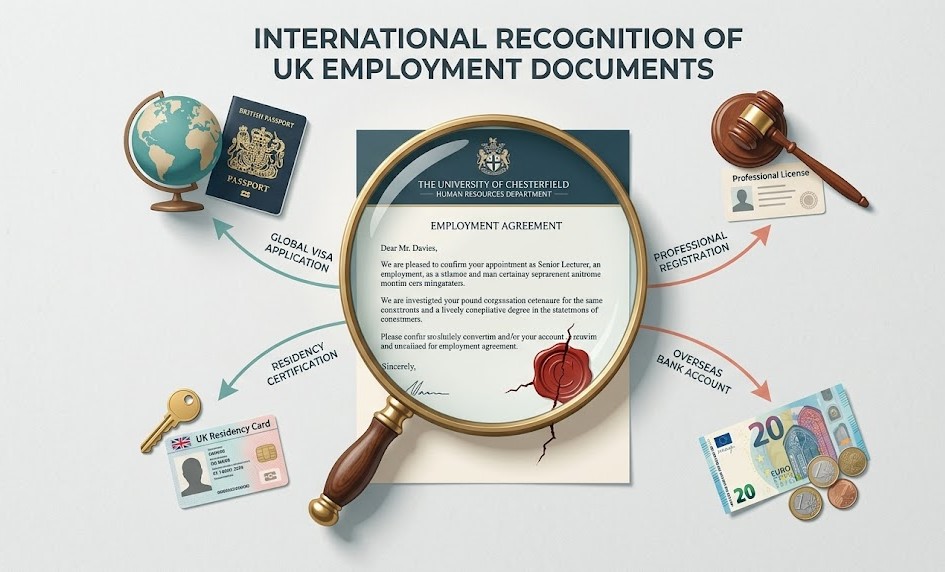
Employment letters are commonly used for visa applications, immigration processes, overseas employment, residency permits, professional licensing, and other international purposes. When a UK employment letter needs to be presented abroad, foreign authorities often require proof that the document is genuine. This is where an apostille becomes important.
A common concern arises when the HR manager who originally signed the employment letter has since resigned, retired, or moved to another company. Many people assume that once the signatory leaves the organisation, the document automatically becomes invalid for apostille purposes. Fortunately, this is not usually the case.
In many situations, an employment letter can still be used for apostille and document legalisation UK services even if the HR manager no longer works for the company. The key issue is whether the document can be properly authenticated and whether the signature can be supported through the appropriate certification process.
This guide explains everything you need to know about apostilling an employment letter after an HR manager has resigned, including the UK apostille process, common challenges, practical solutions, and how to avoid delays.
If you need professional assistance with your documents, visit our Apostille Service UK page:
Did your HR manager leave the company after signing your employment letter? Watch this quick video explaining what happens next and whether your document can still be apostilled:
What Is an Apostille?
An apostille is an official certificate issued by the Foreign, Commonwealth & Development Office (FCDO) in the United Kingdom.
The purpose of an apostille is to confirm:
- A signature on a document is genuine
- The person who signed the document was authorised to do so
- Any official seal or stamp is authentic
The apostille does not verify the contents of the document. Instead, it authenticates the signature or certification attached to it.
Countries that are members of the Hague Apostille Convention recognise apostilles issued by other member countries. This simplifies the process of using UK documents abroad and reduces the need for further authentication in many cases.
The FCDO apostille is one of the most commonly requested forms of international document authentication.
When Is an Employment Letter Apostilled?
Employment letters are frequently used abroad and may require apostille UK certification for various purposes.
Common examples include:
Overseas Employment Applications
Foreign employers may require proof of previous employment history.
Immigration and Visa Applications
Many immigration authorities request confirmation of employment records.
Residency Permits
Employment letters may support residency or work permit applications.
Professional Licensing
Certain professions require evidence of work experience when applying overseas.
Banking and Financial Matters
Foreign banks sometimes request employment verification documents.
Family Sponsorship Applications
Employment evidence may be needed to demonstrate financial stability.
In all these situations, document legalisation UK services help ensure that foreign authorities accept UK-issued documents.
Does an HR Manager Resigning Make the Employment Letter Invalid?
In most cases, no.
The fact that an HR manager has resigned does not automatically invalidate an employment letter that was properly issued while they were employed by the company.
The important question is whether the document was genuine at the time it was created and whether the signature can be authenticated for apostille purposes.
If the letter was legitimately issued on company letterhead and signed by an authorised HR representative, it may still be suitable for apostille processing.
However, some additional steps may be required depending on the circumstances.
Why Signature Verification Matters
The FCDO apostille process relies on verifying signatures.
For many employment letters, the HR manager’s signature is not directly held on the FCDO signature database. This means that the FCDO cannot usually verify the signature in the same way it can verify signatures from certain public officials.
As a result, employment letters commonly require solicitor certification before an apostille can be issued.
Rather than verifying the HR manager’s signature, the FCDO verifies the solicitor’s signature.
This is one reason why the resignation of the HR manager often has little impact on the overall apostille process.
How the Apostille Process Works for Employment Letters
Step 1: Review the Employment Letter
The document should include:
- Company letterhead
- Employee details
- Employment dates
- HR manager signature
- Date of issue
- Contact information where available
Step 2: Determine Whether Certification Is Required
Most employment letters require solicitor certification before submission.
Step 3: Solicitor Certification
A solicitor reviews the document and certifies it according to legal requirements.
Step 4: FCDO Submission
The certified document is submitted for FCDO apostille processing.
Step 5: Apostille Issued
The apostille certificate is attached to the document.
Step 6: Return Delivery
The completed document is returned for international use.
Using an experienced apostille service UK provider can help ensure each stage is completed correctly.
What If the Company Still Exists?
If the company remains operational, obtaining an apostille is often relatively straightforward.
Possible options include:
Use the Existing Employment Letter
If the document remains valid and properly signed, certification may be sufficient.
Request a New Employment Letter
Some applicants prefer obtaining an updated letter signed by a current HR representative.
Obtain Supporting Confirmation
The company may be able to confirm the authenticity of the original letter if required.
What If the Company Has Closed Down?
A closed company creates additional challenges but does not necessarily prevent apostille processing.
Possible solutions include:
Using Existing Documents
If the original employment letter is available, certification may still be possible.
Obtaining Company Records
Historic records may be available through administrators or company archives.
Using Alternative Evidence
Payslips, contracts, tax records, or reference letters may support your application.
Seeking Professional Advice
A document legalisation UK specialist can recommend the most suitable approach.
Can a Certified Copy Be Apostilled?
Yes, in many cases.
A solicitor can certify a copy of the employment letter as a true copy of the original.
The FCDO then apostilles the solicitor’s certification rather than the HR manager’s signature.
This approach is commonly used when:
- Original documents must be retained
- Documents are old
- Signatories have left the company
- Multiple copies are required
Which Documents Commonly Require Apostille?
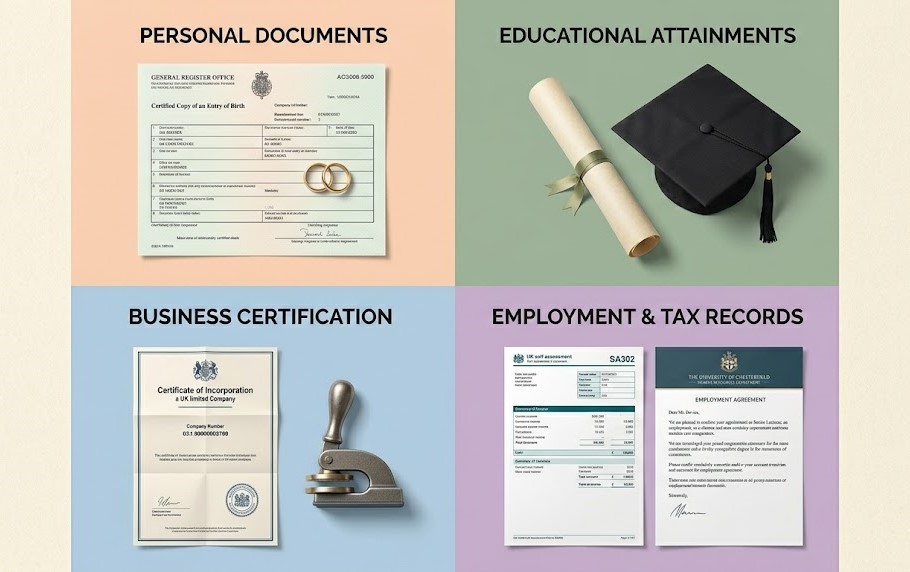
Employment letters are only one category of apostille documents UK applicants frequently submit.
Personal Documents
- Birth certificates
- Marriage certificates
- Death certificates
- Adoption certificates
Educational Documents
- Degree certificates
- Diplomas
- Academic transcripts
- Professional qualifications
Employment Documents
- Employment letters
- Reference letters
- Work experience certificates
- Employment contracts
Business Documents
- Certificates of incorporation
- Company resolutions
- Commercial agreements
- Powers of attorney
Typical Processing Times
Processing times depend on several factors.
Standard Apostille Service
Usually completed within several working days.
Express Services
Faster options may be available depending on circumstances.
Additional Legalisation
Some countries require embassy legalisation after the apostille, increasing overall processing time.
Applicants should allow extra time when documents are needed for urgent overseas deadlines.
Common Mistakes to Avoid
Assuming the Document Is Invalid
An HR manager leaving the company does not automatically invalidate an employment letter.
Sending Uncertified Copies
Many employment letters require solicitor certification.
Ignoring Country-Specific Requirements
Different countries may have different legalisation requirements.
Waiting Until the Last Minute
International applications often have strict deadlines.
Using Incomplete Documents
Missing signatures, dates, or company details may cause delays.
Not Seeking Professional Advice
Complex cases are often easier to resolve with expert guidance.
When Should You Request a New Employment Letter?
A new employment letter may be advisable when:
- The original document is outdated
- The signature is unclear
- The letter lacks company letterhead
- Foreign authorities require a recent letter
- Important information has changed
Obtaining a fresh document can sometimes simplify the apostille process.
Why Use a Professional Apostille Service UK Provider?
Many people underestimate the complexity of document authentication.
A professional apostille service UK provider can:
- Review documents before submission
- Arrange solicitor certification
- Manage FCDO apostille applications
- Reduce delays
- Help avoid rejection
- Provide country-specific guidance
This can be particularly useful when dealing with former employees, retired signatories, or older company documents.
Frequently Asked Questions
Can I apostille an employment letter if the HR manager has resigned?
Yes. In most cases, the resignation of the HR manager does not prevent apostille processing.
Does the HR manager need to be contacted?
Usually not. Many employment letters are apostilled through solicitor certification rather than direct signature verification.
What if the company no longer exists?
The document may still be usable, depending on the available evidence and certification options.
Can a certified copy be apostilled?
Yes. A solicitor can certify a copy, allowing the FCDO apostille to be applied to the solicitor’s certification.
How long does the apostille process take?
Processing times vary, but standard services typically take several working days.
Do all countries accept apostilles?
Many countries do under the Hague Apostille Convention. Some countries may require additional embassy legalisation.
Conclusion
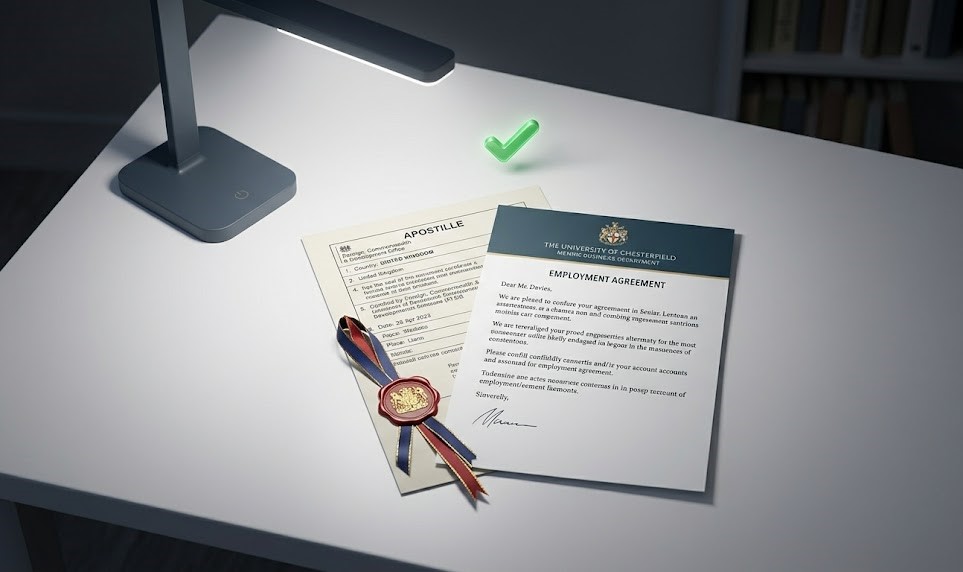
If the HR manager who signed your employment letter has resigned, there is usually no reason to panic. In most situations, the document can still be successfully processed through the apostille UK system.
The key consideration is whether the document can be properly authenticated. Because many employment letters are apostilled through solicitor certification rather than direct verification of the HR manager’s signature, the fact that the signatory has left the company often has little impact on the overall process.
Understanding the requirements for document legalisation UK services, preparing your documents correctly, and seeking expert guidance where necessary can help ensure a smooth and successful outcome.
Whether you need assistance with employment letters, academic certificates, business documents, or other apostille documents UK requirements, the experienced team at 2eApostille can help.
For fast, secure, and professional assistance, visit:
and let our specialists handle your apostille and legalisation requirements with confidence.