
Which documents are eligible for e-apostille?
Introduction
In today’s fast-paced, digital world, many people expect everything—including document legalisation—to be completed online. If you are planning to use UK documents abroad, you may have come across the term e-apostille and wondered whether your documents qualify for it. Understanding which documents are eligible for an e-apostille is essential to avoid delays, rejections, and unnecessary costs.
Whether you are moving abroad, applying for a job overseas, getting married in another country, or expanding your business internationally, ensuring your documents are properly legalised is crucial. This guide explains everything you need to know about e-apostille eligibility in the UK, including which documents qualify, how the process works, and common mistakes to avoid.
What Is an Apostille and Why Is It Required?
An apostille is an official certificate issued by the UK government that verifies the authenticity of a document for use in another country. It confirms that the signature, seal, or stamp on a document is genuine and recognised by the issuing authority.
In the UK, apostilles are issued by the Foreign, Commonwealth & Development Office (FCDO). This process is often referred to as FCDO apostille or document legalisation UK.
You typically need an apostille when:
- Moving abroad for work or study
- Getting married overseas
- Registering a birth in another country
- Conducting international business
- Opening a bank account abroad
Keywords like apostille service UK, apostille UK, and apostille documents UK are commonly searched by individuals who need help with this process.
What Is an E-Apostille?
An e-apostille (electronic apostille) is a digital version of a traditional apostille certificate. Instead of attaching a physical certificate to a paper document, the apostille is issued electronically and can be verified online.
However, this is where many people get confused.
Important Reality in the UK
The UK does not fully operate a completely digital e-apostille system for all documents. While some steps can be completed online, most documents still need to be physically submitted to the FCDO for verification.
That means:
- Fully digital e-apostilles are limited
- Only certain document types may be eligible
- Most standard documents still require physical processing
Which Documents Are Eligible for an E-Apostille?
1. Digitally Signed Documents
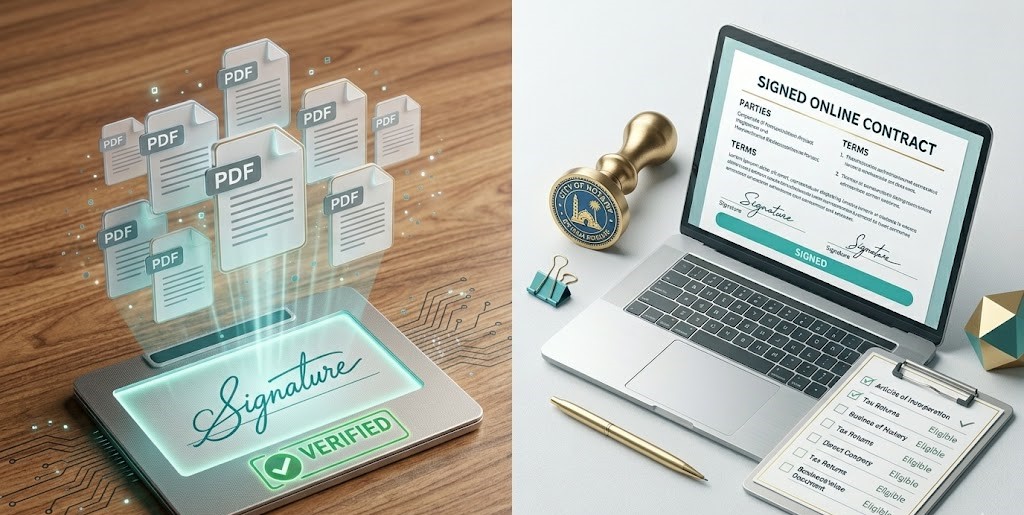
The main category eligible for an e-apostille in the UK includes documents that are:
- Digitally created (PDF format)
- Digitally signed by a UK solicitor or notary
- Authenticated using recognised electronic signatures
Examples include:
- Digital contracts
- Online declarations
- Electronic business agreements
- Digitally certified copies
These documents can sometimes be submitted electronically and processed without printing.
2. Notary-Signed Electronic Documents
If a UK notary public issues a document electronically with a secure digital signature, it may qualify for an e-apostille.
Typical examples:
- Notarised declarations in digital form
- Certified electronic copies of documents
- Legal statements signed digitally
However, the digital signature must meet strict verification standards.
3. Certain Business Documents
Some modern business documents created digitally may be eligible, such as:
- Electronic certificates of incorporation
- Digitally issued company documents
- Online corporate resolutions
Again, eligibility depends on whether the document includes a verifiable digital signature.
Which Documents Are NOT Eligible for an E-Apostille?
Most traditional documents still require a physical apostille. These include:
Personal Documents
- Birth certificates
- Marriage certificates
- Death certificates
- Divorce certificates
These must be original or certified copies and cannot be processed digitally.
Educational Documents
- Degree certificates
- Diplomas
- Transcripts
These usually require solicitor certification before obtaining an apostille.
Legal and Government Documents
- Police certificates (DBS checks)
- Court documents
- Powers of attorney
These often require notarisation and physical submission.
Business Documents (Paper-Based)
- Signed contracts on paper
- Company documents with wet signatures
- Affidavits
These documents must be apostilled in physical form.
Why Most Documents Still Require Physical Apostille
Even though digital processes are increasing, there are key reasons why physical apostilles are still the standard:
- Governments abroad often require original documents
- Many authorities do not accept digital certificates
- Verification systems vary between countries
- Fraud prevention measures favour physical validation
This is why the majority of apostille documents UK still go through traditional processing.
How to Obtain an Apostille in the UK
Step-by-Step Process
- Prepare Your Document
Ensure it is original or properly certified. - Check Certification Requirements
Some documents need a solicitor or notary certification first. - Submit to the FCDO
Documents are sent for verification. - Apostille Issued
The apostille certificate is attached. - Delivery
Documents are returned via post or courier.
If you want a faster and hassle-free option, you can use a professional apostille service UK like
https://2eapostille.co.uk/apostille-service-uk/
Timelines for Apostille and E-Apostille
Standard Processing
- 2 to 5 working days (FCDO processing)
- Additional time for postage
Urgent Service
- 24 to 48 hours (via agents)
E-Apostille (Limited Cases)
- Potentially faster
- Depends on document type and verification
Common Mistakes to Avoid
1. Assuming All Documents Qualify for E-Apostille
Many people believe everything can be done online. This is not true in the UK.
2. Submitting Uncertified Documents
Some documents require solicitor or notary certification first.
3. Sending Incorrect Document Formats
Digital submissions must meet strict requirements.
4. Not Checking Destination Country Rules
Some countries require embassy legalisation even after apostille.
5. Delaying the Process
Apostille processing can take time—plan ahead.
When Should You Use an Apostille Service?
Handling the process yourself is possible, but using a professional service offers several advantages:
- Faster processing
- Error checking
- Guidance on document eligibility
- Support for complex cases
- Secure handling of documents
A trusted provider ensures your documents are processed correctly the first time.
Apostille vs E-Apostille: Key Differences
| Feature | Apostille | E-Apostille |
|---|---|---|
| Format | Paper certificate | Digital certificate |
| Submission | Physical documents | Digital (limited cases) |
| Availability | Widely used | Limited in the UK |
| Acceptance | Globally recognised | Depends on country |
Do Foreign Authorities Accept E-Apostilles?
Acceptance varies depending on the country.
- Some countries accept digital apostilles
- Others require physical documents
- Many authorities still prefer paper-based verification
Always check the requirements of the destination country before choosing an e-apostille.
Frequently Asked Questions (FAQ)
1. Can all UK documents be e-apostilled?
No, only digitally signed documents may qualify. Most documents still require a physical apostille.
2. Are birth certificates eligible for e-apostille?
No, birth certificates must be apostilled in physical form.
3. Is e-apostille faster than traditional apostille?
In some cases, yes—but availability is limited in the UK.
4. Do I need a solicitor for e-apostille?
Yes, if your document requires digital certification.
5. Can I submit documents online only?
Not usually. Most documents still need to be posted.
6. Is e-apostille accepted worldwide?
No, acceptance depends on the country.
Conclusion
While the idea of a fully digital apostille process is appealing, the reality in the UK is that e-apostilles are still limited to specific document types. Most personal, educational, and legal documents require traditional apostille processing through the FCDO.
Understanding which documents are eligible for e-apostille can save you time, money, and frustration. If you are unsure, it is always best to seek expert guidance before submitting your documents.
If you want a fast, reliable, and stress-free experience, trust 2eApostille to handle your document legalisation needs. Whether you require a standard apostille or guidance on e-apostille eligibility, our experts are here to help.
Visit: https://2eapostille.co.uk/apostille-service-uk/
Get your documents processed quickly, securely, and professionally today.