
Do all countries accept an apostille?

Introduction
If you are planning to use UK documents abroad, one of the most common questions is: Do all countries accept an apostille? The answer is important because it determines how your documents must be prepared before they can be legally recognised overseas.
Many people assume that once a document has an apostille, it is valid everywhere. However, this is not always the case. While the apostille system simplifies document legalisation for many countries, not all countries follow this process.
Understanding whether your destination country accepts apostille can save you time, money, and unnecessary stress. It also helps you avoid delays in important life events such as getting married abroad, applying for a visa, studying overseas, or expanding your business internationally.
In this guide, we will explain how the apostille UK system works, which countries accept apostille, what to do if your destination country does not accept it, and how to ensure your apostille documents UK are properly prepared.
What Is an Apostille?
An apostille is an official certificate issued by the UK government through the Foreign, Commonwealth & Development Office (FCDO).
It confirms that a document is genuine and can be used internationally.
What Does an Apostille Verify?
- The authenticity of the signature
- The authority of the person who signed the document
- The validity of official stamps or seals
This process is part of document legalisation UK and ensures that UK documents are recognised abroad.
Do All Countries Accept an Apostille?
The Short Answer
👉 No, not all countries accept an apostille.
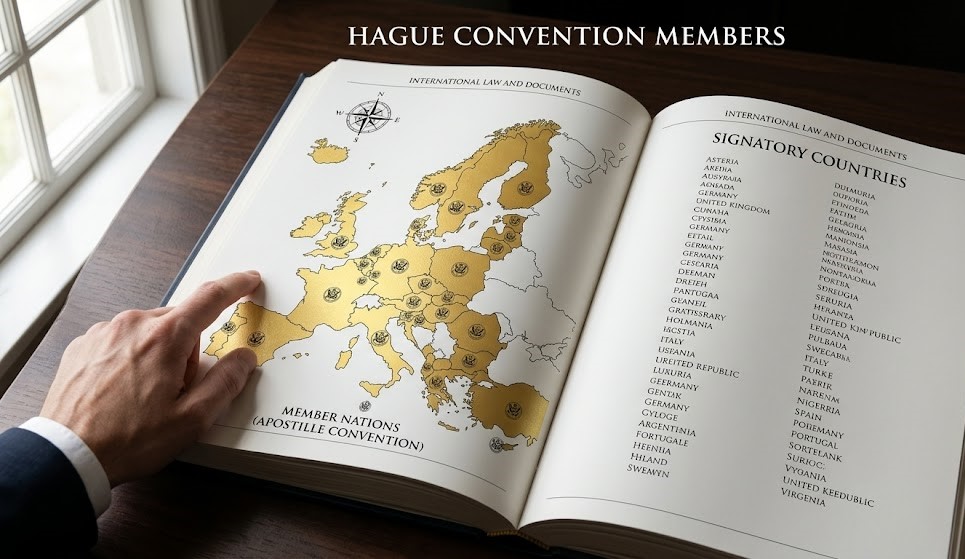
Only countries that are members of the Hague Apostille Convention accept apostille certificates.
What Is the Hague Apostille Convention?
The Hague Apostille Convention is an international agreement that simplifies document legalisation between member countries.
If a country is part of the Convention:
- An apostille is usually sufficient
- No further legalisation is required
If a country is not part of the Convention:
- Additional steps are required
- Embassy or consulate legalisation is needed
Countries That Accept Apostille
There are over 120 countries that accept apostille.
Examples of Apostille Countries
Europe
- France
- Spain
- Italy
- Germany
Americas
- United States
- Mexico
- Brazil
Asia
- Japan
- India
- South Korea
Oceania
- Australia
- New Zealand
These countries accept apostille documents UK without additional legalisation.
Countries That Do NOT Accept Apostille
Some countries are not part of the Hague Convention.
Examples Include:
- United Arab Emirates (UAE)
- Qatar
- Kuwait
- China
What Happens in These Cases?
You will need full document legalisation, which usually includes:
- Verification in the UK
- Apostille or certification
- Embassy legalisation
This process is more complex and time-consuming.
How to Get an Apostille in the UK
Obtaining an apostille in the UK is straightforward.
Step-by-Step Process
Step 1: Prepare Your Documents
Ensure they are original or certified copies.
Step 2: Check Requirements
Some documents may need notarisation.
Step 3: Submit to FCDO
Documents are processed for FCDO apostille.
Step 4: Receive Apostille
Your documents are returned ready for international use.
Which Documents Require Apostille?
Personal Documents
- Birth certificates
- Marriage certificates
- Divorce documents
Educational Documents
- Degree certificates
- Diplomas
Educational Documents
- Degree certificates
- Diplomas
Legal Documents
- Power of attorney

Apostille Processing Times
- Power of attorneyApostille Processing Times
- Standard service: 5–10 working days
- Express service: 1–3 working days
- Planning ahead is essential to avoid delays.
Common Mistakes to Avoid
1. Assuming All Countries Accept Apostille
Always check your destination country.
2. Submitting Incorrect Documents
Ensure documents are valid and complete.
3. Leaving It Too Late
Start early to avoid stress.
4. Ignoring Embassy Requirements
Some countries require additional steps
5. Not Using a Professional Service
Errors can lead to delays or rejection.
Apostille vs Embassy Legalisation
| Feature | Apostille | Embassy Legalisation |
|---|---|---|
| Used for | Hague Convention countries | Non-Hague countries |
| Complexity | Simple | More complex |
| Time | Faster | Longer |
| Cost | Lower | Higher |
Understanding this difference is crucial for proper document legalisation UK.
Why Use a Professional Apostille Service UK?
Using a professional apostille service UK provides:
- Faster turnaround
- Expert guidance
- Reduced risk of errors
- Stress-free process
For reliable service, visit:
https://2eapostille.co.uk/apostille-service-uk/
Frequently Asked Questions
1. Do all countries accept apostille?
No, only countries in the Hague Apostille Convention accept apostille.
2. What if my destination country does not accept apostille?
You will need embassy legalisation.
3. How do I know if a country accepts apostille?
Check if it is part of the Hague Convention.
4. How long does apostille take in the UK?
Usually 5–10 working days.
5. Can I use apostille for business documents?
Yes, many business documents require apostille.
6. Is apostille valid forever?
The apostille does not expire, but documents may have validity limits.
Conclusion
So, do all countries accept an apostille? The answer is no—only countries that are part of the Hague Apostille Convention accept apostille certificates. For other countries, additional legalisation steps are required.
Understanding this distinction is essential when preparing your apostille documents UK. It helps you avoid delays, ensures your documents are accepted, and makes the entire process smoother.
If you are unsure about your requirements, using a professional apostille service UK can make all the difference.
👉 Get started today:
https://2eapostille.co.uk/apostille-service-uk/
With expert support from 2eApostille, your apostille UK and document legalisation UK needs are handled quickly and efficiently—so you can move forward with confidence.