
How do I send documents for an apostille (by post, courier, email for e-apostille)?
Introduction
When you need to use UK documents abroad, one of the most important steps is getting them legalised through an apostille. However, many people are unsure about the correct way to send their documents for processing. Should you post them? Use a courier? Or can you submit them electronically?
Understanding how to send documents for an apostille is essential to avoid delays, rejections, or even lost paperwork. Whether you are preparing for a wedding abroad, applying for a job overseas, or handling international business matters, choosing the right submission method can save time and reduce stress.
In this guide, we will explain everything you need to know about sending documents for an apostille in the UK. We will cover postal applications, courier services, and the growing option of e-apostille submissions. You will also learn about timelines, requirements, and common mistakes to avoid when using an apostille service UK.
What Is an Apostille and Why Is It Required?
An apostille is an official certificate issued by the UK government that confirms a document is genuine. It allows UK documents to be recognised in countries that are part of the Hague Apostille Convention.
When Do You Need an Apostille?
You may need an apostille UK for:
- Marriage abroad
- Visa or immigration applications
- Studying overseas
- Employment abroad
- International business transactions
Without an apostille, foreign authorities may not accept your documents.
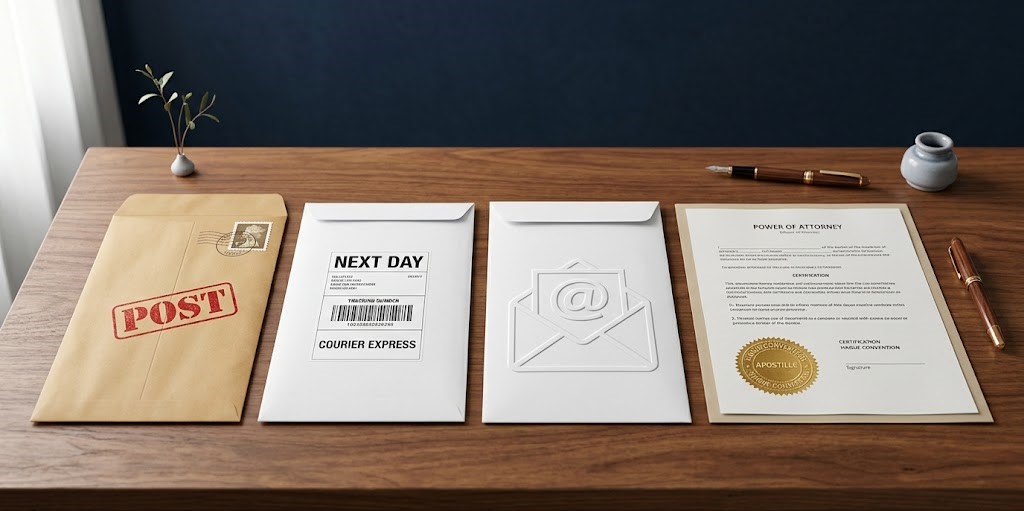
Overview: Ways to Send Documents for Apostille in the UK
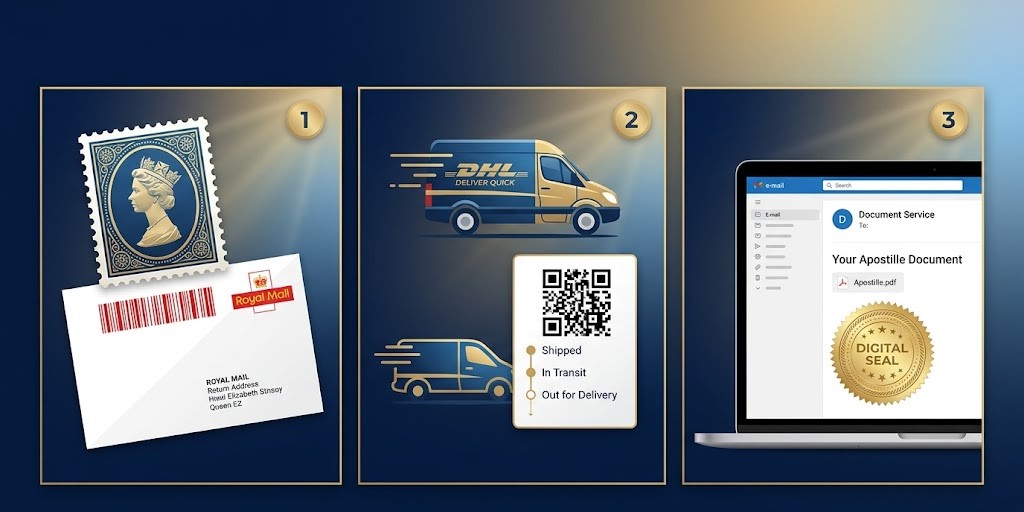
There are three main ways to send your documents for document legalisation UK:
1. By Post
2. By Courier
3. By Email (E-Apostille for digital documents)
Each method has its advantages depending on urgency, document type, and personal preference.
Sending Documents by Post
How Postal Applications Work
Sending documents by post is the most traditional and widely used method for obtaining an FCDO apostille.
Steps:
- Prepare your original documents
- Complete the application form
- Package documents securely
- Send via Royal Mail or recorded delivery
- Wait for processing and return
Advantages of Postal Submission
- Cost-effective
- Suitable for non-urgent applications
- Widely accessible
Disadvantages
- Slower processing time
- Risk of delays or lost mail
- Limited tracking (depending on service used)
Typical Timeline
- Processing: 5–10 working days
- Delivery: 1–3 days each way
Sending Documents by Courier
Why Use a Courier Service?
Courier services are ideal for urgent or important documents that require faster and more secure handling.
How It Works
- Prepare documents
- Book a courier collection
- Send documents to apostille service provider
- Documents processed quickly
- Returned via tracked delivery
Benefits of Courier Submission
- Faster delivery times
- Real-time tracking
- Reduced risk of loss
- Ideal for urgent applications
Typical Timeline
- Same-day or next-day delivery
- Processing can be expedited
- Total time: 1–3 working days (with express service)
Best For
- Last-minute applications
- Time-sensitive legal matters
- High-value documents
Sending Documents by Email (E-Apostille)
What Is an E-Apostille?
An e-apostille is a digital version of an apostille certificate issued for electronic documents.
When Can You Use Email Submission?
Email submission is possible when:
- Documents are digitally issued
- Documents are certified electronically
- The receiving country accepts digital apostilles
Examples of Eligible Documents
- Digital academic certificates
- Electronic company documents
- PDF-issued official records
Advantages of E-Apostille
- Fastest method available
- No physical shipping required
- Convenient for international clients
Limitations
- Not all documents qualify
- Not all countries accept e-apostilles
- May require verification
Which Documents Can Be Sent for Apostille?
Common apostille documents UK include:
Personal Documents
- Birth certificates
- Marriage certificates
- Death certificates
- Divorce decrees
Educational Documents
- Degree certificates
- Diplomas
- Transcripts
Business Documents
- Certificates of incorporation
- Power of attorney
- Contracts
- Company records
Each document type may have specific requirements before submission.
Step-by-Step Process for Sending Documents
Step 1: Check Document Requirements
Ensure your document:
- Is original or properly certified
- Meets FCDO requirements
- Is in acceptable condition
Step 2: Choose Submission Method
Select between:
- Post (standard)
- Courier (fast)
- Email (digital documents)
Step 3: Prepare Supporting Documents
You may need:
- Application form
- Payment details
- Cover letter (optional)
Step 4: Send Documents Securely
Use secure packaging and tracking where possible.
Step 5: Track and Receive Documents
Monitor your application and receive your apostilled documents.
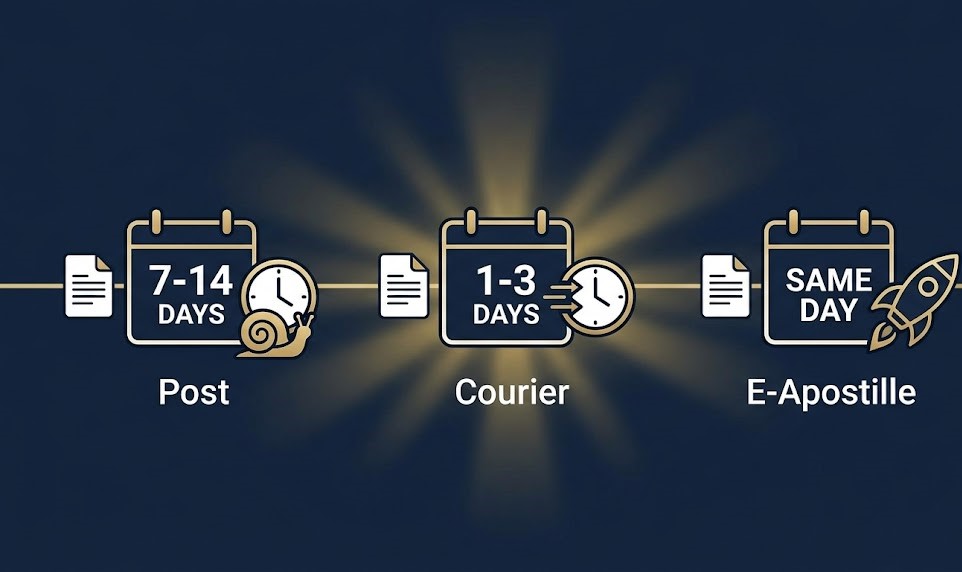
Timelines for Apostille Services
| Method | Processing Time | Total Time |
|---|---|---|
| Post | 5–10 days | 7–14 days |
| Courier | 1–2 days | 1–3 days |
| E-Apostille | Same day | 1 day |
Common Mistakes to Avoid
1. Sending Incorrect Documents
Always verify document requirements before submission.
2. Using Untracked Postal Services
This increases the risk of lost documents.
3. Ignoring Certification Requirements
Some documents must be notarised or certified first.
4. Waiting Until the Last Minute
Delays can affect travel or legal deadlines.
5. Not Checking Country Requirements
Different countries have different rules for document legalisation UK.
Why Use a Professional Apostille Service UK?
Using a professional apostille service UK offers several benefits:
- Faster processing
- Expert guidance
- Reduced risk of rejection
- Secure document handling
For reliable and efficient processing, you can use this trusted service:
https://2eapostille.co.uk/apostille-service-uk/
Frequently Asked Questions (FAQ)
1. Can I send documents for apostille by post?
Yes, postal submission is the most common method, though it may take longer.
2. Is courier better than post for apostille?
Yes, courier services are faster and more secure, especially for urgent applications.
3. Can I email documents for apostille?
Only certain digital documents can be submitted via email for an e-apostille.
4. How long does it take to get an apostille?
It typically takes 1–10 working days depending on the method used.
5. Do I need original documents?
Yes, most apostille applications require original or certified copies.
6. Is tracking available for apostille documents?
Yes, especially when using courier services or tracked postal options.
Conclusion
Sending documents for an apostille in the UK does not have to be complicated. Whether you choose postal submission, courier services, or digital e-apostille, understanding the process helps you avoid delays and ensures your documents are accepted abroad.
The key is to plan ahead, choose the right method based on urgency, and ensure your documents meet all requirements before submission.
If you want a faster, secure, and stress-free experience, consider using a professional apostille service.
👉 Get started today with a trusted provider:
https://2eapostille.co.uk/apostille-service-uk/
Let the experts handle your document legalisation UK needs while you focus on what matters most.