
Can I apostille a private medical report from a clinic that has now closed?
Introduction
When dealing with international immigration,If you need an apostille medical report UK service, you may be wondering whether a private medical report from a clinic that has now closed can still be authenticated. In many cases, the answer is yes. With the correct certification and FCDO apostille process, these documents can often still be accepted overseas.
The good news is that in many cases, a private medical report from a closed clinic can still be apostilled. However, the process depends on several important factors, including the type of document, how it was signed, whether it was notarised, and whether the signature can still be verified by the UK authorities.
Understanding how apostille services work in these situations can help you avoid delays, rejected documents, and unnecessary costs. In this guide, we explain everything you need to know about apostilling medical reports from closed clinics, including the UK apostille process, common problems, practical solutions, and the documents most commonly legalised for international use.
If you need professional assistance, you can learn more about our apostille service UK here: 2eApostille Apostille Service UK
What Is an Apostille?
An apostille is an official certificate issued by the UK Foreign, Commonwealth & Development Office (FCDO). It confirms that a UK document is genuine so that it can be legally recognised in another country that is part of the Hague Apostille Convention.
The apostille certificate verifies:
- The authenticity of the signature
- The authority of the person signing the document
- The official seal or stamp on the document
An apostille does not validate the contents of the document itself. Instead, it confirms that the document was properly issued or certified in the UK.
The FCDO apostille is commonly required for:
- Immigration applications
- Overseas employment
- Visa applications
- Residency permits
- International medical treatment
- Adoption procedures
- Foreign court proceedings
- Educational enrolment abroad
Can a Medical Report From a Closed Clinic Still Be Apostilled?
Yes, sometimes it can. The key issue is whether the FCDO can verify the signature on the document.
If the doctor’s signature was registered and verifiable when the document was issued, the apostille may still be possible even if the clinic has since closed.
However, problems can arise if:
- The signature cannot be verified
- The doctor has retired or relocated
- The report was never formally signed
- The document contains incomplete information
- The clinic records no longer exist
In many cases, the easiest solution is to have the document certified by a solicitor or notarised before submitting it for apostille.
Why Medical Documents Often Require Apostille Services
Medical documents are frequently used internationally for legal and administrative purposes. Foreign authorities may require proof that the documents are genuine before accepting them.
Common situations include:
Overseas Visa Applications
Some countries require medical evidence for long-term visas, work permits, or residency applications.
International Employment
Certain jobs abroad require medical fitness certificates or health assessments.
Medical Treatment Overseas
Foreign hospitals or insurance providers may request apostilled medical reports from the UK.
Disability and Insurance Claims
International insurers sometimes require authenticated medical evidence.
Immigration and Family Applications
Medical reports may be required in adoption, guardianship, or family reunification cases.
Because these documents are being used internationally, document legalisation UK procedures are often mandatory.
Types of Medical Documents That May Be Apostilled
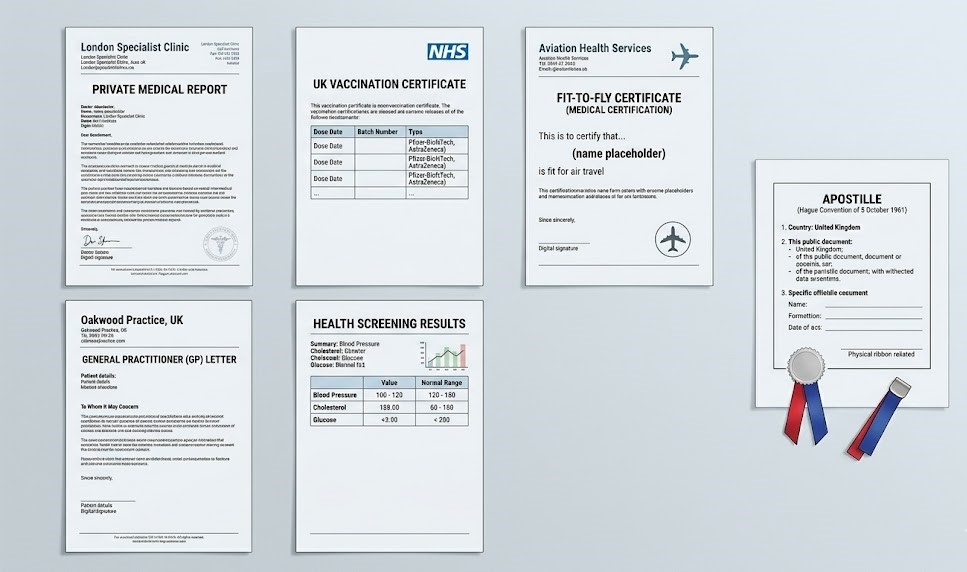
Many types of healthcare-related documents can be legalised through the apostille UK process.
These include:
- Private medical reports
- GP letters
- Hospital letters
- Vaccination certificates
- Fit-to-fly certificates
- Medical fitness certificates
- Disability assessments
- Psychological evaluations
- Specialist consultant reports
- Medical examination reports
- Occupational health documents
- COVID-19 vaccination documentation
- Health screening results
The requirements can vary depending on the destination country and the type of document involved.
What Happens if the Clinic Has Closed?
When a clinic closes, the main challenge becomes verification.
The FCDO apostille office must be able to confirm the authenticity of the signature on the medical report. If they cannot verify the doctor’s signature through their records, the document may be rejected.
This does not always mean the document is unusable. There are often alternative options available.
Option 1: Solicitor Certification
A UK solicitor can certify a copy of the medical report as a true copy of the original.
The solicitor’s signature can then be apostilled instead of relying on the original clinic’s signature.
This is one of the most common solutions for older or difficult documents.
Option 2: Notary Public Certification
For documents intended for certain countries, a notary public may certify or notarise the medical report before apostille.
This approach is particularly useful for countries with stricter legalisation requirements.
Option 3: Obtain a Replacement Medical Report
If possible, you may contact:
- The original doctor directly
- The healthcare provider who acquired the clinic
- NHS records departments
- The General Medical Council (GMC)
- A successor practice
Sometimes archived records still exist even after the clinic has closed.
How the Apostille Process Works in the UK
The UK apostille process is relatively straightforward once the document is properly prepared.
Step 1: Check the Document Type
First, determine whether the medical report is:
- An original signed document
- A certified copy
- A notarised document
Step 2: Verify Whether Certification Is Needed
If the clinic has closed or the signature cannot be verified, solicitor certification or notarisation may be necessary.
Step 3: Submit the Document for Apostille
The document is sent to the Foreign, Commonwealth & Development Office for authentication.
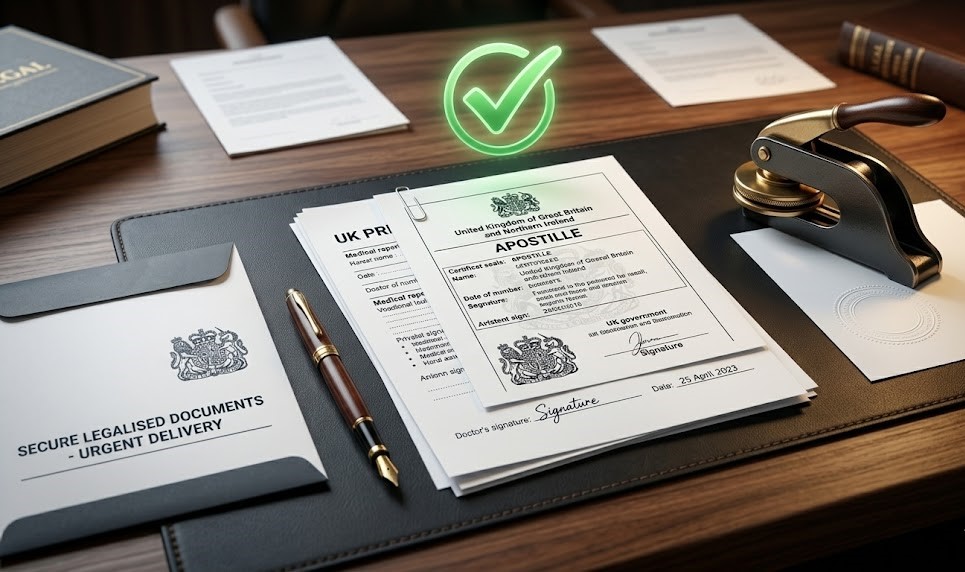
Step 4: Apostille Certificate Is Attached
Once approved, the FCDO attaches the apostille certificate to the document.
Step 5: Return Delivery
The apostilled document is returned by secure post or courier.
Professional apostille service UK providers often handle the entire process on your behalf.
How Long Does It Take?
The timeline depends on the complexity of the case and whether additional certification is needed.
Typical timeframes include:
- Standard apostille service: several working days
- Urgent apostille service: sometimes faster
- Additional solicitor certification: extra processing time
- Embassy legalisation (if required): additional days
Documents from closed clinics may take slightly longer because extra verification may be required.
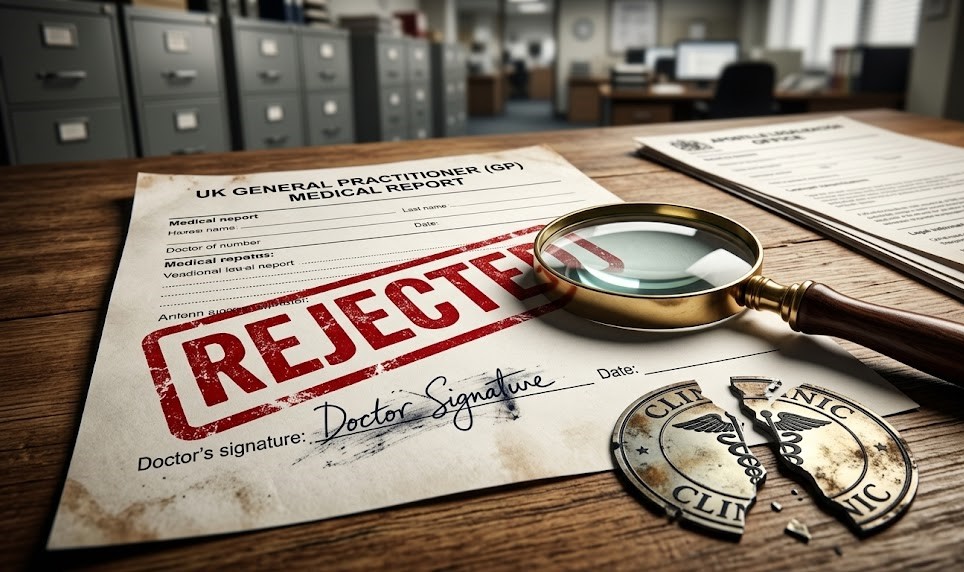
Common Reasons Medical Reports Get Rejected
Certain mistakes frequently cause delays or rejection during the apostille process.
Missing Signature
Unsigned medical reports usually cannot be apostilled.
No Date on the Document
Many foreign authorities expect medical documents to include a clear issue date.
Illegible Signature
If the doctor’s signature cannot be identified, verification becomes difficult.
Closed Clinic With No Records
If the FCDO cannot verify the signatory, apostille may initially be refused.
Poor Quality Copies
Blurry or incomplete scans may be rejected.
Incorrect Certification
Improper solicitor wording or incomplete notarisation can cause delays.
Do All Countries Accept Apostilled Medical Reports?
Most Hague Convention countries accept apostilled UK documents. However, some countries may still require additional embassy legalisation.
Countries outside the Hague Convention often require:
- Apostille
- Embassy attestation
- Consular legalisation
Requirements vary depending on the country and document type.
What if the Original Doctor Has Left the Practice?
This is another common concern.
Even if the doctor no longer works at the clinic, the document may still be accepted if:
- The signature can still be verified
- The doctor remains registered
- The report was properly issued at the time
If verification is impossible, solicitor certification is often the best alternative.
Can Copies of Medical Reports Be Apostilled?
Yes, certified copies can often be apostilled.
A solicitor usually certifies the copy by confirming it is a true copy of the original document.
The apostille is then issued against the solicitor’s signature rather than the original medical signature.
This is especially useful when:
- Original documents are fragile
- Clinics have closed
- Originals must be retained
- International authorities accept certified copies
Do You Need a Notary or Solicitor?
Not always.
Simple UK-issued documents may only require solicitor certification.
However, some countries specifically request notarised documents, especially for:
- Court matters
- Immigration
- Overseas property transactions
- Long-term residency applications
A professional document legalisation UK service can advise which option is appropriate.
Tips to Avoid Delays
Preparing documents correctly can save significant time and frustration.
Check Destination Country Requirements
Different countries have different legalisation rules.
Ensure the Document Is Complete
Medical reports should include:
- Full patient details
- Doctor’s signature
- Date of issue
- Clinic information
Use Professional Certification
Incorrect certification wording is a common problem.
Keep Copies of Everything
Always retain scanned copies before sending originals.
Use Secure Delivery
Tracked or courier delivery is recommended for important documents.
Why Use a Professional Apostille Service UK?
Handling apostille documents UK requirements yourself can become complicated, especially when dealing with closed clinics or older medical reports.
Professional services help by:
- Checking document eligibility
- Arranging solicitor certification
- Managing notarisation
- Handling FCDO submission
- Tracking progress
- Preventing costly mistakes
This can be especially helpful when deadlines are urgent.
What Makes Medical Documents Different?
Medical documents are often more sensitive than standard legal documents because they involve confidential information and professional medical opinions.
Foreign authorities may scrutinise them carefully, especially when used for:
- Immigration
- Work permits
- Long-term residency
- Insurance claims
- International healthcare
Because of this, proper authentication is extremely important.
Can Older Medical Reports Be Apostilled?
Sometimes yes, but older documents may require additional steps.
Issues can include:
- Retired doctors
- Outdated clinic information
- Signature verification difficulties
- Poor document condition
In these cases, solicitor certification is often the safest approach.
Frequently Asked Questions
Can I apostille a medical report from a clinic that no longer exists?
Yes, in many cases. If the original signature cannot be verified, solicitor certification or notarisation may help.
Does the FCDO verify the medical contents?
No. The FCDO apostille only confirms the authenticity of the signature or certification.
Can I use a certified copy instead of the original?
Often yes, provided the copy is properly certified by a solicitor or notary.
How long does the apostille process take?
Processing times vary depending on urgency and whether additional certification is required.
Will every country accept apostilled medical reports?
Most Hague Convention countries will, but some countries require additional embassy legalisation.
What happens if my document is rejected?
You may need solicitor certification, notarisation, or replacement documentation before resubmitting.
Conclusion
Apostilling a private medical report from a clinic that has now closed can feel complicated, but it is often still possible with the right preparation and guidance.
The most important factor is whether the document can be properly verified. If direct verification is difficult, solicitor certification or notarisation can often provide a practical solution. Understanding the apostille UK process, destination country requirements, and document preparation steps can help avoid delays and rejection.
Whether you require an apostille medical report UK for immigration, overseas employment, or medical treatment abroad, obtaining the correct certification is essential. Using a trusted apostille service UK can help ensure your documents meet international requirements.
For fast, reliable, and professional support with document legalisation UK services, contact 2eApostille UK today and let our team help you legalise your documents with confidence.