
Can Police Certificates or DBS Checks Be Apostilled?
Introduction
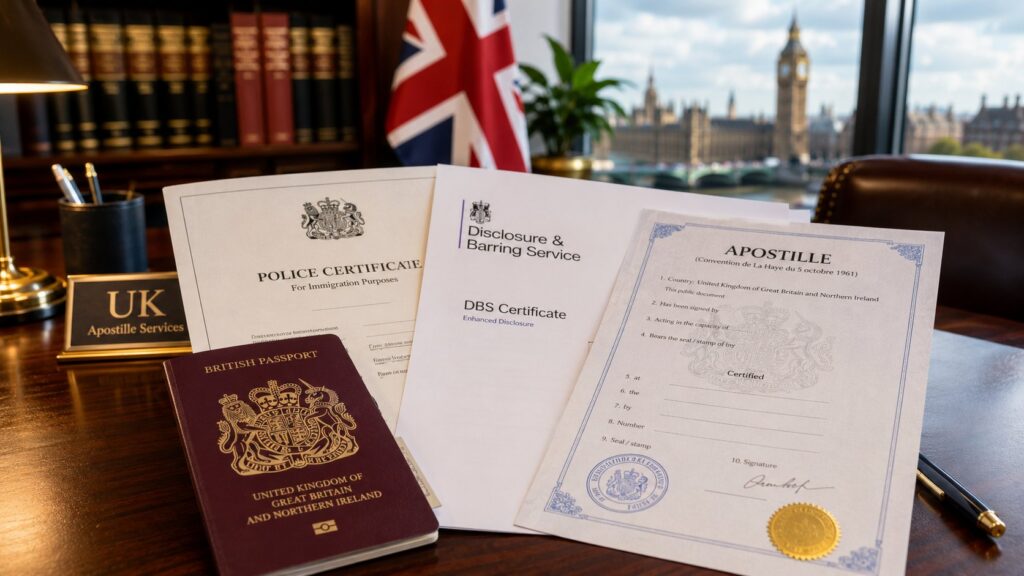
If you are moving abroad, applying for a visa, seeking employment overseas, or completing an immigration application, you may be asked to provide evidence of your criminal record status. In the UK, this can involve a police certificate or a Disclosure and Barring Service (DBS) check.
A common question is: Can police certificates or DBS checks be apostilled?
In many circumstances, the answer is yes, but the process depends on the type of certificate you have and the requirements of the country where you intend to use it. Foreign authorities may ask for an apostille to authenticate a UK-issued certificate before accepting it as an official document.
An apostille confirms the authenticity of the relevant signature, seal or certification on a document. In the UK, an FCDO apostille is issued through the Foreign, Commonwealth & Development Office’s Legalisation Office.
Understanding the difference between a police certificate and a DBS check is important because they are issued by different organisations and may have different legalisation requirements.
If you need professional help with an apostille service UK, you can find more information about 2eApostille’s service here:
You can also watch this short video for a simple explanation of the apostille process:
What Is an Apostille?
An apostille is an official certificate used to authenticate a UK document for use in another country that recognises the Hague Apostille Convention.
The apostille confirms the authenticity of a signature, seal or stamp on the document. It does not confirm that all the information contained in the document is factually correct.
For UK documents, an FCDO apostille can be required when the receiving country asks for official authentication.
The apostille system makes international document verification easier because participating countries can recognise the standard apostille certificate rather than requiring a longer chain of authentication.
What Is a Police Certificate?
If you are asking whether police certificates or DBS checks can be apostilled, the answer depends on the type of certificate and the requirements of the destination country.
People commonly request police certificates when they are:
- Applying for immigration.
- Moving permanently to another country.
- Applying for overseas employment.
- Applying for a visa.
- Completing residency procedures.
- Meeting foreign government requirements.
The certificate may be requested by a foreign embassy, immigration authority, employer or government department.
It is important to obtain the correct type of police certificate requested by the destination country. A DBS check is not automatically an equivalent replacement for every overseas police certificate requirement.
What Is a DBS Check?
A DBS check is a background check issued through the Disclosure and Barring Service in England and Wales.
DBS checks are commonly used by UK employers and organisations when assessing whether someone is suitable for certain roles, particularly positions involving children or vulnerable adults.
There are different levels of DBS checks, including:
- Basic DBS check
- Standard DBS check
- Enhanced DBS check
- Enhanced DBS check with barred lists
The appropriate check depends on the role and the legal requirements applicable to it.
A DBS certificate is different from a police certificate, even though both may contain information relating to criminal records.
This distinction matters when preparing documents for use overseas.
Can a DBS Check Be Apostilled?
A DBS certificate can potentially be legalised with an apostille, but the exact requirements depend on the certificate and the circumstances.
Because a DBS certificate is not simply an ordinary public document such as a birth certificate, additional certification may be required before the FCDO can issue an apostille.
The receiving authority may also specify:
- How recent the DBS certificate must be.
- Whether an original certificate is required.
- Whether a certified copy is acceptable.
- Whether the certificate must be translated.
- Whether further embassy legalisation is required.
For this reason, it is important to check the destination country’s requirements before arranging legalisation.
Can a Police Certificate Be Apostilled?
Yes, a UK police certificate may be eligible for an apostille, subject to the applicable legalisation requirements.
The FCDO needs to be able to authenticate the relevant signature, seal or certification.
If the document does not meet the requirements for direct legalisation, additional certification may be needed first.
A professional apostille service UK can review the document and help determine the appropriate legalisation route.
Police Certificate vs DBS Check: What Is the Difference?
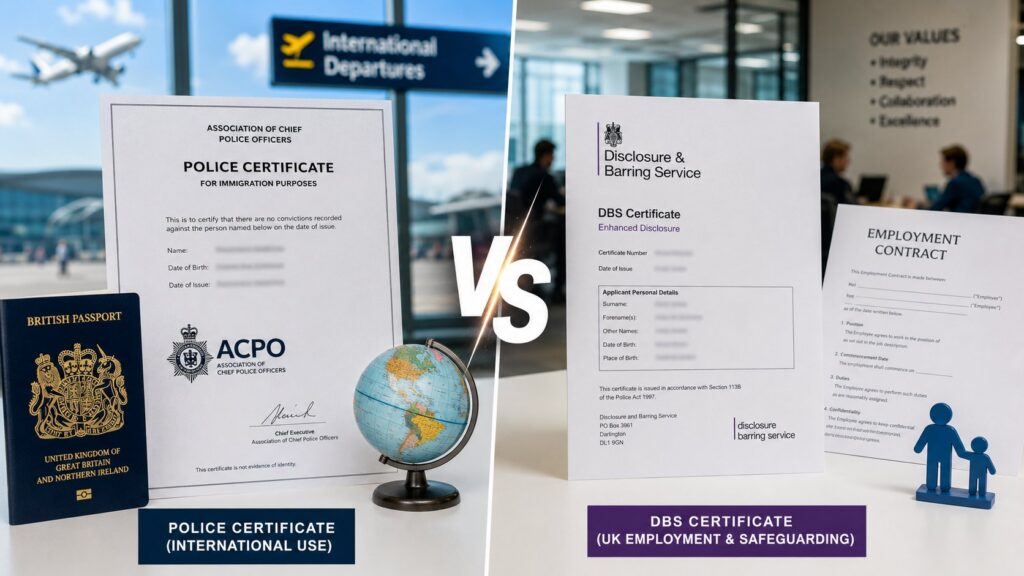
Although they may be requested for similar reasons, police certificates and DBS checks are not identical.
| Police Certificate | DBS Check |
|---|---|
| Often used for overseas immigration and visa applications | Primarily used for UK employment screening |
| Provides criminal record information for the relevant jurisdiction | Provides information according to the DBS checking level |
| Often requested specifically for use abroad | Commonly requested by UK employers |
| Requirements vary by destination country | Requirements vary according to the role |
If an overseas authority specifically requests a police certificate, do not assume that a DBS check will automatically satisfy the requirement.
Always follow the wording provided by the receiving authority.
How to Apostille a Police Certificate or DBS Certificate
The process can vary depending on the document, but the general process involves several stages.
Step 1: Check the Foreign Authority’s Requirements
Before applying for an apostille, confirm exactly what the receiving organisation wants.
Check:
- The type of certificate required.
- How recently it must have been issued.
- Whether an apostille is required.
- Whether a translation is required.
- Whether embassy legalisation is also necessary.
This can prevent you from legalising the wrong document.
Step 2: Obtain the Correct Certificate
Make sure you have the correct and current police certificate or DBS certificate.
If the receiving authority has a validity period, make sure the certificate is still within that period when you submit it.
Step 3: Check Whether Certification Is Necessary
Depending on the document and the legalisation route, certification may be required before an FCDO apostille can be issued.
This is one reason professional document legalisation services can be useful.
Step 4: Obtain the FCDO Apostille
Once the document satisfies the necessary requirements, it can be submitted for an apostille.
The FCDO authenticates the relevant signature, seal or certification and issues the apostille if the requirements are met.
Step 5: Arrange Translation if Required
If the destination country requires documents in another language, you may need a certified translation.
Do not automatically assume that the apostille itself needs translation. The requirement comes from the receiving authority.
Ask whether they require:
- Translation of the certificate.
- Translation of the apostille.
- Translation of the complete document package.
How Long Does the Process Take?
Processing time depends on several factors.
These can include:
- The type of certificate.
- Whether additional certification is required.
- FCDO processing times.
- Translation requirements.
- Courier delivery.
- Embassy or consular requirements.
If you have an overseas visa or employment deadline, start the process early.
Some professional providers offer priority services for urgent applications, but availability and processing times can vary.
Common Mistakes to Avoid
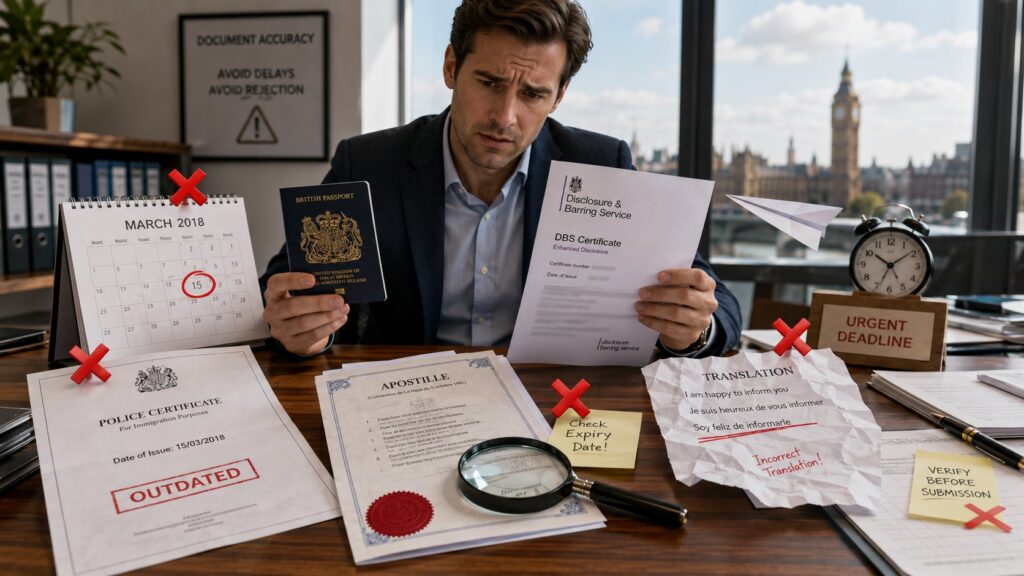
Using a DBS Check When a Police Certificate Was Requested
One of the most important mistakes is assuming the two documents are interchangeable.
If an immigration authority specifically asks for a police certificate, obtain the document they have requested.
Using an Outdated Certificate
Some countries require police certificates or DBS documents to have been issued within a particular period.
Always check the date requirement.
Forgetting Translation Requirements
Apostilling a document does not automatically mean that a foreign authority will accept it without translation.
Confirm the language requirements before submitting your paperwork.
Assuming Apostille Is Always the Final Step
Some countries or authorities may require additional legalisation after an apostille.
This depends on the destination and the purpose for which the document will be used.
Sending the Wrong Document
Before submitting your certificate for legalisation, compare it with the exact document requested by the foreign authority.
Why Use an Apostille Service UK?
Police certificates and DBS checks can involve more complicated requirements than straightforward public documents.
A professional apostille service UK can help you:
- Check your document.
- Identify possible certification requirements.
- Arrange an FCDO apostille.
- Explain translation requirements.
- Advise on additional legalisation.
- Arrange secure return delivery.
Professional assistance can be particularly useful when your documents are required for an overseas visa, employment application or immigration deadline.
Frequently Asked Questions
1. Can a DBS certificate be apostilled?
A DBS certificate may be eligible for apostille legalisation, depending on the document and the applicable certification requirements. Check the receiving authority’s requirements before proceeding.
2. Can a police certificate be apostilled?
Yes, a UK police certificate can potentially be apostilled if it meets the relevant FCDO legalisation requirements.
3. Is a DBS check the same as a police certificate?
No. They are different documents issued for different purposes. A foreign authority requesting a police certificate may not automatically accept a DBS check instead.
4. Does a police certificate need translation?
It depends on the destination country’s requirements. If the receiving authority requires documents in another language, a certified translation may be necessary.
5. How long does an apostille take?
Processing times vary according to the document, certification requirements, FCDO processing times, translation and delivery. Start early if you have an important overseas deadline.
6. Can 2eApostille help with police certificate legalisation?
A professional apostille service UK can assist with document checking, FCDO apostille processing and other legalisation requirements, depending on the document and destination country.
Conclusion
Police certificates and DBS checks can be important documents when applying for visas, employment, residency or immigration overseas. However, they are not interchangeable, and the exact legalisation requirements depend on the document and the country where it will be used.
If an overseas authority requires authentication, an FCDO apostille may be part of the process. Additional certification, translation or embassy legalisation may also be required depending on the circumstances.
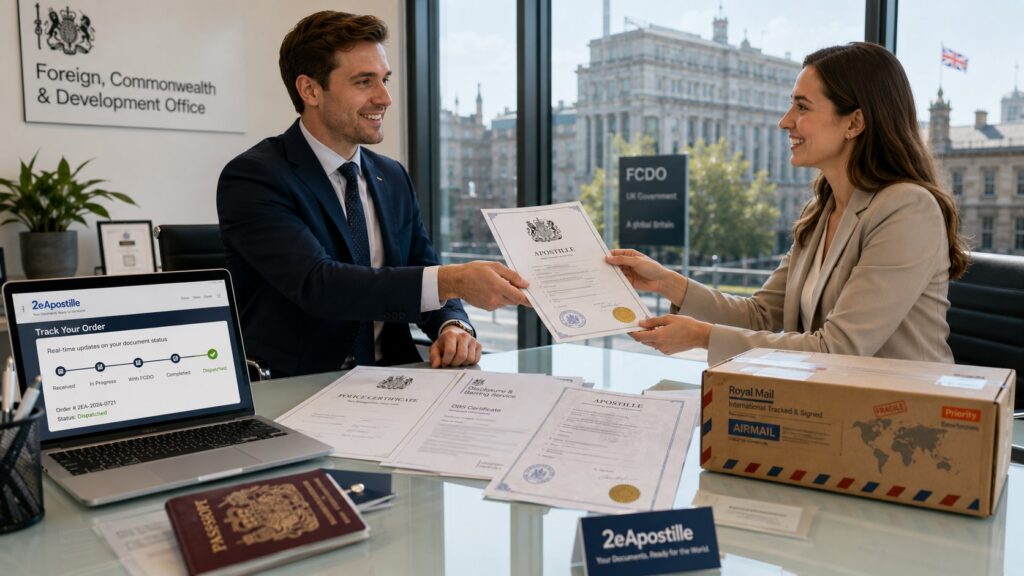
If you need help with document legalisation UK, an apostille service UK, or an FCDO apostille for a police certificate or DBS check, 2eApostille can help guide you through the process.
Visit our Apostille Service UK page to get started:
With professional document handling and guidance on the legalisation process, 2eApostille can help make preparing your UK documents for international use simpler, more efficient and less stressful.