
Birth Certificate Apostille UK: Short Form vs Long Form
Introduction
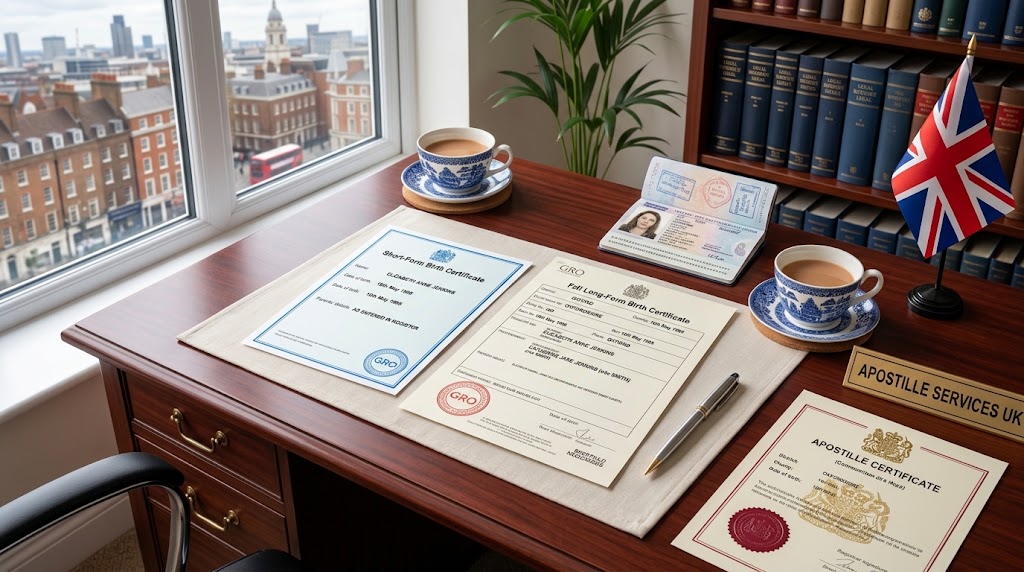
When you need a birth certificate apostille for use abroad, one of the first questions people ask is whether they can use the certificate they already have or whether they need to order a particular version. This is especially important because UK birth certificates can exist in different formats, including short-form and full or long-form certificates.
If a foreign government, immigration authority, court, employer or other organisation asks you to provide an apostilled birth certificate, using the wrong version could cause unnecessary delays. The receiving authority may require specific information, such as the names of both parents, that is not included on a short certificate.
An apostille authenticates a UK document for use in another country. In the UK, the Foreign, Commonwealth & Development Office (FCDO) Legalisation Office handles the apostille process. Birth certificates issued by the General Register Office (GRO) are eligible for a paper-based apostille, but they are not eligible for an electronic e-Apostille.
Understanding which certificate is suitable for a birth certificate apostille can help prevent unnecessary delays and ensure you submit the correct document for your overseas application.
This guide explains the difference between short-form and long-form birth certificates, which certificate is normally suitable for apostille, how the process works, what documents you may need, typical processing times and the mistakes you should avoid.
If you require a trusted apostille service UK, visit our dedicated service page:
Before continuing, watch this short video explaining the apostille and legalisation process.
What Is an Apostille?
An apostille is an official certificate attached to a UK document to authenticate the signature, stamp or seal on that document for international use.
The FCDO Legalisation Office checks the relevant signature, stamp or seal against its records. If it can verify the details, it legalises the document by attaching an apostille.
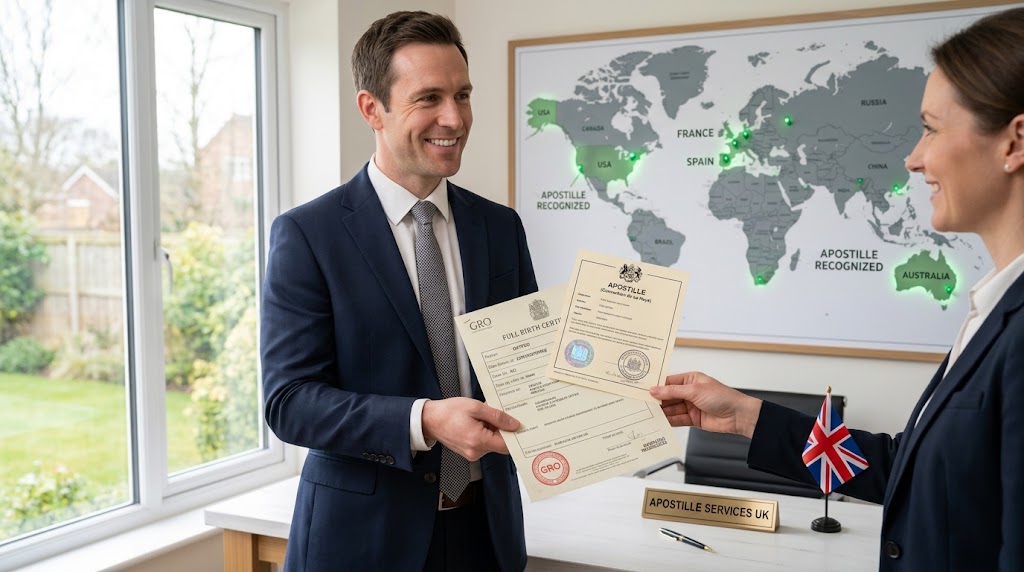
An apostille is normally needed when a UK document is being presented to an authority in another country that accepts the Hague Apostille Convention.
It is important to understand that an apostille does not confirm the information contained in a birth certificate. It authenticates the document for international use. The overseas authority still decides whether the certificate meets its own requirements.
For example, an apostilled birth certificate may be required for:
- Immigration applications
- Citizenship applications
- Marriage abroad
- Family-related legal procedures
- Residency applications
- Inheritance matters
- International adoption procedures
- Visa applications
- Government registrations
What Is a Short-Form Birth Certificate?
A short-form birth certificate contains basic information about the person whose birth was registered.
It generally provides key details such as the person’s name and date of birth, but it contains less information than a full certificate.
Because it contains limited information, a short certificate may not be suitable for every overseas application.
For example, if a foreign authority needs to establish the relationship between you and your parents, a short-form certificate may not contain enough information.
This is why you should always check the exact requirements of the organisation requesting your birth certificate before applying for an apostille UK.
What Is a Long-Form or Full Birth Certificate?
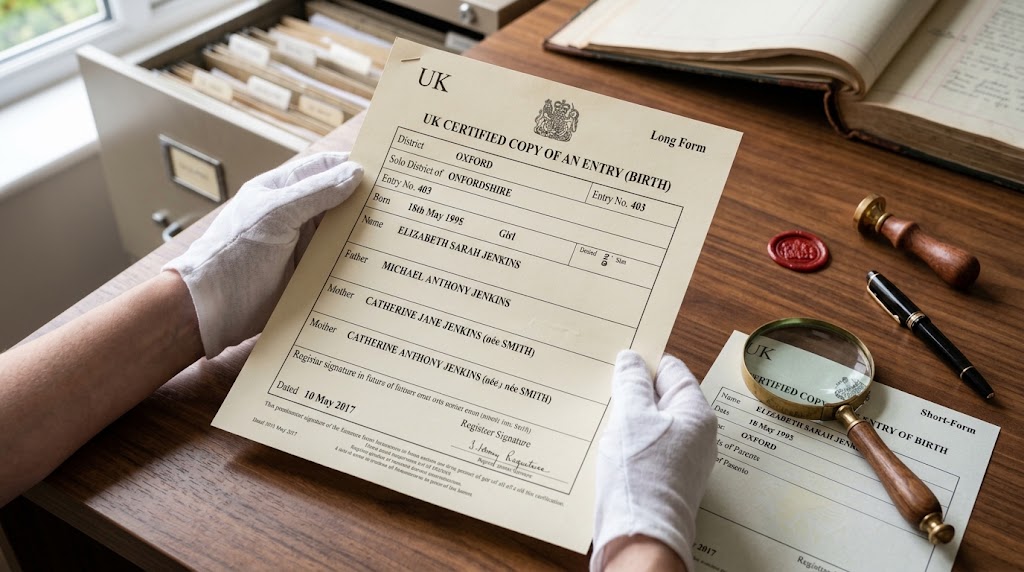
A full birth certificate contains more information from the relevant birth registration entry.
Depending on the circumstances and registration system, it can include information such as:
- Full name
- Date of birth
- Place of birth
- Father’s details
- Mother’s details
- Mother’s maiden name
- Registration information
A full certificate is often preferred for international procedures because it provides more information for authorities checking identity and family relationships.
However, the fact that a certificate is “full” does not automatically mean every country will accept it. The receiving authority’s requirements always take priority.
Birth Certificate Apostille: Short Form or Long Form?
There is no universal rule that says every person must use a long-form birth certificate for an apostille.
The important question is which certificate the receiving authority requires.
Before arranging a birth certificate apostille, confirm whether the overseas authority requires a short-form or full birth certificate.
If the authority only requests a birth certificate and does not specify a particular format, it is sensible to confirm whether it accepts the short certificate or prefers a full certificate.
This can help prevent a situation where you obtain an apostille on a certificate that the foreign authority later refuses to accept.
Can a Short Birth Certificate Be Apostilled?
A UK birth certificate is a public document and can be legalised through the FCDO when it meets the relevant requirements.
However, whether a particular short-form certificate is suitable for your specific overseas application is a separate question.
The FCDO’s role is to authenticate the relevant document; it does not decide whether a foreign authority will accept the certificate for a particular purpose.
Therefore, before submitting a short certificate for an FCDO apostille, check with the organisation requesting it.
If they require evidence of parents, nationality or family relationships, they may specifically request a full certificate.
Can a Full Birth Certificate Be Apostilled?
Yes. A qualifying UK birth certificate can be submitted for legalisation.
GOV.UK specifically lists birth certificates among documents that can be legalised. However, birth certificates issued by the General Register Office cannot receive an e-Apostille, so a paper-based apostille is required where an apostille is needed.
This is important because some applicants expect to receive their apostille electronically. For a GRO birth certificate, you should plan for the paper-based process.
Why Do Foreign Authorities Often Request a Full Birth Certificate?
Foreign authorities may need more than basic evidence of your birth.
For example, a citizenship or immigration authority may need to establish:
- Who your parents are
- Your family relationship
- Your place of birth
- Your identity
- Your connection to another person
- Whether information on other submitted documents matches
A short certificate may not provide enough information for these checks.
For this reason, a full birth certificate is often more practical when the document is being used for an important international legal or administrative procedure.
However, requirements vary by country and organisation, so you should never rely solely on general advice.
How to Get a Birth Certificate for Apostille
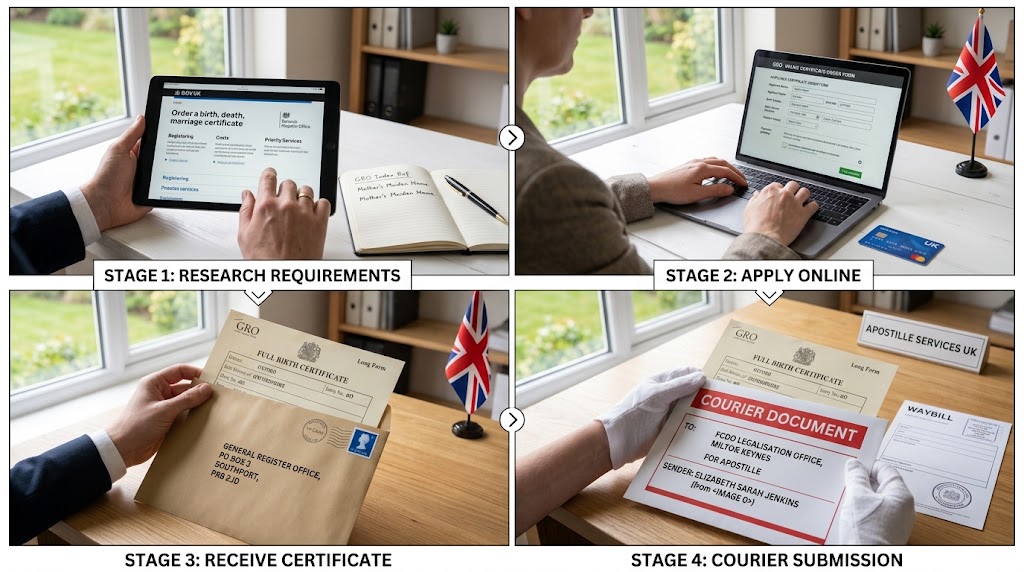
Step 1: Check the Overseas Requirement
If you need a birth certificate apostille UK, the first step is to confirm exactly which version of the certificate the receiving authority requires
Ask whether they need:
- Short-form certificate
- Full certificate
- Original certificate
- Certified copy
- Apostille
- Translation
- Additional legalisation
Getting this information first can save both time and money.
Step 2: Order the Correct Certificate
If you do not already have the required version, obtain an official certificate from the appropriate UK registration authority.
For England and Wales, the General Register Office provides birth certificates and information about ordering civil registration records. GOV.UK also confirms that certificates can be legalised for use overseas.
If your birth was registered in Scotland or Northern Ireland, the relevant registration authority may be different.
Step 3: Check the Certificate
Before sending your document for legalisation, check that:
- Your name is correct
- The date of birth is correct
- The certificate is the version requested
- There are no obvious errors
- You have the required original or official certificate
If there is an error, it may need to be corrected before legalisation.
Step 4: Apply for the FCDO Apostille
You can apply online for a paper-based apostille through the UK Legalisation Office.
For a paper-based apostille, you will need to submit the physical document according to the instructions provided after applying.
Step 5: Receive the Legalised Certificate
Once the document has been legalised, the paper apostille will be attached to your birth certificate.
You can then provide the completed document to the overseas authority.
Do Birth Certificates Need Notarisation?
Birth certificates are official public documents, so they do not necessarily require the same notarisation process as private documents.
GOV.UK explains that documents issued by a public registry, such as birth certificates, can be legalised when they meet the relevant requirements.
However, your specific application may involve additional requirements from the foreign authority.
For example, an overseas organisation could ask for a certified copy or translation. Therefore, do not arrange notarisation unless it is actually required.
Do Birth Certificates Need Translation?
Possibly.
If your UK birth certificate is being submitted to an authority that requires documents in another language, you may need a translation.
The receiving authority may specify whether the translation must be:
- Certified
- Notarised
- Completed by an approved translator
- Submitted together with the original
- Legalised separately
Do not assume that an apostille replaces translation requirements.
The best approach is to ask the receiving authority what type of translation it accepts before completing your document legalisation UK process.
How Long Does a Birth Certificate Apostille Take?
The current GOV.UK guidance states that a standard paper-based apostille usually takes up to 25 working days, plus postage or courier time.
The FCDO also offers other services in specific circumstances, including urgent services for eligible registered businesses.
Because birth certificates are not eligible for e-Apostille, applicants should allow time for physical document handling and delivery.
If your certificate is needed for a visa, wedding, citizenship application or court deadline, start the process as early as possible.
What Does a UK Apostille Cost?
Current FCDO fees include:
- Standard paper-based apostille: £45 per document
- e-Apostille: £35 per document
However, a UK birth certificate cannot receive an e-Apostille, so the paper-based fee applies where an apostille is required. Additional postage or courier charges may also apply.
If you use a professional apostille service UK, additional service or courier fees may apply depending on the provider and service selected.
Common Mistakes to Avoid
Choosing the Wrong Certificate
Do not assume your existing certificate is acceptable. Check whether the authority wants a short or full certificate.
Apostilling Before Checking Requirements
An apostille does not guarantee acceptance by the foreign authority.
Ordering an e-Apostille
GRO birth certificates are specifically excluded from the e-Apostille service.
Forgetting Translation
The certificate may require translation even after it has been apostilled.
Ignoring Additional Legalisation
Some countries may require further embassy or consular legalisation depending on their procedures.
Leaving Everything Until the Deadline
Obtaining a replacement certificate, apostille, translation and additional legalisation can take time.
Can an Apostilled Birth Certificate Be Used More Than Once?
An apostilled birth certificate can generally be presented to an authority that requires it, but whether you can reuse the same apostilled document depends on the receiving organisation.
Some authorities may accept a previously issued apostille, while others may require a newly issued certificate or recent document.
Therefore, if you are using the certificate for several applications or different countries, check each authority’s requirements before relying on the same document.
Frequently Asked Questions
Is a short-form birth certificate valid for apostille?
A UK birth certificate can be legalised when it meets the relevant requirements, but whether a short certificate is suitable for your particular overseas application depends on the receiving authority.
Is a long-form birth certificate better for international use?
A full certificate provides more information and may be preferred where an authority needs details about parents or family relationships. Always check the specific requirement.
Can a birth certificate receive an e-Apostille?
No. GOV.UK lists birth certificates among documents that cannot receive an e-Apostille. A paper-based apostille is required where legalisation is needed.
Does an apostille make my birth certificate valid in another country?
An apostille authenticates the document for international use. It does not guarantee that the overseas authority will accept it for every purpose.
Does my birth certificate need translation?
It may. Translation requirements depend on the destination country and the organisation receiving the document.
How long does a birth certificate apostille take?
The standard paper-based FCDO service currently takes up to 25 working days, plus delivery time, although processing times can change and additional services may be available in certain circumstances.
Conclusion
Choosing the correct certificate is an important first step when arranging a birth certificate apostille for international use. A short-form certificate may be sufficient for some purposes, while a full or long-form certificate may be necessary when an overseas authority needs additional information about your birth or parents.
Before arranging an FCDO apostille, confirm exactly which certificate the receiving authority requires and whether you also need translation or further legalisation. This can help prevent delays and avoid paying to legalise the wrong document.
If you need help with apostille documents UK or other document legalisation UK requirements, 2eApostille can assist with the process.
Visit our Apostille Service UK page to learn more about preparing UK documents for official use abroad.