
Can I use a UK apostille in the EU?
Introduction
If you are planning to use UK documents in Europe—whether for marriage, work, study, or business—you may be wondering: Can I use a UK apostille in the EU?
This is one of the most common questions people ask when dealing with international paperwork. The confusion is understandable. Since the UK is no longer part of the European Union, many assume that document requirements have become more complicated.
The good news is that in most cases, a UK apostille is still fully accepted across EU countries. However, there are important details you need to understand. Requirements can vary depending on the country, the type of document, and how it will be used.
In this detailed guide, we will explain everything in simple terms. You will learn what an apostille is, when it is required in the EU, how the UK apostille process works, and how to ensure your documents are accepted without delays.
What Is an Apostille?
An apostille is an official certificate issued by the UK government that verifies the authenticity of a document.
In the UK, apostilles are issued by the Foreign, Commonwealth & Development Office (FCDO). This is why the term FCDO apostille is commonly used.
What Does an Apostille Do?
An apostille:
- Confirms that a document is genuine
- Verifies the signature or seal on the document
- Allows the document to be recognised internationally
It is important to understand that an apostille does not:
- Translate the document
- Verify the content itself
Can You Use a UK Apostille in the EU?
The Short Answer: Yes
In most cases, you can use a UK apostille in EU countries without any additional embassy legalisation.
This is because both the UK and EU countries are members of the Hague Apostille Convention. This agreement allows documents with an apostille to be recognised across participating countries.
What This Means for You
If you have a UK document with an apostille:
- It will generally be accepted in EU countries
- You do not need embassy legalisation
- The process is simpler and faster
However, there are still some additional requirements to consider.
When Is an Apostille Required in the EU?
Even within the EU, an apostille is often required for UK documents.
Common Situations
You may need an apostille for:
- Getting married in an EU country
- Applying for a job abroad
- Enrolling in a university
- Opening a business
- Buying property
- Immigration or residency applications
Why Apostilles Are Still Needed After Brexit
Before Brexit, some documents could be used more easily within the EU. Now, UK documents are treated as foreign documents, which means:
- Apostille is usually required
- Additional verification may be needed
Do EU Countries Require Embassy Legalisation?
No—this is one of the key advantages.
EU countries generally do not require embassy legalisation after an apostille. The apostille alone is sufficient because of the Hague Convention.
This makes the process:
- Faster
- Less expensive
- Less complicated
Do You Need Translation for EU Countries?
Yes, in most cases.
Even though an apostille makes your document legally valid, it does not make it understandable.
Examples:
- France → documents usually need to be translated into French
- Spain → Spanish translation required
- Germany → German translation required
Who Can Translate?
Translations must usually be:
- Certified
- Done by a professional translator
Some countries may require:
- Sworn translators
- Locally approved translators
The UK Apostille Process Explained
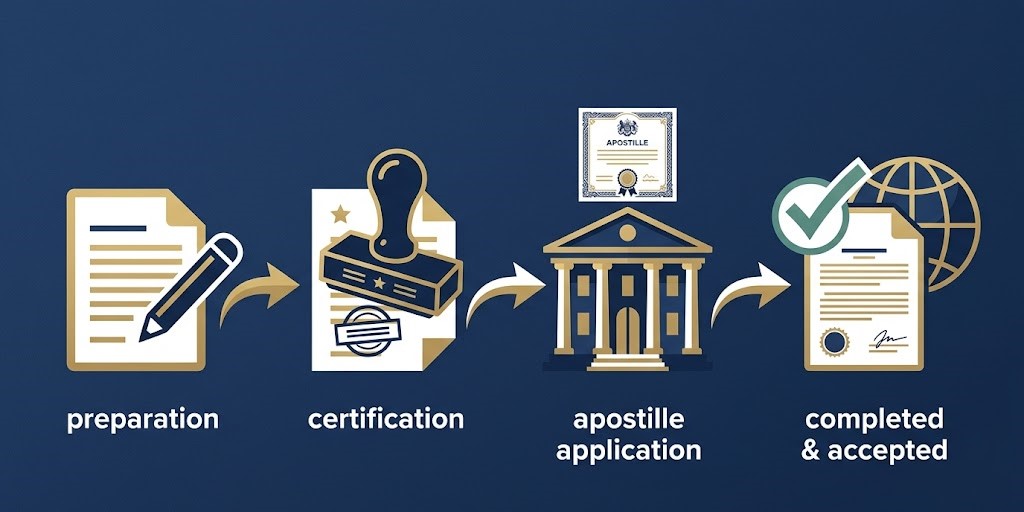
Understanding how to obtain an apostille is essential.
Step 1: Prepare Your Document
Ensure your document is:
- Original or certified copy
- In good condition
Step 2: Certification (If Required)
Some documents must be certified by:
- A solicitor
- A notary public
Step 3: Apply for an Apostille
Submit your document to the FCDO.
Step 4: Receive Your Apostille
The apostille is attached to your document, confirming its authenticity.
Which Documents Commonly Require Apostille in the EU?
Many types of apostille documents UK are used in EU countries.
Personal Documents
- Birth certificates
- Marriage certificates
- Divorce certificates
- Death certificates
Educational Documents
- Degree certificates
- Diplomas
- Transcripts
Business Documents
- Certificates of incorporation
- Company documents
- Contracts
Legal Documents
- Powers of attorney
- Court documents
- Affidavits
Timelines for Apostille UK Services
Timing can vary depending on urgency.
Standard Service
- 2–5 working days
Express Service
- 1–2 working days
Additional Time for Translation
- 1–3 days depending on complexity
Total Timeline
Typically 3–7 working days for complete processing.
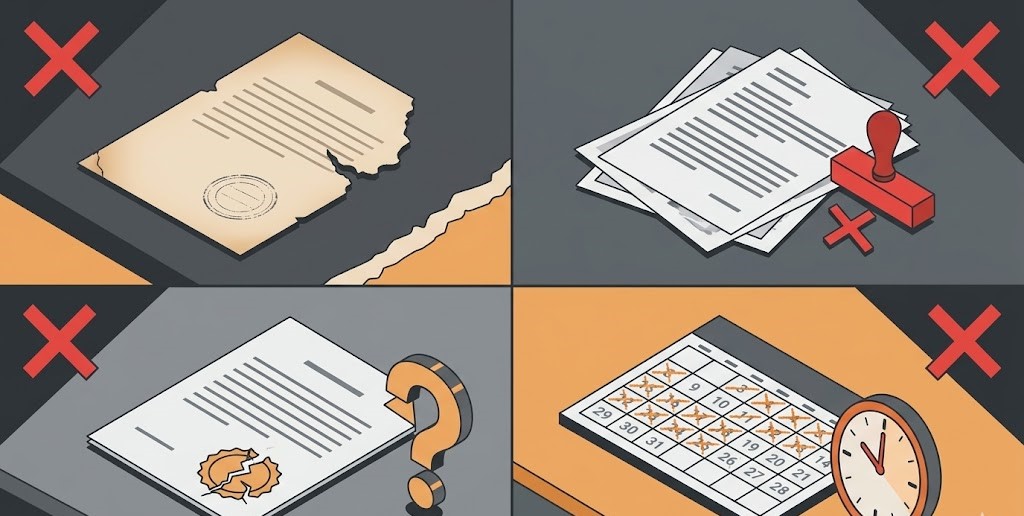
Common Mistakes to Avoid
Many people face delays due to simple errors.
1. Not Getting an Apostille
Assuming it is not needed can lead to rejection.
2. Using Incorrect Documents
Uncertified copies may not be accepted.
3. Ignoring Translation Requirements
Most EU countries require translations.
4. Using Unqualified Translators
Translations must be certified.
5. Leaving It Too Late
Processing times can vary.
Special Considerations for EU Countries
Although the process is standard, each country may have specific requirements.
France
- Requires certified translations
- May require additional civil documentation
Spain
- Often requires sworn translators
Germany
- Strict about translation accuracy
- May require notarisation
Italy
- May require legalised translations
Always check the specific country requirements before applying.
Why Use a Professional Apostille Service UK?
Handling apostille and translation yourself can be confusing.
A professional apostille service UK can:
- Ensure correct documentation
- Manage the entire process
- Avoid costly mistakes
- Provide faster turnaround
For a reliable service, visit:
https://2eapostille.co.uk/apostille-service-uk/
Do EU Countries Ever Waive Apostille Requirements?
In some limited cases, yes.
Certain EU regulations allow simplified document use, but:
- These do not apply to all documents
- Apostilles are still commonly required
It is safer to assume you will need an apostille unless told otherwise.
Frequently Asked Questions (FAQs)
1. Can I use a UK apostille in all EU countries?
Yes, as all EU countries recognise apostilles under the Hague Convention.
2. Do I need embassy legalisation for the EU?
No, apostille alone is sufficient.
3. Do I need translation for EU documents?
Yes, most countries require certified translations.
4. How long does the apostille process take?
Usually between 2 and 5 working days.
5. Can I apply for an apostille myself?
Yes, but professional services are faster and more reliable.
6. Is notarisation required before apostille?
Only for certain types of documents.
Conclusion
Using a UK apostille in the EU is generally straightforward, thanks to the Hague Apostille Convention. However, understanding the full process—including translation and document preparation—is essential to avoid delays.
By following the correct steps and preparing your documents properly, you can ensure they are accepted without complications in any EU country.
If you want a fast, stress-free experience, it is always best to use a trusted professional service.
Get started today with a reliable apostille service UK:
https://2eapostille.co.uk/apostille-service-uk/
Let 2eApostille handle your apostille UK and document legalisation UK needs with confidence and efficiency.