
Can Powers of Attorney Be Apostilled?
Introduction
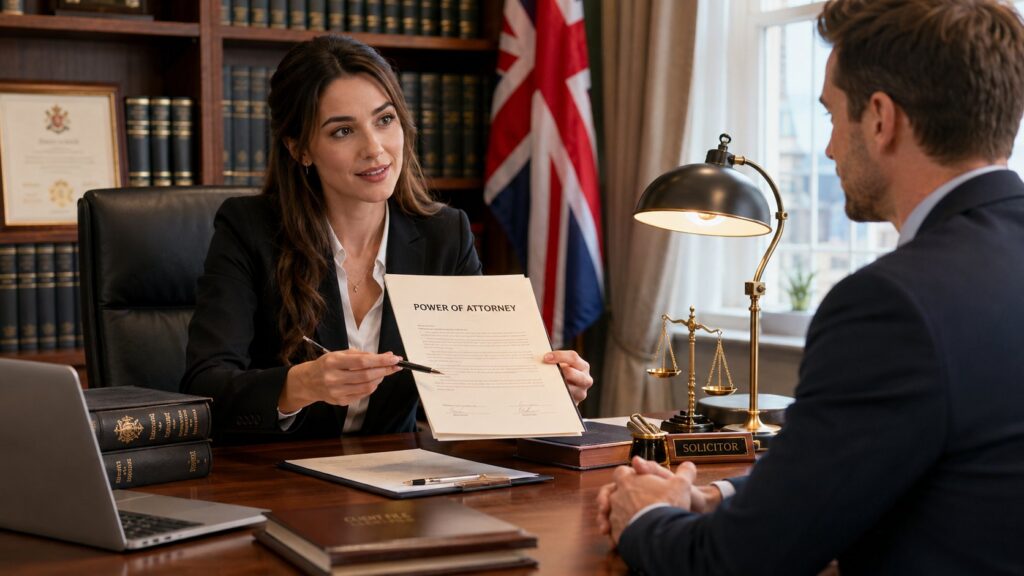
A power of attorney is an important legal document that allows one person to authorise another person to act on their behalf. Depending on the authority granted, the appointed person may be able to manage financial matters, sign documents, deal with property, handle business interests or represent someone in legal and administrative matters.
When a UK power of attorney needs to be used abroad, an overseas bank, court, government authority, property registry or other organisation may require the document to be authenticated before accepting it. This is where an apostille may be required.
A common question is: “Can a power of attorney be apostilled in the UK?“
In many cases, yes. A power of attorney can be prepared for international use and may receive an FCDO apostille, provided it meets the relevant requirements. Depending on the document and destination country, it may first need to be signed correctly, witnessed, certified or notarised.
If you are arranging apostille UK or document legalisation UK, checking the destination country’s requirements before starting the process can help prevent delays and unnecessary costs.
Watch our short video for a quick explanation of whether powers of attorney can be apostilled:
What Is a Power of Attorney?
A power of attorney is a legal document that gives another person authority to act on behalf of someone else.
The person giving the authority is commonly called the donor, while the person receiving it is known as the attorney.
A power of attorney can provide specific or wider authority depending on its purpose. It may be used to allow someone to:
- Manage financial matters.
- Deal with bank accounts.
- Buy or sell property.
- Sign legal documents.
- Manage business interests.
- Handle overseas investments.
- Deal with administrative matters.
- Assist with estate or inheritance matters.
When the document is intended for use outside the UK, the receiving authority may require it to be legalised. In some circumstances, this involves obtaining an apostille.
What Is an Apostille?
An apostille is an official certificate used to authenticate certain public documents for international use.
In the UK, apostilles are issued by the Foreign, Commonwealth & Development Office (FCDO) Legalisation Office. An apostille is generally used when a UK document is being presented in a country that recognises the Hague Apostille Convention.
For example, someone who cannot travel overseas to complete a property transaction may give another person power of attorney. The overseas property authority or lawyer may require the document to have an apostille before accepting it.
An apostille:
- Authenticates the relevant signature, stamp or seal.
- Does not confirm that the contents of the document are legally correct.
- Does not give additional powers to the attorney.
- Does not automatically translate the document.
- Does not guarantee acceptance by every foreign organisation.
The receiving authority should therefore be contacted before the document is prepared.
Can a Power of Attorney Be Apostilled?
Yes, in many cases
A power of attorney can often be prepared for the apostille process when it is intended for use abroad.
However, the document may need to be properly signed, witnessed, certified or notarised before it can be submitted. The requirements can depend on:
- The type of power of attorney.
- The destination country.
- The organisation receiving the document.
- How the document was signed.
- Whether notarisation is required.
- Whether a translation is required.
A privately signed document may not always be suitable for direct apostille processing. In many cases involving powers of attorney, a notary public may need to certify the document or signature first.
For this reason, it is important to confirm the requirements before arranging an apostille service UK.
When Might a Power of Attorney Need an Apostille?
A power of attorney may need an apostille when it is being used for official or legal purposes outside the UK.
Buying or Selling Property Abroad
If someone owns property overseas but cannot travel to complete a transaction, they may appoint another person to act on their behalf. The foreign property authority, lawyer or registry may request an apostilled power of attorney.
Managing Overseas Bank Accounts
A person may authorise someone else to manage an overseas bank account or financial assets. The foreign bank may require the power of attorney to be legalised before accepting it.
Business Matters
Business owners may use powers of attorney to allow another person to sign contracts, represent a company or complete transactions abroad. An overseas organisation may request an apostilled document.
Overseas Investments
A power of attorney may allow a representative to manage investments or financial interests in another country. The receiving organisation may require authentication of the document.
Inheritance and Probate
Where overseas property or assets are involved, a power of attorney may be used in connection with estate or inheritance matters. Foreign authorities may require the document to be legalised.

What Types of Powers of Attorney May Need Legalisation?
The terminology and requirements vary between countries, but documents that may require international legalisation can include:
- General powers of attorney.
- Special powers of attorney.
- Limited powers of attorney.
- Property-related powers of attorney.
- Financial powers of attorney.
- Business powers of attorney.
- Powers of attorney connected with estate administration.
Does a Power of Attorney Need to Be Notarised Before an Apostille?
Sometimes
Not every power of attorney follows the same process. However, many powers of attorney intended for international use are notarised before being submitted for an apostille.
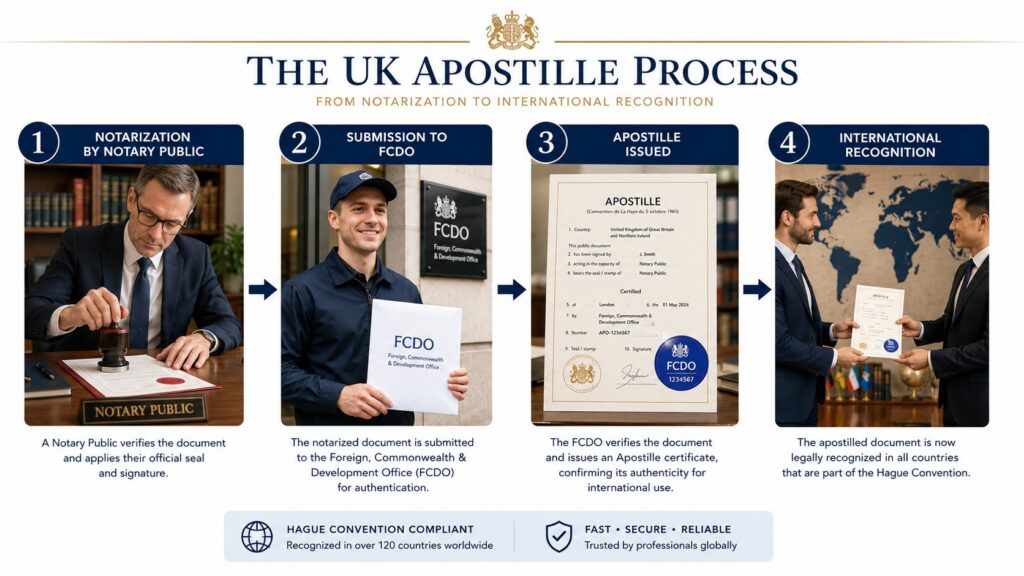
A notary public may verify the identity of the person signing and certify the signature or document according to the applicable procedure. The notarised document can then be submitted for the relevant FCDO apostille process.
Before arranging notarisation, check whether the destination country or receiving organisation requires:
- Notarisation.
- A specific power of attorney format.
- A particular type of certification.
- A certified translation.
- An apostille.
- Additional embassy or consular legalisation.
This can help ensure that the document is prepared correctly from the beginning.
How Does the UK Apostille Process Work?
The process can vary depending on the document and destination country, but it generally involves the following stages.
1. Check the Destination Country’s Requirements
First, confirm exactly what the overseas authority requires.
Check whether the power of attorney needs to be:
- Notarised.
- Apostilled.
- Translated.
- Prepared in a specific format.
- Further legalised by an embassy or consulate.
This is one of the most important steps because different countries and organisations can have different requirements.
2. Prepare the Power of Attorney
The document should clearly identify the donor and attorney and explain the authority being granted.
It should include the required dates, signatures, limitations and witnesses where applicable.
If the foreign authority has provided a specific form or wording, this should be followed carefully.
3. Sign and Witness the Document Correctly
Depending on the circumstances, the document may need to be signed in the presence of a witness, solicitor or notary public.
Incorrect signing or witnessing can result in the document needing to be corrected or prepared again.
4. Arrange Notarisation or Certification
Where required, the power of attorney should be notarised or appropriately certified before apostille processing.
The document should be finalised before notarisation because later changes may affect the certification.
5. Obtain the FCDO Apostille
Once the document has been correctly prepared, it can be submitted for the FCDO apostille.
The FCDO authenticates the relevant signature, stamp or seal and, where the document meets the requirements, issues an apostille certificate.
6. Complete Further Legalisation if Required
If the destination country does not accept apostilles, additional embassy or consular legalisation may be required.
The full process could therefore involve:
- Preparing the power of attorney.
- Correct signing and witnessing.
- Notarisation or certification.
- FCDO legalisation.
- Embassy or consular legalisation, where required.
The exact procedure depends on the destination country.
How Long Does It Take to Apostille a Power of Attorney?
The timeframe depends on several factors, including:
- Document preparation.
- Notarisation requirements.
- FCDO processing.
- Postal or courier delivery.
- Translation requirements.
- Embassy legalisation.
A straightforward document may take less time than one requiring notarisation, translation and additional legalisation.
Does a Power of Attorney Need to Be Translated?
It depends on the destination country
A power of attorney written in English may need to be translated if the receiving authority does not accept English documents.
Depending on the country, it may require:
- A professional translation.
- A certified translation.
- A sworn translation.
- Translation by an approved translator.
Some authorities may also require the apostille to be translated.
Always confirm whether the original document, apostille or both need translation and whether the translation requires certification.
An apostille itself does not translate the contents of a document.
What If the Country Does Not Accept Apostilles?
A UK apostille is generally intended for countries that recognise the Hague Apostille Convention.
If the destination country does not accept apostilles, additional document legalisation UK steps may be necessary. These can include FCDO legalisation followed by embassy or consular legalisation.
The process may therefore take longer and involve additional requirements.
Before starting, check with the relevant embassy, consulate or receiving organisation to determine exactly what is required.
Common Mistakes to Avoid
1. Using the Wrong Format
Some countries require a specific form or wording for a power of attorney. A standard document may not always be accepted.
2. Signing Incorrectly
If notarisation or witnessing is required, signing the document privately may cause problems.
3. Forgetting Notarisation
Many international powers of attorney require notarisation before apostille processing.
4. Assuming an Apostille Is Always Enough
Countries that do not recognise the Hague Apostille Convention may require additional legalisation.
5. Ignoring Translation Requirements
The receiving authority may require a certified or sworn translation.
6. Changing the Document After Notarisation
Changes after notarisation can affect the certification and may require the process to be repeated.
Practical Checklist Before Apostilling a Power of Attorney
Before starting the process, confirm:
- The destination country accepts UK apostilles.
- The receiving authority accepts the proposed power of attorney.
- The required document format is being used.
- The document will be signed correctly.
- Notarisation or certification is completed if required.
- Translation requirements have been checked.
- Embassy legalisation is not being overlooked.
- Enough time has been allowed for processing.
- Copies of important documents have been kept securely.
Why Professional Apostille Support Can Help
Obtaining an apostille for a power of attorney can involve several stages rather than simply submitting a document for authentication.
Depending on the circumstances, you may need to arrange notarisation, certification, translation, FCDO legalisation and embassy requirements.
Professional apostille service UK support can help you understand the appropriate process and prepare eligible documents for international use.
For more information, visit our Apostille Service UK page to learn more about apostille and document legalisation services.
Frequently Asked Questions
1. Can a power of attorney be apostilled in the UK?
Yes, in many cases. The document may need to be correctly signed, witnessed, certified or notarised before an apostille can be issued.
2. Does every power of attorney need to be notarised?
No. Requirements vary depending on the document and destination country. However, notarisation is commonly required for powers of attorney intended for international use.
3. Can I use a UK apostilled power of attorney abroad?
It may be accepted if the destination country recognises apostilles and the receiving authority accepts the document. Always check the specific requirements first.
4. How long does it take to apostille a power of attorney?
The timeframe depends on document preparation, notarisation, FCDO processing, delivery and any additional embassy legalisation.
5. Does a power of attorney need to be translated?
Possibly. The receiving authority may require a professional, certified or sworn translation, particularly where English is not accepted.
6. What if the country does not accept apostilles?
Additional embassy or consular legalisation may be required. The exact procedure depends on the destination country.

Conclusion
A power of attorney can be an important document when someone needs another person to act on their behalf abroad. In many cases, it can be prepared for an apostille UK process so that it can be presented to an overseas authority.
However, the correct procedure depends on the type of power of attorney, how it is signed and the requirements of the destination country. Some documents may require notarisation, certification, translation or additional embassy legalisation before they can be accepted.
An apostille authenticates the relevant signature, stamp or seal; it does not confirm the legal content of the power of attorney or guarantee acceptance by every foreign organisation.
Checking the destination country’s requirements before signing the document is therefore essential. Proper preparation can help prevent delays, rejected documents and unnecessary costs.
If you need assistance with apostille documents UK, apostille UK or document legalisation UK, 2eApostille can help guide you through the appropriate process. Our apostille service UK can assist with eligible documents and the relevant FCDO apostille procedure for international use.
For professional support with your power of attorney and other UK documents, visit the Apostille Service UK page and prepare your documents for overseas use with confidence.