
Which Countries Require Additional Embassy Legalisation After Apostille?
Introduction
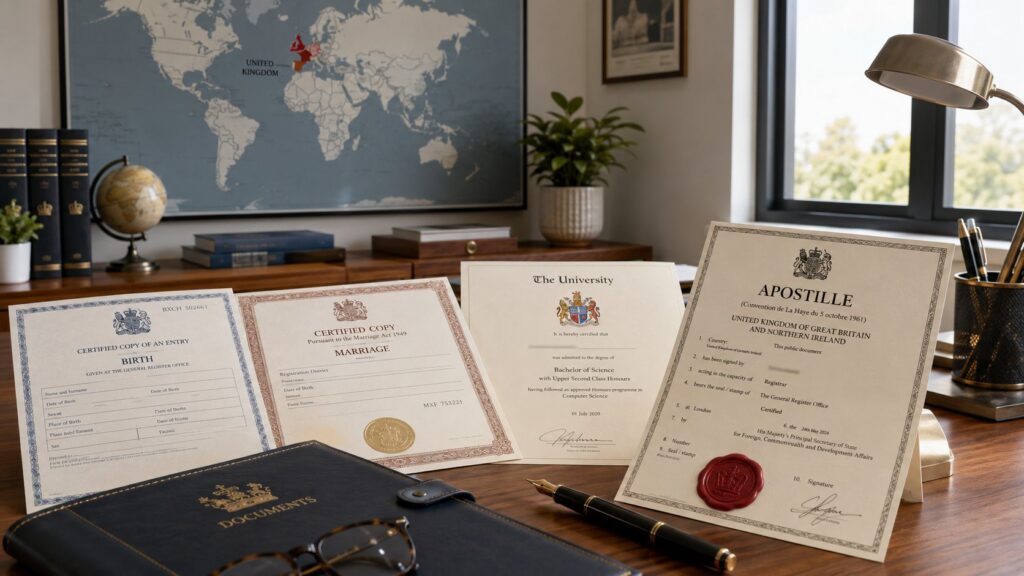
Which countries require additional embassy legalisation after apostille? Many people ask this question when preparing UK documents for use overseas. While an FCDO apostille is accepted in Hague Convention countries, some destinations require embassy legalisation before documents are officially recognised.
If you are relocating abroad, applying for a work visa, studying overseas, getting married in another country, or conducting international business, it is essential to understand whether your destination country requires more than just an apostille. Failing to complete the necessary legalisation process can result in delays, rejected applications, or the need to resubmit your documents.
Whether you need to legalise a birth certificate, marriage certificate, degree certificate, business document, or Power of Attorney, understanding country-specific requirements can save you both time and money.
If you need a trusted apostille service UK, visit our dedicated service page:
Before continuing, watch this short video explaining why some countries require embassy legalisation after obtaining an apostille.
What Is an Apostille?
An apostille is an official certificate issued by the Foreign, Commonwealth & Development Office (FCDO) that confirms the authenticity of a UK public document or a properly certified private document.
The apostille verifies:
- The signature on the document.
- The official seal or stamp.
- The authority of the individual who signed it.
An FCDO apostille does not confirm that the contents of the document are accurate. Instead, it proves that the document itself is genuine and has been issued or certified by an authorised person.
Many overseas authorities require an apostille before accepting UK documents for legal, educational, employment, immigration, or business purposes.
Why Do Some Countries Require Embassy Legalisation?
The apostille system only applies to countries that are members of the Hague Apostille Convention.
Countries that are not members of the Convention generally do not recognise an apostille on its own. Instead, they require an additional verification step carried out by their own embassy or consulate.
This process is known as embassy legalisation or consular legalisation.
The embassy checks the apostille issued by the UK authorities and confirms that the document meets the legal requirements of the destination country.
Without embassy legalisation, your documents may not be accepted by:
- Immigration authorities
- Government departments
- Universities
- Employers
- Courts
- Business regulators
What Is Embassy Legalisation?
Many people searching for countries requiring embassy legalisation after apostille are surprised to learn that the legalisation process differs depending on the destination country.
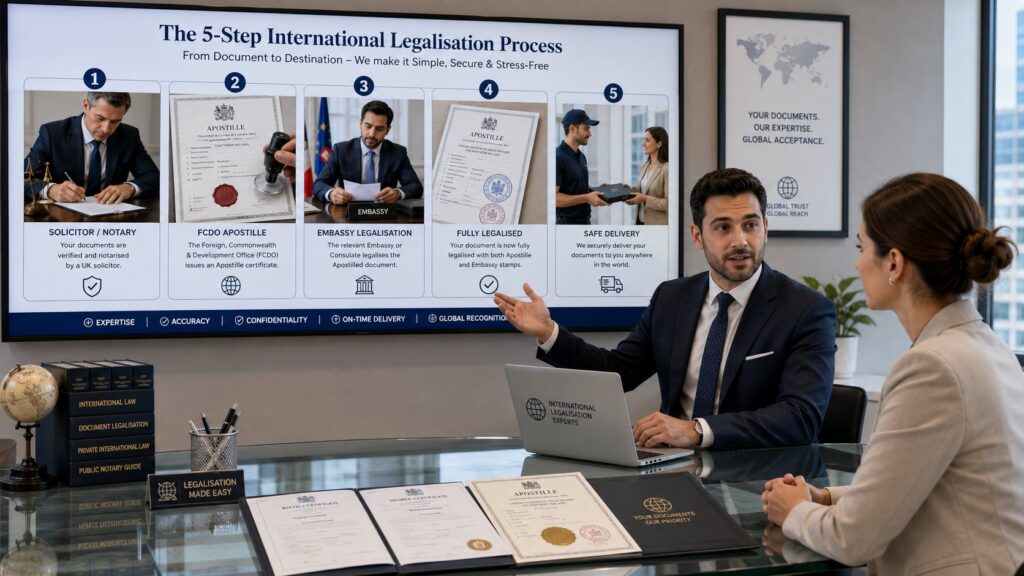
The typical process is:
- Prepare the document.
- Obtain solicitor or notary certification if required.
- Receive the FCDO apostille.
- Submit the document to the destination country’s embassy or consulate.
- Receive the embassy’s legalisation stamp or certificate.
Only after all required stages have been completed will many non-Hague Convention countries accept the document.
Which Countries May Require Additional Embassy Legalisation?
This section explains the countries requiring embassy legalisation after apostille and why an apostille alone may not always be sufficient.
United Arab Emirates (UAE)
The UAE frequently requires:
- FCDO apostille
- UAE Embassy legalisation
- Additional authentication within the UAE for certain applications
Common documents include:
- Degree certificates
- Marriage certificates
- Birth certificates
- Commercial documents
- Employment contracts
Qatar
Many UK documents intended for Qatar require:
- Solicitor certification (where applicable)
- FCDO apostille
- Qatar Embassy legalisation
These documents are commonly used for:
- Employment
- Residency
- Family visas
- Business registration
Kuwait
Kuwait often requires embassy legalisation after an apostille for documents such as:
- Educational certificates
- Marriage certificates
- Birth certificates
- Commercial paperwork
- Medical documents
Vietnam
Certain UK documents destined for Vietnam require embassy authentication after the apostille process.
Examples include:
- Degree certificates
- Birth certificates
- Marriage certificates
- Powers of Attorney
- Business documents
Other Countries
Depending on current regulations, additional embassy legalisation may also be required for documents intended for use in certain countries across the Middle East, Africa, and Asia.
Because legalisation requirements can change, it is always advisable to confirm the latest guidance before submitting your paperwork.
How Do I Know If My Destination Country Needs Embassy Legalisation?
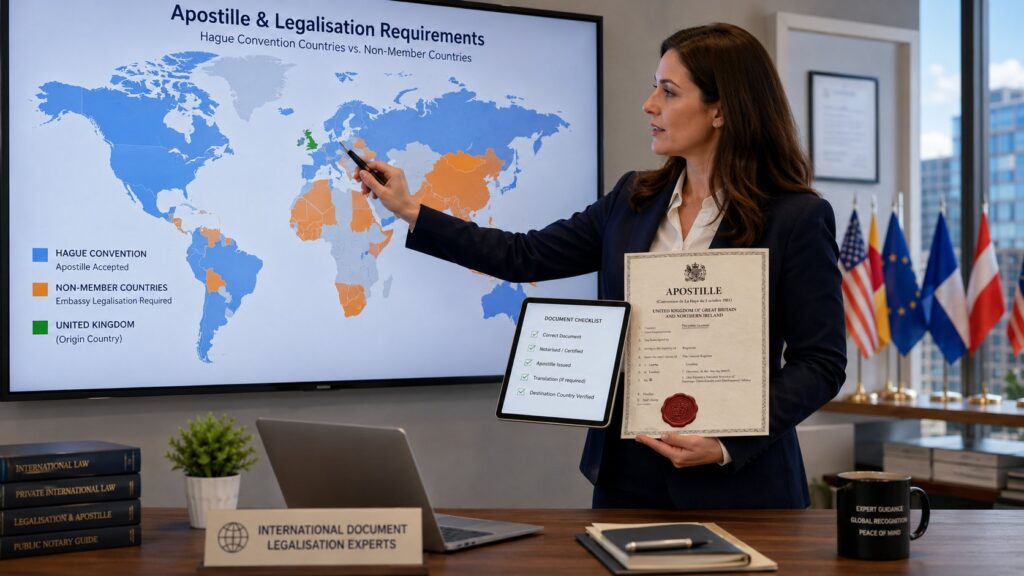
The easiest way to determine the correct process is to check whether your destination country recognises apostilles issued under the Hague Apostille Convention.
You should also consider:
- The type of document you are submitting.
- The purpose of the document.
- The requirements of the receiving organisation.
- Whether certified translations are needed.
- Whether additional embassy authentication is required.
An experienced apostille service UK provider can help you identify exactly what is needed before your documents are submitted, helping to avoid delays and rejected applications.
How Does the Apostille and Embassy Legalisation Process Work?
If your destination country requires embassy legalisation, your documents must complete several authentication stages before they can be accepted overseas. Understanding each step can help you prepare your paperwork correctly and avoid unnecessary delays.
Step 1: Check Your Documents
The first step is to confirm whether your documents are eligible for legalisation and whether they require any certification before an apostille can be issued.
Examples of documents commonly requiring legalisation include:
- Birth certificates
- Marriage certificates
- Death certificates
- Degree certificates
- Academic transcripts
- Employer reference letters
- Medical certificates
- Powers of Attorney
- Company documents
- Commercial agreements
A professional apostille service UK can review your paperwork and advise on the correct legalisation route for your destination country.
Step 2: Obtain Solicitor or Notary Certification (If Required)
Not every document can be sent directly to the Foreign, Commonwealth & Development Office (FCDO).
Private documents generally require certification by a solicitor or notary public first.
These often include:
- Employment reference letters
- Business contracts
- Company resolutions
- Passport copies
- Medical letters
- Educational copies
- Affidavits
Public documents such as original UK birth certificates or marriage certificates usually do not require additional certification before receiving an FCDO apostille.
Step 3: Obtain the FCDO Apostille
Once the documents have been prepared correctly, they are submitted to the Foreign, Commonwealth & Development Office.
The FCDO verifies:
- The signature on the document.
- The official seal or stamp.
- The authority of the person who signed it.
If everything is in order, the official apostille certificate is attached.
For Hague Convention countries, this is often the final stage.
Step 4: Embassy or Consular Legalisation
If your destination country requires additional authentication, your documents must then be submitted to the relevant embassy or consulate.
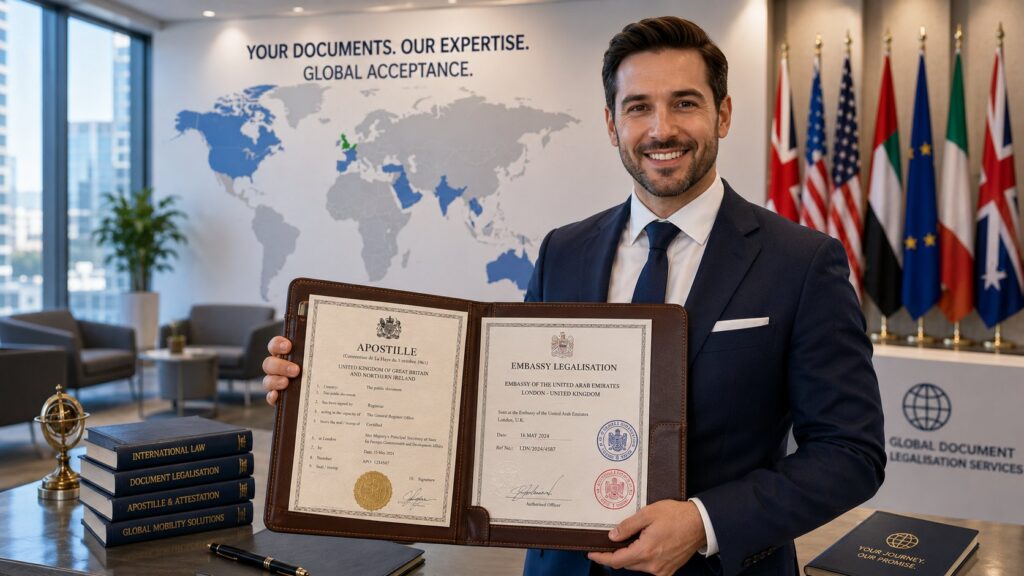
The embassy confirms that the FCDO apostille is genuine and applies its own legalisation stamp or certificate.
Some embassies may also request:
- Completed application forms
- Passport copies
- Certified translations
- Passport-sized photographs
- Supporting letters
- Embassy processing fees
Each embassy follows its own procedures, so the exact requirements vary from country to country.
Step 5: Secure Return of Your Documents
After the embassy legalisation process has been completed, your original documents are returned to you.
Most professional providers offer secure delivery options such as:
- Royal Mail Special Delivery
- Tracked courier services
- International courier delivery
- Signature-on-delivery services
These options provide additional security for valuable original documents.
Which Documents Commonly Require Embassy Legalisation?
Many different types of apostille documents UK may require both an apostille and embassy legalisation.
Personal Documents
Personal documents commonly include:
- Birth certificates
- Marriage certificates
- Death certificates
- Civil partnership certificates
- Adoption certificates
- Deed Poll name change certificates
These are often needed for immigration, overseas marriage, residency applications, and family matters.
Educational Documents
Educational documents frequently require legalisation for overseas employment or university admission.
Examples include:
- Degree certificates
- Diplomas
- Academic transcripts
- Professional qualifications
- Teaching certificates
Some employers and universities may also request certified translations.
Employment Documents
Employment-related paperwork commonly includes:
- Employer reference letters
- Employment contracts
- Experience certificates
- HR confirmation letters
- Salary verification letters
Many of these documents require solicitor certification before receiving an apostille.
Medical Documents
Medical documents that may require legalisation include:
- Doctor’s letters
- Medical reports
- Vaccination certificates
- Occupational health reports
- Disability assessments
Depending on the destination country, these documents may also need certified translations.
Business Documents
Businesses operating internationally often require legalisation for:
- Certificate of Incorporation
- Articles of Association
- Certificates of Good Standing
- Commercial contracts
- Company resolutions
- Powers of Attorney
These documents are commonly required for overseas company registration, international trade, and commercial transactions.
How Long Does Embassy Legalisation Take?
Processing times vary depending on:
- The destination country.
- Embassy processing times.
- The type of document.
- Whether certification is required.
- Courier delivery times.
In general, obtaining an FCDO apostille is only part of the overall timeframe. Embassy legalisation can add additional processing time, so it is advisable to begin the process well before your deadline.
If your documents are needed urgently, discuss your timescale with your chosen apostille service UK provider, as priority services may be available.
Common Mistakes to Avoid
Many applications are delayed because of simple mistakes that can easily be prevented.
Assuming an Apostille Is Always Enough
One of the most common misunderstandings is believing that every country accepts an apostille. Some destinations require embassy legalisation as an additional step.
Sending the Wrong Type of Document
Always confirm whether the receiving authority requires an original document, a certified copy, or a recently issued certificate.
Forgetting Certified Translations
Certain countries require documents to be translated before they will accept them.
Ignoring Embassy Requirements
Embassies often have specific forms, fees, and supporting document requirements. Missing any of these can delay the application.
Leaving the Process Until the Last Minute
Embassy legalisation usually takes longer than obtaining an apostille alone. Starting early gives you more flexibility and reduces stress.
Why Choose a Professional Apostille Service UK?
A trusted apostille service UK can simplify the entire legalisation process.
Professional providers can:
- Review your documents before submission.
- Confirm whether certification is required.
- Arrange solicitor or notary certification.
- Obtain your FCDO apostille efficiently.
- Handle embassy legalisation where necessary.
- Provide secure tracked return delivery.
- Offer guidance based on your destination country’s latest requirements.
Using experienced specialists helps reduce the risk of rejected applications and ensures your documents are correctly prepared for international use.
Frequently Asked Questions
1. Which countries require embassy legalisation after an apostille?
Countries that are not members of the Hague Apostille Convention, or those with additional legal requirements, may require embassy or consular legalisation after obtaining an FCDO apostille.
2. Is an apostille alone enough for every country?
No. An apostille is generally accepted only by Hague Convention member countries. Other countries may require additional embassy legalisation before your document is recognised.
3. Which documents commonly require embassy legalisation?
Common documents include birth certificates, marriage certificates, degree certificates, employer reference letters, business documents, medical reports, and Powers of Attorney.
4. How long does embassy legalisation take?
The timeframe varies depending on the destination country’s embassy, document type, and processing requirements. Allow extra time if embassy legalisation is needed.
5. Can a professional apostille service arrange embassy legalisation?
Yes. A trusted apostille service UK can manage the entire process, including document review, FCDO apostille, embassy legalisation, and secure return delivery.
6. How can I check whether my destination country needs embassy legalisation?
The easiest way is to speak with a professional document legalisation UK provider who can confirm the latest requirements based on your destination country and document type.
Conclusion
Obtaining an apostille is an essential step when preparing UK documents for international use, but it is not always the end of the legalisation process. While countries that are members of the Hague Apostille Convention generally accept an FCDO apostille, many non-member countries require an additional stage of embassy or consular legalisation before your documents will be officially recognised. Understanding these requirements before you begin can help you avoid unnecessary delays, rejected applications, and additional costs.
Before sending your paperwork overseas, always check whether your destination is one of the countries requiring embassy legalisation after apostille. Whether you are moving overseas, applying for a work visa, enrolling at an international university, getting married abroad, expanding your business, or handling legal matters in another country, ensuring your documents are correctly authenticated is essential. Different countries have different rules, and the legalisation process may vary depending on the type of document being submitted.
To learn more or start your application today, visit our Apostille Service UK page:
Whether you need to legalise a birth certificate, marriage certificate, degree certificate, business document, Power of Attorney, medical report, or any other official paperwork, 2eApostille offers a fast, secure, and dependable service tailored to your needs. We will review your documents, advise on any certification or embassy requirements, arrange the FCDO apostille, and manage additional embassy legalisation where required, giving you complete confidence that your documents are properly prepared for use anywhere in the world.