
How do I verify an e-apostille?
Introduction
When you are sending UK documents abroad—whether for work, study, business, or immigration—ensuring their authenticity is critical. Foreign authorities must be confident that your documents are genuine, and this is where apostille services come in. However, with the rise of digital processes, many people now ask an important question: how do I verify an e-apostille?
Understanding verification is just as important as obtaining the apostille itself. If a document cannot be verified properly, it may be rejected by overseas authorities, causing delays, additional costs, or even legal complications.
In this detailed guide, we will explain everything you need to know about verifying an e-apostille in the UK. You’ll learn how the system works, what steps to follow, common mistakes to avoid, and how professional services can make the process easier. Whether you are new to document legalisation UK or simply want clarity, this article will help you confidently handle apostille documents UK.
What Is an Apostille?
An apostille is an official certificate issued by the UK government that confirms the authenticity of a document. It verifies that the signature, stamp, or seal on a document is genuine.
In the UK, apostilles are issued by the Foreign, Commonwealth & Development Office (FCDO). This is why the term FCDO apostille is commonly used.
An apostille is typically required when you need to use UK documents in countries that are part of the Hague Convention. It eliminates the need for further embassy legalisation in those countries.
What Is an e-Apostille?
An e-apostille (electronic apostille) is a digital version of the traditional paper apostille. Instead of receiving a physical certificate attached to your document, you receive a secure digital record.
However, it is important to understand a key point:
The UK does not fully operate a completely digital apostille system for all documents.
In most cases:
- Physical documents are still submitted to the FCDO
- The apostille is issued as a paper certificate
- Some verification features may be available digitally
True e-apostilles (fully digital certificates) are limited and depend on document type and format.
Can an e-Apostille Be Verified?
Yes, an apostille—whether physical or digital—can be verified. This is a crucial feature that ensures trust between countries.
Verification confirms:
- The apostille is genuine
- It was issued by the FCDO
- The document has not been tampered with
This process is especially important for employers, universities, and government authorities abroad.
How Do I Verify an e-Apostille in the UK?
Step 1: Locate the Apostille Details
Every apostille includes key information such as:
- Certificate number
- Date of issue
- Issuing authority (FCDO)
For digital or scanned copies, these details are still visible.
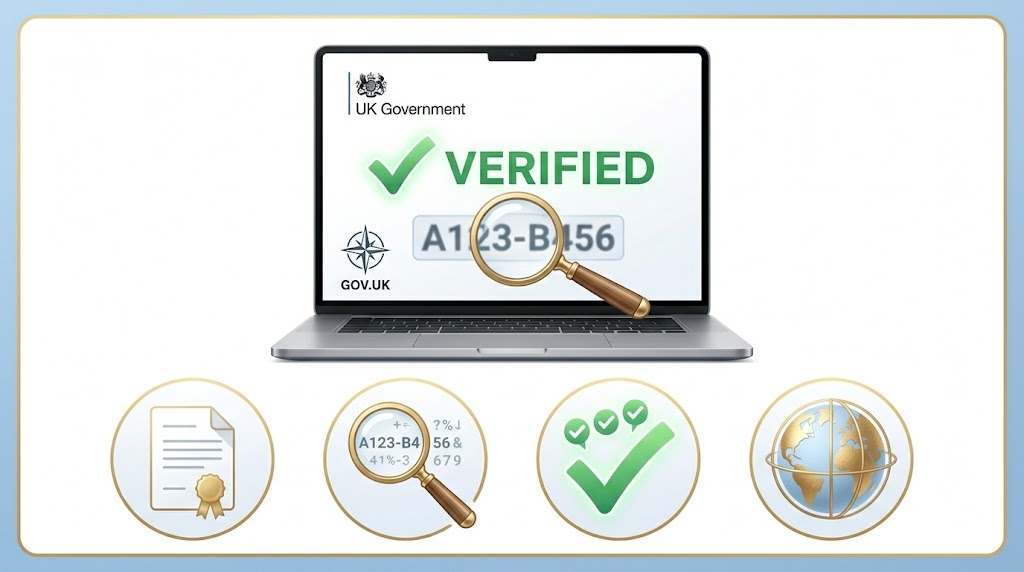
Step 2: Use the Official Verification System
The UK government provides a way to verify apostilles online. You typically need:
- The certificate number
- The date of issue
Once entered into the official system, it confirms whether the apostille is valid.
Step 3: Confirm Document Consistency
Even after verification:
- Check that the apostille matches your document
- Ensure names, signatures, and details align
Step 4: Share with Overseas Authorities
If required:
- Send a digital copy
- Provide verification details
- Allow authorities to cross-check authenticity
Important Note About UK e-Apostilles
Many people misunderstand the concept of e-apostilles in the UK. Here is the reality:
- The UK primarily issues paper apostilles
- Digital verification exists, but not full digital issuance for all documents
- Some documents may be digitised after certification
This means that while you can verify apostilles online, the original process is still largely physical.
When Do You Need to Verify an Apostille?
You may need to verify an apostille in situations such as:
- Applying for jobs abroad
- University admissions
- Visa or immigration applications
- Business expansion overseas
- Legal proceedings in another country
Verification reassures foreign authorities that your documents are legitimate.
Which Documents Can Have Apostilles Verified?
Most apostille documents UK can be verified, including:
Personal Documents
- Birth certificates
- Marriage certificates
- Divorce certificates
- Police certificates
Educational Documents
- Degree certificates
- Diplomas
- Transcripts
Business Documents
- Certificates of incorporation
- Company agreements
- Commercial invoices
Legal Documents
- Power of attorney
- Court documents
- Affidavits
The Process of Obtaining an Apostille in the UK
Before verification comes the application process. Here’s how apostille UK services typically work:
Step 1: Prepare Your Documents
Ensure documents are:
- Original or certified copies
- Properly signed and dated
Step 2: Certification (if required)
Some documents must be:
- Certified by a solicitor
- Notarised by a notary public
Step 3: Submit to the FCDO
Documents are sent to the FCDO for verification.
Step 4: Apostille Issued
The apostille is attached or issued.
Step 5: Delivery
Documents are returned to you or forwarded abroad.
Timelines for Apostille and Verification
Typical timelines include:
- Standard processing: 2–5 working days
- Urgent services: 1–2 working days
- Delivery time: depends on courier
Verification, however, is usually instant once you have the correct details.
Common Mistakes When Verifying an e-Apostille
Many applicants face issues due to simple mistakes. Avoid the following:
Incorrect Certificate Details
Entering the wrong number or date can result in failed verification.
Using Unofficial Websites
Always rely on official or trusted sources.
Assuming All Apostilles Are Digital
In the UK, most apostilles are still physical.
Ignoring Document Matching
Even a valid apostille must match the document it is attached to.
Difference Between Apostille and Document Legalisation UK
It is important to distinguish between:
Apostille
- Used for Hague Convention countries
- Issued by the FCDO
- No embassy involvement needed
Full Legalisation
- Required for non-Hague countries
- Includes embassy attestation after apostille
Verification applies mainly to the apostille stage.
Can Foreign Authorities Verify My Apostille?
Yes. One of the main benefits of apostilles is international recognition.
Authorities abroad can:
- Use verification systems
- Check certificate details
- Confirm authenticity independently
This is why apostilles are widely trusted.
Benefits of Using a Professional Apostille Service UK
While you can apply yourself, professional services offer key advantages:
Accuracy
Avoid errors that may delay verification.
Speed
Faster processing and handling.
Guidance
Expert advice on document requirements.
Convenience
No need to manage the process yourself.
For a reliable and efficient solution, consider using a professional apostille service UK such as:
https://2eapostille.co.uk/apostille-service-uk/
When Verification Might Fail
Sometimes verification does not work. This may happen if:
- The apostille is fake
- Details are entered incorrectly
- The system has not updated yet
- The document was not properly issued
In such cases, you may need to:
- Recheck details
- Contact the issuing authority
- Reapply for a valid apostille
Practical Tips for Smooth Verification
- Always keep a copy of your apostille
- Double-check all details before submission
- Use tracked delivery when sending documents
- Work with trusted service providers
Frequently Asked Questions (FAQs)
1. Can I verify a UK apostille online?
Yes, UK apostilles can be verified online using official verification systems with the certificate number and date.
2. Are all apostilles digital in the UK?
No, most apostilles are still issued as physical documents, although verification may be done online.
3. What details are needed for verification?
You typically need the certificate number and date of issue.
4. Can a fake apostille be detected?
Yes, verification systems are designed to identify invalid or fake apostilles.
5. Do I need to verify my apostille before sending it abroad?
It is not mandatory, but it is recommended to ensure everything is correct.
6. Can someone else verify my apostille?
Yes, employers, universities, or authorities abroad can verify it themselves.
Conclusion
Verifying an e-apostille—or any apostille—is a simple yet essential step in the document legalisation process. It ensures your documents are trusted and accepted internationally, avoiding delays and complications.
While the UK system still relies largely on physical apostilles, the ability to verify them online adds an extra layer of security and convenience.
If you want a smooth, hassle-free experience with your apostille documents UK, it is always wise to work with experts.
Avoid delays, mistakes, and uncertainty. Let professionals handle your apostille and document legalisation UK needs efficiently.
Visit: https://2eapostille.co.uk/apostille-service-uk/ today and use their trusted apostille service UK to ensure your documents are correctly processed, verified, and accepted worldwide.