
Can professional qualifications (ACCA, GMC, HCPC, etc.) be apostilled?
Introduction
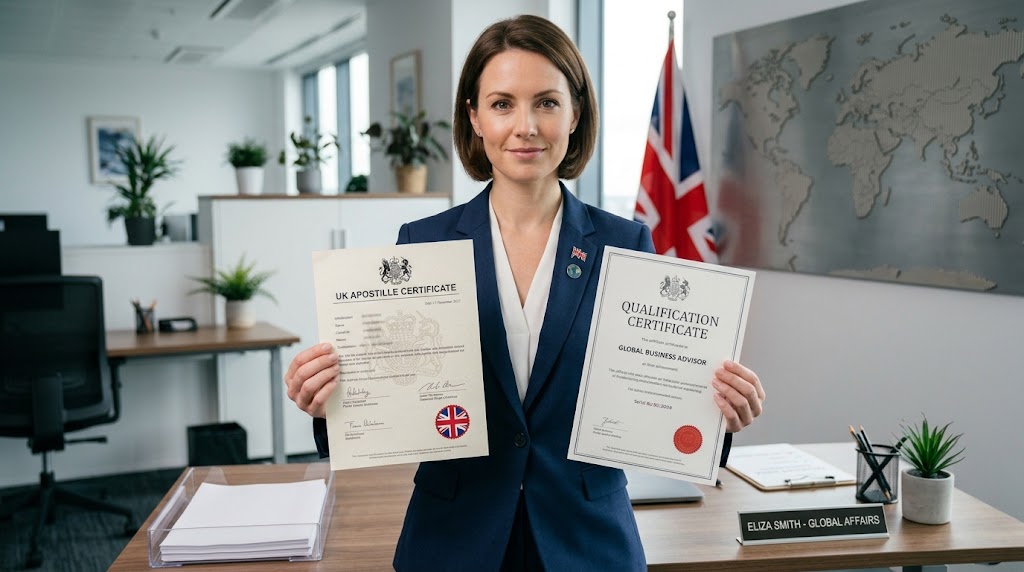
If you are planning to work, study or obtain professional registration abroad, you may be asked to provide evidence of your professional qualifications. Overseas employers, government authorities, licensing bodies and regulatory organisations often need to confirm that qualifications issued in the UK are genuine before accepting them.
This can apply to a wide range of professional qualifications and registrations, including documents issued by organisations such as the ACCA, GMC, HCPC and other recognised professional bodies. Depending on the country and the purpose of the document, you may be asked to obtain an apostille before your qualification can be accepted abroad.
Professional qualifications can often be apostilled when they are required for official use abroad, depending on the type of document and the requirements of the receiving authority.
For many people, the process can seem confusing. You may already have a professional certificate or registration document, but a foreign authority may still require official authentication before it will accept it. This is where an apostille can play an important role.
This guide explains whether professional qualifications can be apostilled, how the apostille process works in the UK, which professional documents may require legalisation, when notarisation may be necessary and how to avoid common mistakes.
For a quick overview, watch this video before continuing with the full guide:
What Is an Apostille?
An apostille is an official certificate used to authenticate a document for international use. It is recognised by countries that are parties to the Hague Apostille Convention.
In the UK, an apostille is issued through the Foreign, Commonwealth & Development Office, commonly referred to as the FCDO.
An apostille confirms the authenticity of the relevant signature, stamp or seal on a document. It does not verify the contents of the qualification itself or guarantee that a foreign employer or professional body will accept it. The receiving organisation still decides whether the qualification meets its own professional or regulatory requirements.
For example, an apostille may help authenticate a document issued by or certified in relation to a professional body. However, the overseas authority may separately assess whether your qualification allows you to practise in that country.
An apostille may be required when you need to use a UK professional qualification for:
- Overseas employment
- Professional registration abroad
- Immigration or visa applications
- Recognition of qualifications
- International licensing
- Applications to regulatory authorities
- Overseas government procedures
- International business or consultancy work
Understanding this distinction is important. An apostille authenticates the document; it does not automatically transfer your professional licence or right to practise from the UK to another country.
Can Professional Qualifications Be Apostilled?
In many cases, yes. However, the exact process depends on the type of document and how it was issued.
Professional qualifications and related documents may include:
- ACCA certificates
- GMC certificates or documents
- HCPC registration documents
- Membership certificates
- Professional registration certificates
- Certificates issued by recognised professional bodies
- Qualification certificates
- Letters confirming membership or registration
- Certificates of good standing
- Official verification letters
- Degree certificates
- Academic transcripts
Some original documents may be suitable for apostille directly, while others may first require certification, notarisation or confirmation from the issuing organisation.
It is therefore important not to assume that every professional certificate follows the same procedure.
Before starting the apostille process, check exactly what the overseas authority requires. Ask whether it needs:
- The original certificate
- A certified copy
- A notarised copy
- A recently issued letter
- A Certificate of Good Standing
- An apostille
- A translation
- Additional embassy legalisation
This can prevent delays and ensure you prepare the correct document.
Can ACCA Documents Be Apostilled?
Professional accountancy documents may be required when applying for jobs or professional opportunities abroad.
Depending on the requirements of the receiving authority, relevant ACCA-related documents may include certificates, membership documents or official confirmation of professional status.
However, an overseas authority may not simply ask for an original qualification certificate. It may instead request an official letter, confirmation document or another specific form of evidence.
For this reason, it is important to check the exact requirement before arranging an apostille UK.
In some cases, the document may need to be appropriately certified before the FCDO apostille process can be completed. The route will depend on the type of document and the signature or certification it contains.
Can GMC Documents Be Apostilled?
Medical professionals may need official documents for employment, licensing or registration in another country.
The documents required can vary depending on the destination country and the receiving medical authority. A foreign regulator may request evidence relating to a doctor’s qualifications, registration or professional standing.
It is important to remember that obtaining an apostille does not itself give a doctor permission to practise overseas. Medical authorities normally have their own procedures for recognising qualifications and granting registration.
The apostille process is concerned with authenticating the document for international use. You should therefore confirm the exact document required before submitting anything for legalisation.
Can HCPC Documents Be Apostilled?
Professionals registered with the HCPC may also need documents for use abroad.
Depending on the purpose of the application, an overseas employer or regulator may request evidence of professional registration or an official document confirming professional status.
Again, the correct document should be confirmed with the receiving authority. A simple printout may not always be sufficient. The overseas organisation may require an official certificate, letter or other document issued in a specific format.
Where required, the appropriate document may then need to go through the document legalisation UK process before being presented abroad.
Other Professional Qualifications That May Require an Apostille

Professional documents are not limited to ACCA, GMC and HCPC records. People in many professions may need legalised documents when working internationally.
Examples may include qualifications or documents relating to:
- Accounting
- Medicine
- Nursing
- Dentistry
- Pharmacy
- Engineering
- Architecture
- Teaching
- Law
- Financial services
- Health and social care
- Information technology
- Construction and technical professions
Membership certificates, professional licences, qualification certificates and official letters may all be requested by overseas authorities.
The key point is that the receiving organisation usually determines what evidence it requires.
How Does the Apostille Process Work in the UK?
The process for obtaining an apostille can vary depending on the document.
Step 1: Confirm the Destination Country’s Requirements
First, check what the overseas authority requires.
You should confirm whether the destination country accepts apostilles under the Hague Convention. You should also check whether the authority requires a specific document format.
Do not arrange an apostille without first checking whether you need the original document, a certified copy or another form of professional confirmation.
Step 2: Obtain the Correct Professional Document
Make sure you have the correct version of the document.
Some authorities may require an original qualification certificate. Others may request a recently issued professional status letter or Certificate of Good Standing.
Using the wrong document can result in delays or rejection.
Step 3: Arrange Certification or Notarisation if Required
Some documents may need certification or notarisation before they can be apostilled.
For example, a private document or copy may need to be certified by an appropriate professional before proceeding to the next stage.
A notary public may be required in certain situations, particularly where a document needs formal authentication.
The correct preparation route depends on the individual document.
Step 4: Obtain the FCDO Apostille
Once the document has been correctly prepared, it can be submitted for the FCDO apostille process.
The apostille authenticates the relevant signature, stamp or seal so that the document can be used internationally in a country that accepts apostilles.
For assistance with this process, you can learn more through 2eApostille’s Apostille Service UK page.
Step 5: Check Whether Further Legalisation Is Required
An apostille may not always be the final stage.
If the destination country does not accept apostilles, or if the receiving authority requires additional authentication, embassy or consular legalisation may be necessary.
Always confirm the full process before making travel or employment arrangements.
Which Documents Commonly Require an Apostille?
Although this article focuses on professional qualifications, many other UK documents may also need an apostille.
Common examples include:
- Birth certificates
- Marriage certificates
- Degree certificates
- Academic transcripts
- Professional qualification certificates
- Business documents
- Powers of Attorney
- Police certificates
- DBS checks
- Wills and probate documents
- Court documents
- Company records
For example, someone moving abroad for professional employment may need to apostille a degree certificate, professional qualification and police certificate as part of the same application.
Because requirements differ, each document should be checked separately.
How Long Does It Take to Apostille a Professional Qualification?
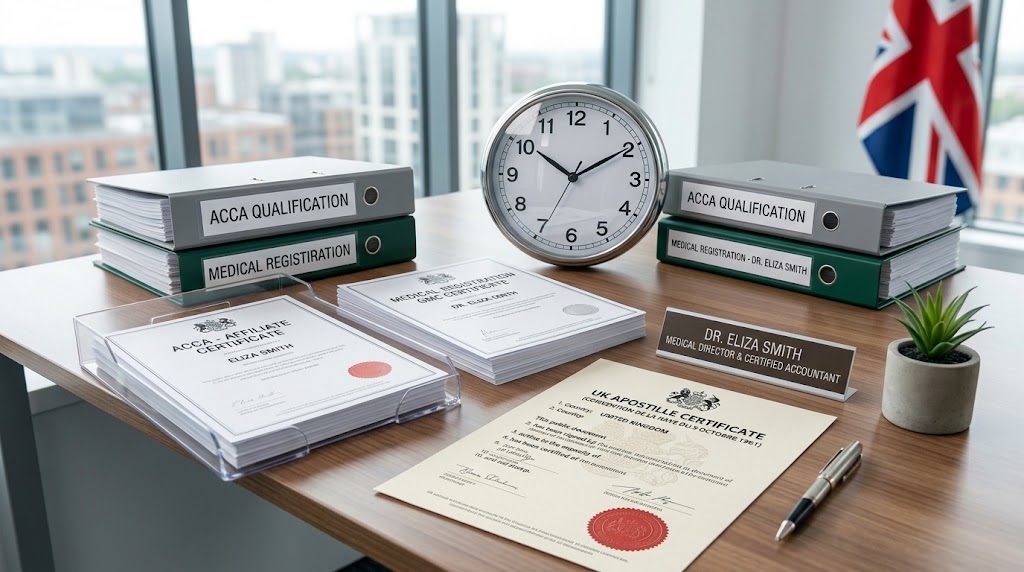
The timeline depends on several factors, including:
- The type of document
- Whether certification is required
- Whether notarisation is necessary
- The readiness of the document
- FCDO processing
- Courier arrangements
- Whether embassy legalisation is required
A document that is ready for apostille may take less time than one requiring additional preparation.
If your professional qualification is needed for an urgent overseas job offer or registration application, do not wait until the final deadline.
Start the process as early as possible, especially if multiple documents need legalisation.
Typical Requirements Before Applying for an Apostille
Before arranging an apostille, you may need:
- The correct professional document
- An original or acceptable certified copy
- Appropriate certification or notarisation
- Details of the destination country
- Confirmation of the receiving authority’s requirements
- Translation arrangements, if necessary
You should also check whether the overseas authority has a document age requirement.
For example, a professional qualification certificate may be permanent, but a letter confirming current registration or professional standing may need to be recently issued.
Do Professional Qualifications Need to Be Translated?
If your professional qualification is written in English but will be submitted to an authority that uses another language, a translation may be required.
The receiving organisation may request:
- A professional translation
- A certified translation
- A notarised translation
- Both the original document and translation
Do not assume that the apostille automatically removes the need for translation.
You should check whether the authority requires the apostille itself, the qualification document or both to be translated.
Common Mistakes to Avoid
Apostilling the Wrong Document
One of the most common mistakes is assuming that the qualification certificate is the only document required.
An overseas professional authority may instead require an official verification letter or proof of current registration.
Using an Unofficial Printout
A downloaded printout or scanned copy may not always be acceptable for apostille or overseas registration purposes.
Always check what format is required.
Forgetting About Certification or Notarisation
Some documents cannot proceed directly to the apostille stage. They may require formal certification or notarisation first.
Assuming an Apostille Confirms Professional Eligibility
An apostille does not automatically mean you are authorised to work in another country.
You may still need separate professional registration, licensing or qualification recognition.
Not Checking Translation Requirements
A document may be correctly apostilled but still rejected if the receiving authority requires an official translation.
Waiting Until the Last Minute
Professional registration and overseas employment deadlines can be strict. Additional preparation or embassy legalisation can increase the overall processing time.
Why Professional Apostille Assistance Can Be Useful
Professional qualifications are important documents, and using the wrong legalisation process can cause delays in employment or registration applications.
A professional apostille service UK can help you understand the general preparation process and determine whether a document may require additional steps before apostille.
This can be useful if you have several documents requiring legalisation or if you are working with an overseas deadline.
For more information about apostille documents UK, visit 2eApostille’s Apostille Service UK page.
Frequently Asked Questions
Can ACCA certificates be apostilled?
Yes, ACCA-related qualification or professional documents may be suitable for apostille, depending on the document and the requirements of the receiving authority.
Can GMC documents be apostilled?
Certain GMC-related documents may be prepared for apostille when required for official use abroad. The correct document should first be confirmed with the overseas authority.
Can HCPC registration documents be apostilled?
Professional registration documents or official evidence relating to HCPC registration may require apostille, depending on the document and destination country’s requirements.
Do professional qualifications need notarisation before an apostille?
Not always. The requirement depends on the type of document and how it was issued or certified. Some documents may require additional preparation before an apostille can be issued.
Does an apostille allow me to practise my profession abroad?
No. An apostille authenticates the relevant document but does not automatically give you the right to work or practise in another country. Separate professional registration may still be required.
Do professional qualification documents need to be translated?
They may need translation if required by the receiving authority. Always check whether a professional, certified or notarised translation is required.

Conclusion
Professional qualifications such as ACCA, GMC and HCPC-related documents may need to be apostilled when they are being used for employment, registration or other official purposes abroad. However, the correct process depends on the exact document and the requirements of the overseas authority.
Before starting the process, confirm exactly what document is required and whether it needs to be certified, notarised, translated or further legalised. An apostille authenticates the document for international use, but it does not replace separate professional recognition or licensing requirements.
If you need help arranging an apostille UK for a professional qualification or other important document, 2eApostille can assist with your document legalisation UK requirements. Visit the Apostille Service UK page to learn more about the apostille process and get professional support with preparing your documents for use abroad.