
What if my name on the document doesn’t match my passport?
Introduction
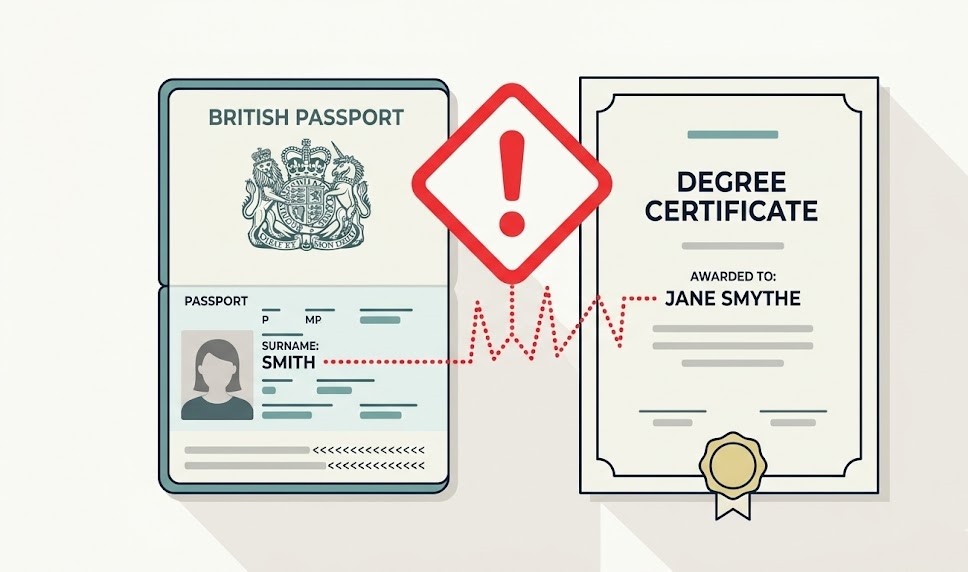
When preparing documents for use abroad, even a small detail—like a mismatch between your name on a document and your passport—can cause unexpected delays or rejections. This is a common concern for people applying for an apostille in the UK, especially when dealing with older documents, name changes after marriage, or variations in spelling.
If you’re using an apostille service UK, it’s important to understand how name discrepancies can affect your application and what steps you can take to resolve them. In this comprehensive guide, we’ll explain everything in simple terms, including how the apostille UK process works, when mismatched names matter, and how to fix the issue effectively.
Why Name Matching Matters for Apostille and International Use
When you submit documents for document legalisation UK, the apostille itself does not verify your identity—it verifies the authenticity of the document. However, the end user of the document (such as a foreign authority, employer, or immigration office) will compare the name on your document with your passport or ID.
If there is a mismatch, it may lead to:
- Delays in processing your application abroad
- Requests for additional documentation
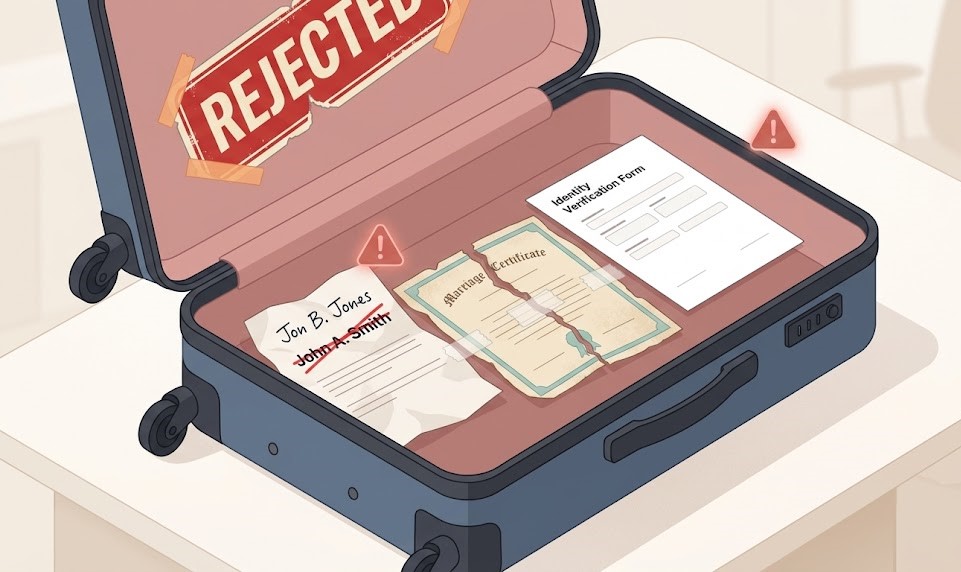
- Rejection of your documents
- Legal complications in some countries
This is why ensuring consistency in your name across all documents is crucial.
What Is an Apostille and What Does It Verify?
An apostille is an official certificate issued by the Foreign, Commonwealth & Development Office (FCDO). It confirms that a UK document is genuine and can be recognised internationally under the Hague Convention.
The FCDO apostille verifies:
- The authenticity of the signature
- The authority of the person signing the document
- The official seal or stamp
Importantly, it does not check whether your name matches your passport. This responsibility lies with the receiving authority in the destination country.
Common Reasons for Name Mismatches
Name discrepancies can happen for several reasons, and most are completely normal.
1. Marriage or Divorce
Many people change their surname after marriage or revert to a previous name after divorce.
2. Middle Names or Initials
Some documents may include full middle names, while others use initials or omit them entirely.
3. Spelling Variations
Minor spelling differences can occur due to clerical errors or different transliterations.
4. Cultural Naming Differences
In some cultures, name order or structure may differ between documents.
5. Old Documents
Older documents may reflect a previous legal name.
Does a Name Mismatch Affect Apostille Issuance?
In most cases, a name mismatch does not prevent the apostille from being issued. The apostille UK process focuses only on verifying the authenticity of the document—not the personal details.
However, the real issue arises after the apostille is issued, when the document is presented abroad.
When Does a Name Mismatch Become a Problem?
A mismatch becomes a problem when the receiving authority cannot confidently link the document to you.
This is especially important for:
- Visa and immigration applications
- Employment checks abroad
- Marriage registrations overseas
- Academic admissions
- Legal or financial transactions
Different countries have different levels of strictness, but many require exact or clearly explainable name matches.
How to Fix a Name Mismatch on Documents
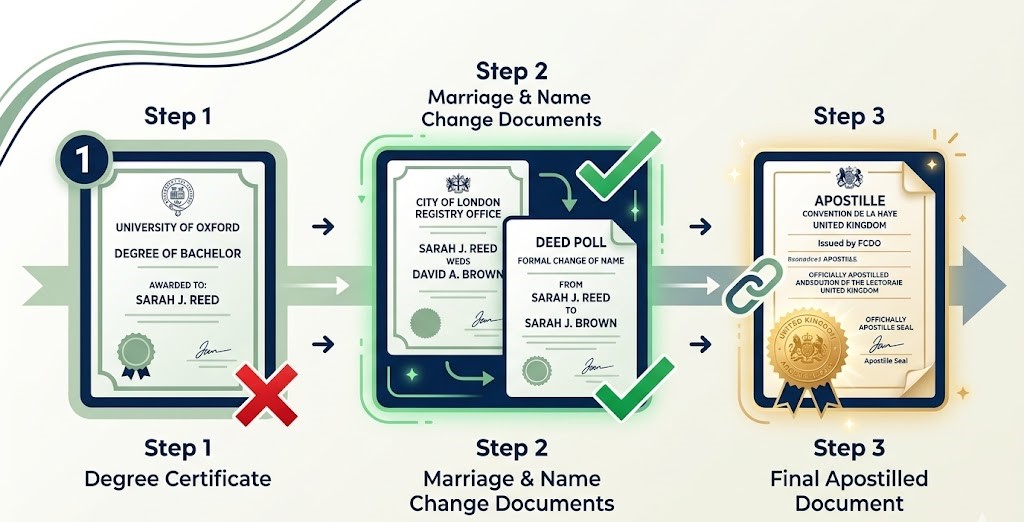
If your name doesn’t match your passport, there are several ways to resolve the issue.
1. Provide Supporting Documents
The most common solution is to provide additional documents that link your names.
Examples include:
- Marriage certificate
- Deed poll (name change document)
- Divorce certificate
- Statutory declaration
These documents create a clear chain of identity.
2. Use a Statutory Declaration
A statutory declaration is a legal statement confirming that different names refer to the same person.
It must be:
- Signed in the presence of a solicitor or notary
- Clearly explain the name discrepancy
- Include all relevant names
This is often required for international use.
3. Obtain a Certified Copy with Explanation
In some cases, a solicitor can certify a copy of your document and include a statement explaining the name variation.
4. Reissue the Document
If possible, you may request a new version of the document with your current legal name.
This is often an option for:
- Academic certificates
- Some official records
However, not all documents can be reissued.
Apostille Process in the UK (Step-by-Step)
Understanding the apostille documents UK process can help you prepare correctly.
Step 1: Check Document Eligibility
Ensure your document is suitable for apostille.
Step 2: Certification (If Required)
Some documents must be certified by a solicitor or notary.
Step 3: Submit to FCDO
Send your documents for FCDO apostille processing.
Step 4: Apostille Issued
The apostille certificate is attached.
Step 5: Return Delivery
Your documents are returned securely.
If there is a name mismatch, it’s best to address it before Step 3.
Common Documents Affected by Name Mismatches
Name discrepancies often appear in the following apostille documents UK:
Personal Documents
- Birth certificates
- Marriage certificates
- Divorce certificates
Educational Documents
- Degree certificates
- Diplomas
- Transcripts
Business Documents
- Company records
- Contracts
Legal Documents
- Powers of attorney
- Affidavits
Timelines and Processing Considerations
Name mismatches can affect your timeline if not handled properly.
Standard Apostille Processing
- 5–10 working days
Urgent Processing
- 1–3 working days via agents
Additional Time for Corrections
- Preparing statutory declarations
- Obtaining supporting documents
Planning ahead is essential to avoid delays.
Common Mistakes to Avoid
Many people encounter issues because of simple mistakes.
Ignoring the Mismatch
Assuming it won’t matter can lead to rejection abroad.
Not Providing Supporting Documents
Always include proof linking your names.
Using Unofficial Documents
Ensure all supporting documents are properly certified.
Waiting Until the Last Minute
Fixing discrepancies can take time.
Do Different Countries Have Different Rules?
Yes, requirements vary depending on the country.
Some countries are more flexible and accept supporting documents, while others require exact name matches.
For example:
- European countries often accept supporting evidence
- Middle Eastern countries may require strict consistency
- Some Asian countries require additional legalisation steps
Always check the specific requirements of your destination country.
Should You Use an Apostille Service UK Provider?
Using a professional apostille service UK can make the process much easier, especially if you have a name mismatch.
Benefits include:
- Expert advice on document requirements
- Assistance with statutory declarations
- Faster processing
- Reduced risk of rejection
You can start your application here:
https://2eapostille.co.uk/apostille-service-uk/
Professional guidance ensures everything is handled correctly the first time.
Practical Example
Let’s say your degree certificate shows your maiden name, but your passport shows your married name.
To resolve this, you would:
- Include your marriage certificate
- Possibly provide a statutory declaration
- Submit all documents together for apostille
This creates a clear link between your identities.
Frequently Asked Questions (FAQ)
1. Can I get an apostille if my name doesn’t match my passport?
Yes, but you may need supporting documents to prove your identity.
2. Will the FCDO reject my document بسبب name mismatch?
No, the FCDO apostille does not check name consistency.
3. What documents can prove a name change?
Marriage certificates, deed polls, and statutory declarations are commonly used.
4. Do I need to correct the document before apostille?
Not always—supporting documents are often sufficient.
5. Can I use a statutory declaration?
Yes, it is a widely accepted solution.
6. Will foreign authorities accept mismatched names?
Only if you provide clear supporting evidence.
Conclusion
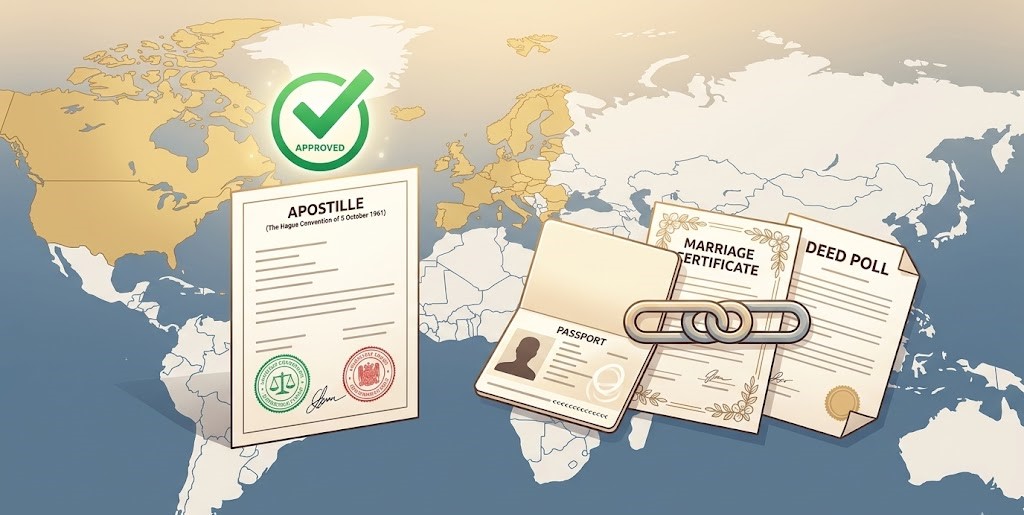
A mismatch between your name on a document and your passport is a common issue—but it doesn’t have to be a major problem. With the right preparation, supporting documents, and professional guidance, you can ensure your apostille UK process goes smoothly.
The key is to address the issue early, provide clear evidence linking your names, and understand the requirements of the country where your documents will be used.
If you want to avoid delays and ensure everything is handled correctly, 2eApostille is here to help. Our expert apostille service UK ensures your documents are prepared, verified, and processed efficiently, giving you complete peace of mind.
Start your application today at https://2eapostille.co.uk/apostille-service-uk/ and let us handle your document legalisation UK needs with professionalism and care.