
Can Wills or Probate Documents Be Apostilled?
Introduction
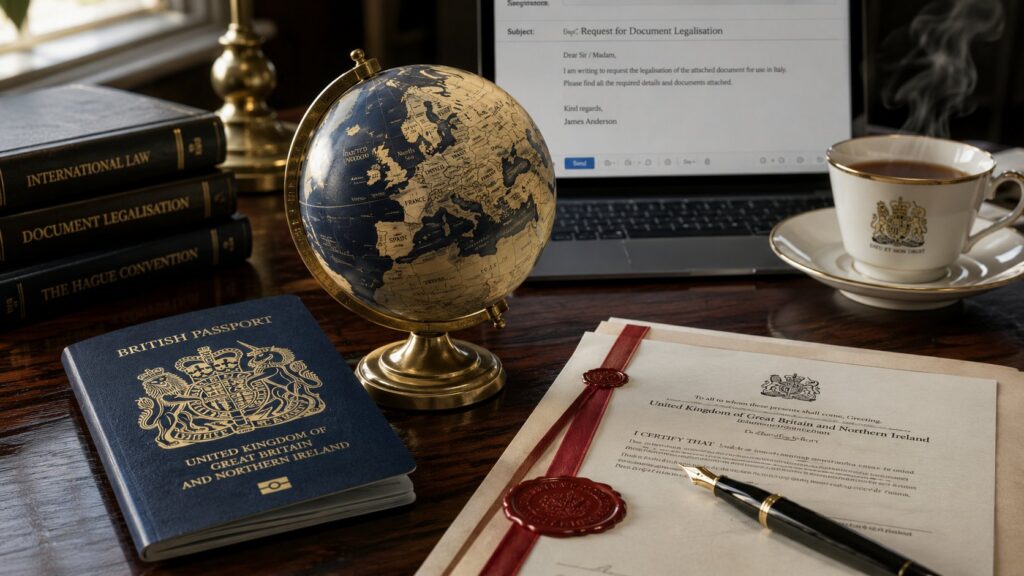
Dealing with the death of a family member is often emotionally difficult, and the legal and administrative responsibilities that follow can make the situation even more challenging. Matters can become particularly complicated when the deceased person owned property, held financial assets, had business interests or left beneficiaries in another country. In these situations, overseas banks, courts, government authorities or other organisations may ask for UK legal documents to be officially authenticated before they can be accepted abroad.
This may lead to an important question: Can wills or probate documents be apostilled?
In many cases, certain wills, grants of probate and related probate documents can be prepared for international use through the appropriate legalisation process. However, the exact requirements depend on the type of document, the authority that issued or certified it and the country where it will be used.
An apostille is commonly used to authenticate UK public documents for use in countries that recognise the Hague Apostille Convention. If the destination country is outside the Hague Convention, further embassy or consular legalisation may be required after the UK legalisation stage.
Watch our short video for a quick explanation of whether wills and probate documents can be apostilled:
What Is an Apostille?
An apostille is an official certificate that authenticates a public document for use in another country that accepts apostilles under the Hague Apostille Convention.
In the UK, an apostille is issued through the Foreign, Commonwealth & Development Office (FCDO) Legalisation Office.
The purpose of an apostille is to help an overseas authority verify the authenticity of the relevant signature, stamp or seal on a document. For example, if a probate document has been issued by an official UK authority, the apostille helps confirm the authenticity of the official signature or seal for international use.
It is important to understand what an apostille does and does not do.
An apostille can authenticate the origin of a document, but it does not:
- Confirm that every statement in the document is legally correct.
- Decide who is entitled to an inheritance.
- Prove the validity of the contents of a will.
- Replace the need for probate.
- Translate a document into another language.
- Guarantee that every overseas authority will accept the document.
The receiving authority in the destination country may have additional requirements. For this reason, it is always sensible to confirm exactly what documents are needed before starting the document legalisation UK process.
Can a Will Be Apostilled?
Yes, but the correct form of the will is important
A will may potentially be prepared for international use through the appropriate apostille process. However, not every copy of a will can necessarily be sent directly for legalisation.
A private document signed by an individual does not automatically become suitable for an apostille simply because it is an important legal document. The document may first need to be properly certified or otherwise presented in a form that the FCDO can legalise.
For example, the receiving authority may require:
- An original will.
- A certified copy of the will.
- A court-certified copy.
- A solicitor-certified copy.
- A copy issued or sealed by the Probate Registry.
- A grant of probate instead of the will itself.
The correct option depends on the circumstances.
Can Probate Documents Be Apostilled?
Many official probate documents may be suitable for legalisation
Probate documents are often required when an estate includes assets or legal interests outside the UK.
Examples may include:
- Property located abroad.
- Foreign bank accounts.
- Overseas investments.
- Shares held in another country.
- Business interests abroad.
- Pension or insurance payments.
- Inheritance matters involving foreign beneficiaries.
- Legal proceedings relating to the estate.
What Is a Grant of Probate?
A Grant of Probate is an official legal document that confirms the authority of an executor to administer the estate of a deceased person when there is a valid will.
The executor may need to use the Grant of Probate to deal with:
- Banks.
- Property.
- Investments.
- Financial institutions.
- Government authorities.
- Other organisations holding assets belonging to the estate.
If assets are located outside the UK, a foreign organisation may ask for the Grant of Probate to be officially authenticated.
Why Would a Will or Probate Document Need an Apostille?
Apostilles are often required because a UK document may not automatically be accepted as authentic by a foreign authority.
For example, imagine that a deceased person lived in the UK but owned a bank account in another country. The executor may need to prove their legal authority to deal with the account.
The foreign bank may request:
- A Grant of Probate.
- A death certificate.
- A copy of the will.
- Identification documents.
- A certified translation.
- An apostille.
The apostille helps authenticate the relevant UK document for international use.
Which Probate and Estate Documents May Need an Apostille?
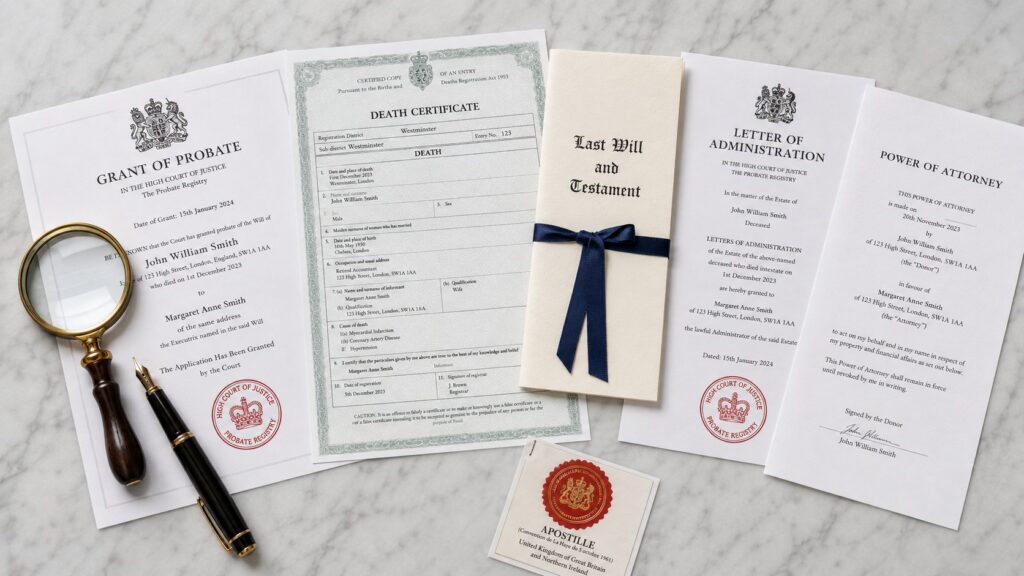
The following documents may commonly be involved in international estate administration.
Death Certificates
A foreign bank, court or authority may require an official UK death certificate before allowing estate matters to proceed.
Depending on the requirements of the destination country, the death certificate may need an apostille.
Grant of Probate
This is one of the most important documents that may be needed when an executor is dealing with overseas assets.
The Grant of Probate confirms the executor’s legal authority to administer the estate.
Letters of Administration
Where an administrator has been appointed instead of an executor, this document may need to be authenticated for international use.
Wills
The will itself may sometimes be requested by a foreign authority. However, it is important to establish whether the original, a certified copy or another officially issued version is required.
Powers of Attorney
An executor or beneficiary may sometimes appoint another person to deal with legal or financial matters. If a power of attorney is intended for use abroad, it may require legalisation.
Court Orders
Some inheritance disputes or estate matters may involve court orders. If the order is required overseas, apostille legalisation may be necessary.
Certified Copies of Legal Documents
In some circumstances, an overseas authority may not accept an ordinary photocopy. A properly certified or official copy may be required.
How Does the Apostille Process Work in the UK?
The process of obtaining an apostille for a will or probate document generally involves several stages.
Step 1: Confirm What the Overseas Authority Requires
Before sending any document for legalisation, ask the receiving organisation:
- Which exact document is required?
- Does it need an apostille?
- Does it need to be translated?
- Is a certified copy acceptable?
- Does the document need additional embassy legalisation?
- Does the document need to be recent?
- Is there a specific format that must be followed?
This first step can prevent unnecessary delays and costs.
Step 2: Obtain the Correct Original or Certified Document
You may need to obtain the document from the appropriate authority.
For example, this may involve:
- The Probate Registry.
- A court.
- A solicitor.
- A government registry.
- Another official authority.
The document must be in the correct form for the receiving authority and the legalisation process.
An ordinary photocopy may not be sufficient.
Step 3: Arrange Certification if Required
Some documents may need to be certified before they can receive an apostille.
The type of certification required can depend on the document and the circumstances.
For example, a copy of a will may need appropriate certification before it can be used for international purposes.
It is important not to arrange unnecessary certification without first checking what is required. Different countries and authorities may have different rules.
Step 4: Submit the Document for FCDO Apostille
Once the document is ready, it can be submitted for legalisation through the appropriate FCDO apostille process.
The FCDO will authenticate the relevant official signature, stamp or seal.
If successful, an apostille certificate is issued.
The apostille is then used with the underlying document when presenting it to the overseas authority.
Step 5: Check Whether Further Legalisation Is Required
An apostille is generally used for countries that accept the Hague Apostille Convention.
However, if the destination country does not use the apostille system, the document may require further legalisation.
This can involve additional stages, such as legalisation by the embassy or consulate of the destination country.
The exact process varies depending on the country.
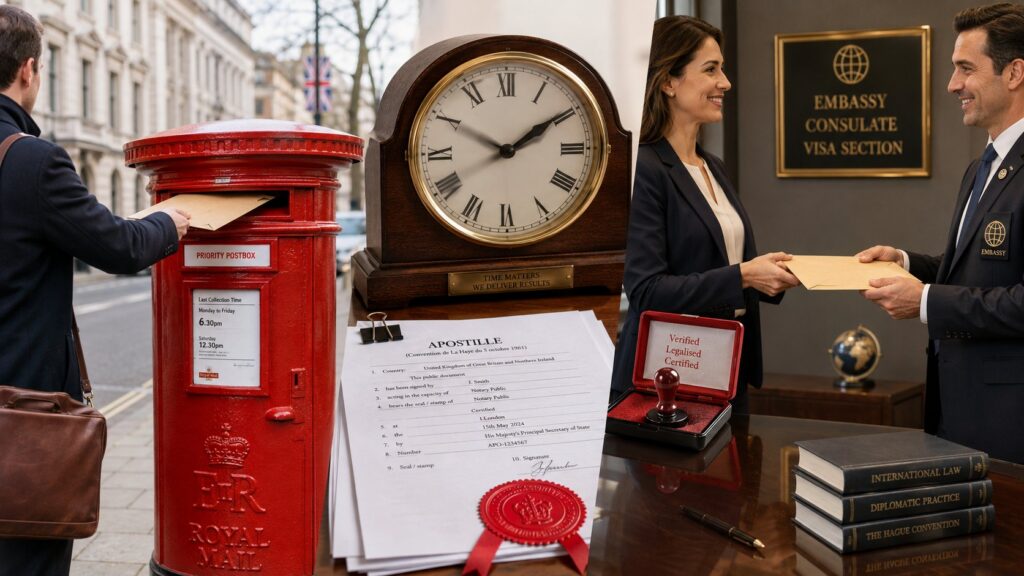
How Long Does It Take to Apostille Probate Documents?
The total timeframe can vary depending on several factors.
These may include:
- The time needed to obtain the probate document.
- Whether certification is required.
- FCDO processing.
- Postal or courier delivery.
- Translation.
- Embassy legalisation.
- The requirements of the destination country.
A complex estate matter involving several documents may take longer than a straightforward apostille application.
For example, you may need to prepare:
- A death certificate.
- A Grant of Probate.
- A will.
- A power of attorney.
- Translations.
Each document may need separate preparation and legalisation.
It is therefore best to start the process as early as possible.
Common Mistakes to Avoid When Apostilling Wills or Probate Documents
1. Sending the Wrong Document
One of the most common mistakes is sending a will when the overseas authority actually requires a Grant of Probate.
Always check the exact requirement.
2. Using an Ordinary Photocopy
A simple photocopy may not be accepted.
You may need an original, certified copy or official court-issued document.
3. Assuming Every Will Can Be Apostilled Directly
The legalisation process depends on the form of the document and the authentication requirements.
Private documents may require additional preparation.
4. Forgetting About Translation
An apostille does not translate a document.
If the receiving authority requires a certified translation, this should be arranged according to its instructions.
5. Ignoring Embassy Legalisation
An apostille may not be sufficient for a country outside the Hague Apostille Convention.
Further legalisation could be required.
6. Starting the Process Too Late
Probate matters can be time-sensitive, particularly when overseas property, bank accounts or inheritance payments are involved.
Starting early can help avoid unnecessary delays.
Common Documents That May Require an Apostille
While wills and probate documents are important in international estate matters, many other UK documents may also require an apostille for use abroad.
Birth Certificates
Birth certificates may be required for citizenship, family matters, immigration or inheritance purposes.
Marriage Certificates
A marriage certificate may be required in property, inheritance or family-related matters.
Degree Certificates
Individuals moving abroad for work, study or professional registration may need to legalise their educational documents.
Business Documents
Company documents may require an apostille for international trade, overseas business registration or financial matters.
Powers of Attorney
A power of attorney may require legalisation when giving another person authority to act overseas.
Police Certificates
Police certificates may be requested for immigration, employment or residency applications abroad.
Court Documents
Certain official court documents may require legalisation before being accepted internationally.
The requirements for each type of document can differ.
Frequently Asked Questions
1. Can an original will be apostilled?
In some cases, a will can be prepared for apostille legalisation, but the appropriate form of the document is important. The receiving authority should confirm whether it requires the original will, a certified copy or another official document.
2. Can a Grant of Probate be apostilled?
A Grant of Probate may be suitable for apostille legalisation when it is required for use abroad. The destination country and receiving authority should confirm the exact requirements.
3. Do probate documents need to be translated?
Possibly. If the documents are being used in a non-English-speaking country, the receiving authority may request a professional or certified translation.
4. Can I apostille a photocopy of a will?
An ordinary photocopy may not be sufficient. You may need a properly certified copy or another official version of the document.
5. How long does probate document legalisation take?
The total timeframe depends on document preparation, certification, FCDO processing, delivery, translation and any additional embassy legalisation.
6. Does every country accept a UK apostille?
No. An apostille is generally used for countries that participate in the Hague Apostille Convention. Countries outside the Convention may require additional embassy or consular legalisation.
Conclusion
When dealing with an estate that has an international connection, preparing UK legal documents correctly can be essential. A deceased person’s overseas property, bank accounts, investments, business interests or beneficiaries may require executors or administrators to provide official evidence of their authority before estate matters can be completed.
Wills and probate documents can often form part of the international document legalisation process, but the exact document that requires an apostille depends on the circumstances. In some cases, the overseas authority may request the will itself. In others, it may require a Grant of Probate, Letters of Administration, a death certificate or another official probate document.
If you need help preparing apostille documents UK for overseas use, 2eApostille can assist with the apostille service UK process and help you understand the next steps for legalising UK documents through the appropriate FCDO apostille procedure.
For professional assistance with apostille UK and document legalisation UK, contact 2eApostille and use our Apostille Service UK to help prepare your documents for international use.